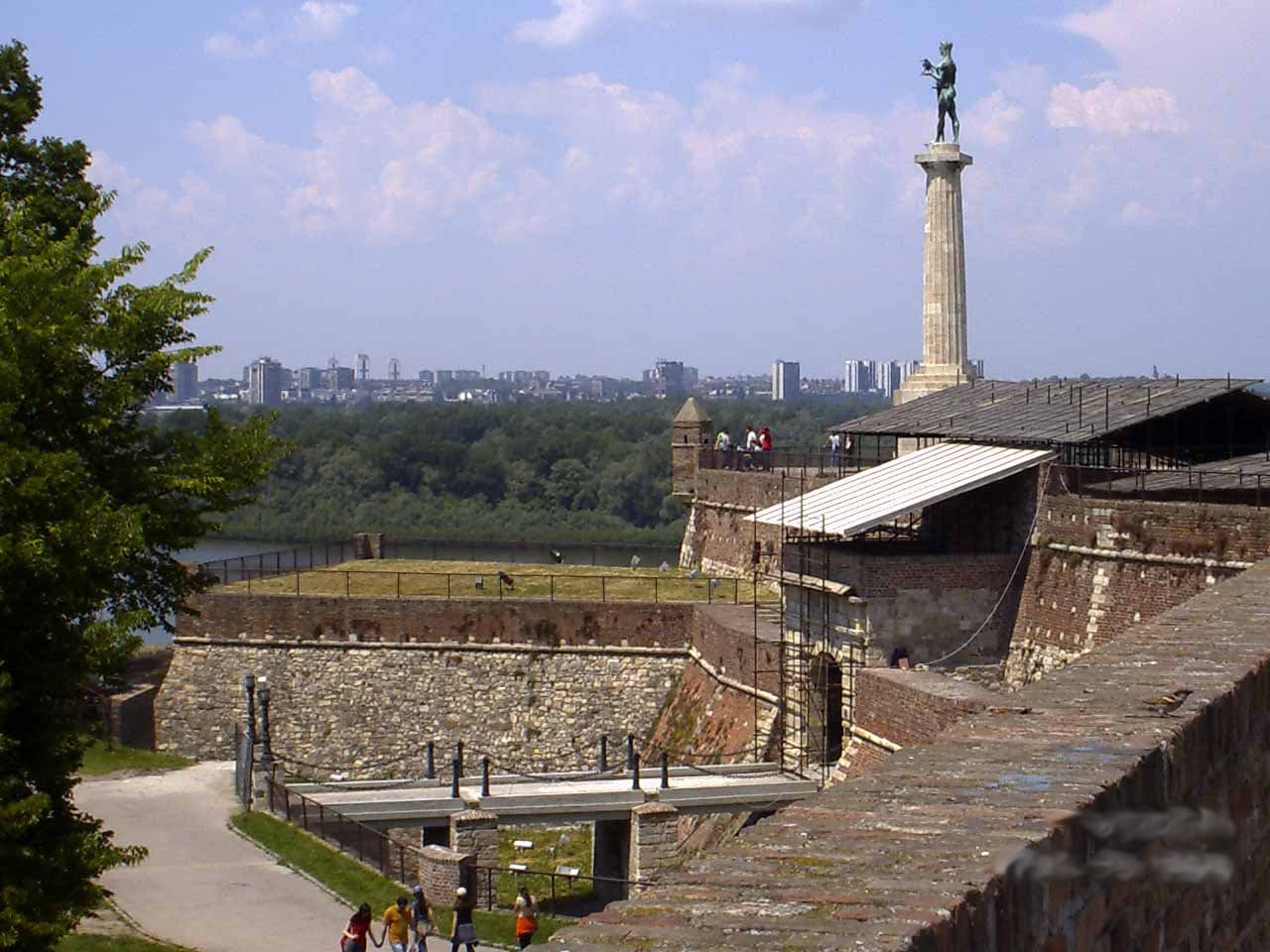
The questions come in like this: 'is Belgrade dangerous?', 'is Sarajevo safe?', 'visiting Sarajevo dangers'. The short answer, for anyone travelling as a tourist, is that none of the twelve cities in our dossiers between the Adriatic and the Black Sea has a problem of violent crime against visitors. The real risks are of another kind, and they differ from city to city: pockets on the tram, the taxi at the airport, the bill in the wrong bar, the road to cross in Tirana, the bear in Brașov. The table lines them up, one per city, with two sources in every row: the British consular advice for that country, which is the source every dossier's safety section rests on, and the dossier itself, with the date it was checked.
We chose the British advice because it is the only one covering all seven countries in the same format with frequent updates; the pages were read for the dossiers between 16 and 21 September 2026. The verdict in the second column summarises the dossier, not the advice: where the dossier softens or sharpens the tone compared with the advice, it does so because it found a local source, which you find by opening the page.
City by city
The cities are in geographical order, from Bosnia to Romania. The third column lists only the scams the dossier documents with a source: where there are none, we say so.
| City | What the advice and the dossier say | Known scams and traps | Source |
|---|---|---|---|
| Sarajevo | One of the safest capitals in South-East Europe for tourists: the risk is pickpocketing on trams and in Baščaršija at rush hour. Leftover mines concern only rural areas off the trails, never the centre; Trebević has been cleared since 2021. Outer districts such as Alipašino Polje and Dobrinja hold nothing after dark. Registration within 72 hours, done by the hotel. | Airport taxis with a flat fare or a 'broken' meter (book a transfer through your accommodation); street exchange offices in the bazaar; the Tunnel museum takes only cash in marks. | UK advice · Sarajevo dossier |
| Mostar | Safe. The ruined buildings along the former front line are viewed from outside, they are not structurally safe; in the countryside stay on marked trails. The real danger is the Stari Most: over twenty metres into icy water, nobody dives without the divers' club. | No documented scams. The mistakes are two: the hit-and-run visit between 11 and 16, and paying in euros, accepted at a poor rate: pay in marks. | UK advice · Mostar dossier |
| Belgrade | No off-limits districts and quiet by day. Pickpockets at the airport, the bus stations and in tourist areas. Around stadiums and nightclubs on match days there can be violence linked to football firms and organised crime: walk away if the mood changes. Carry ID at all times, register within 24 hours. | Taxis without a meter at the airport and bus station (fixed-price voucher from the electronic kiosks); inflated bills in bars, clubs and splavovi, some linked to criminal circles; euros accepted at a terrible rate, street money changers. | UK advice · Belgrade dossier |
| Sofia | A quiet capital, the centre is safe in the evening too; more care around the railway and bus stations at night. The risks are of another kind: winter air pollution on windless days, broken and icy pavements, stray dogs in the suburbs and on Vitosha, where above 1,800 metres you need equipment and experience. ID (a copy of the photo page is enough) always in your pocket. | Unlicensed airport taxis with the per-kilometre sticker written to confuse (05.2 for €5.20): take the M4 metro; the city-centre 'gentlemen's clubs', bills of hundreds of euros and threats; pickpockets on Vitosha boulevard, on the metro and at markets; lev prices in old guides, which no longer exist since 2026. | UK advice · Sofia dossier |
| Plovdiv | Quiet and safe in the evening too, Kapana included; no districts to avoid. Ordinary care at the station and in crowds; the Old Town's cobbled climbs are slippery in the rain. | Unofficial taxis without a meter from the station and terminals. Otherwise no documented scams: the mistake is seeing it in three hours between Sofia and the coast. | UK advice · Plovdiv dossier |
| Tirana | Crimes against foreigners are rare, no off-limits districts. The main risk is the traffic: aggressive driving, zebra crossings that grant no priority, one of Europe's highest road death rates. Dark suburbs and broken pavements at night; earthquake zone. | Taxis without a meter at the airport and downtown (official bus at 400 lek, hourly, around the clock); pickpockets in the centre, on buses and at the outdoor tables of Blloku; many museums, buses and restaurants take only lek in cash. | UK advice · Tirana dossier |
| Ksamil | Safe, no risky areas for visitors: the risks are financial, not personal. Building sites open along the coast even in season; hired boats and jet skis may lack safety equipment, the consular advice recommends licensed operators. | A parasol and two sunbeds at €25-50 a day, up to €15 an hour for the parasol alone: ask the price first; boats and taxis haggled on the quay, total price before boarding; bills in euros at the venue's own rate: pay in lek. | UK advice · Ksamil dossier |
| Kotor | Safe. Carry ID at all times, register within 24 hours (hotels do it), never photograph police or military. The real summer danger is the fortress staircase: 1,350 steps with no shade and no water, never between 11 and 16. | Verbal-fare taxis at Tivat and Podgorica airports (licensed only, booked or via app); stalls in front of the cruise terminal at three to five times the prices inside the walls; unlicensed 'guides' who tag along on the steps and ask for money at the top. | UK advice · Kotor dossier |
| Dubrovnik | Safe; pickpocketing as a generic risk in the cruise crowds. The old town's rules carry real fines: swimwear or bare chest about €265, the regulated traffic zone around the walls €260 for private cars, climbing on monuments and drinking near protected sites penalised. | City taxis without a meter (from the airport the fare is fixed, €30-40, displayed at the official desks); tourist menus without clear prices near the Stradun; invitations to bars with inflated bills, not confirmed for the city. The €265 fine for noisy wheeled suitcases is a hoax denied by the city. | UK advice · Dubrovnik dossier |
| Split | Safe; pickpockets in Diocletian's Palace and on the Riva at cruise disembarkation times. Swimwear in the centre fined up to €150; the British advisory reports up to €4,000 for brawls and drunken behaviour. | No official reports of taxi or bill scams: meter on the rides from port and airport, price list before sitting down. A table on the Riva costs far more than one in the lanes, for the same dish. | UK advice · Split dossier |
| Bucharest | Safe on the whole, no off-limits districts. Around the Gara de Nord at night more thefts and harassment; in the Centrul Vechi late at night inflated bills, drunken fights and pushy touts. Stray dogs in the suburbs and near building sites; earthquake zone, at-risk buildings carry a red dot on the facade. | Taxis at Otopeni and the Gara de Nord with tampered meters or verbal flat rates (official kiosks in arrivals, or an app); distraction-technique pickpockets, the most reported in Romania; spiked drinks in Centrul Vechi bars; 'no commission' money changers with dreadful spreads. | UK advice · Bucharest dossier |
| Brașov | Quiet, no districts to avoid; pickpockets in Piața Sfatului on market days and around the station late at night. Bears come down to the edges of the districts below the forest, Răcădău in particular, at dusk: no food left outside, never approach for a photo. In the mountains the weather turns fast even in August. | Bran castle tickets from unofficial resellers at a mark-up (bran-castle.com only); taxis without a meter to Bran, Râșnov and Poiana (app or scheduled buses); 'Dracula trail' tours selling Bran as Vlad's home: it never was. | UK advice · Brașov dossier |
The four things that apply everywhere
The taxi is the most widespread scam: eleven cities out of twelve have an entry on taxis with no meter or a verbal fare (only Mostar lacks one), almost always at the airport or the bus station. The defence is the same in every case: the ride-hailing app where there is one (Belgrade, Bucharest, Sofia, Tirana, Sarajevo), the official kiosk with a fixed-price voucher where there is one (Belgrade, Bucharest, Dubrovnik) and the bus or metro from the airport where there is one (Sofia with the M4 at €0.80, Tirana with the 400-lek bus). Getting into the car of whoever approaches you in arrivals is the most expensive mistake in the whole region.
Cash is the second theme: in the Balkans you really need it, because museums, buses and small restaurants often don't take cards, but it is also what pickpockets count on. Withdraw from bank ATMs, not the standalone ones in the street, split it between two places and never change money with anyone who offers in the street; where the euro is accepted but isn't the currency (Bosnia, Serbia, Albania) the venue sets the rate, and whoever pays in local currency pays less; in Montenegro the euro is the currency, and in Bulgaria it has been since 1 January 2026, so lev price lists are out of date.
The third theme is bureaucratic and carries a fine: in Bosnia every foreigner must be registered with the police within 72 hours, in Serbia and Montenegro within 24. Hotels do it at check-in; anyone renting from a private host has to do it themselves. In Bulgaria, Serbia and Montenegro you must always carry ID, and in Bulgaria the British authorities say a printed copy of the photo page is enough. The fourth is the emergency number: 112 in all twelve cities, mountain rescue in Brașov included.
The things that differ from country to country
Mines exist only in Bosnia, and only in rural and wooded areas off the marked trails: in Sarajevo Trebević was declared mine-impact free in 2021, in the city the risk is nil, and the rule for the whole country remains to stay on the trails and stop at the signs with the skull. Bears exist only in Brașov, where they come down to the edges of the districts at dusk. Stray dogs remain in Sofia, in the suburbs and on Vitosha, and in Bucharest, near building sites. Traffic is a consular-advice risk only in Albania, where in Tirana the zebra crossings grant no priority. Spiked drinks appear only in the Bucharest dossier, in the bars of the Centrul Vechi. Football-related violence appears only in Belgrade's, on match days.
On two things the region is uniform and severe: drugs, with long prison sentences even for personal amounts in Bulgaria, Serbia, Albania and Romania, and photographs of police, military and installations, banned in Serbia, Montenegro and Romania. And on one thing it is uniform and reassuring: in none of the twelve cities does the dossier flag a district you must not enter, only areas of no interest where there's no point being after dark.
How we counted
The twelve cities are those of the VoyAVer dossiers across Bosnia, Serbia, Bulgaria, Albania, Montenegro, Croatia and Romania. For each one the dossier's safety section rests on the country's British consular advice, and each scam has its own source and confidence level, shown on the page. We used no aggregated safety indices and no ranking sites: they are the first thing the site's audit excludes. If something doesn't add up, the sources column leads to the right page.