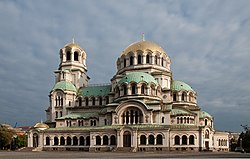
Plovdiv, Bulgaria
Photo: Ymblanter, Wikimedia Commons (CC BY-SA 4.0)
← All destinations

Plovdiv, Bulgaria

Older than Rome and Athens, inhabited continuously for thousands of years: Plovdiv stacks Romans, Byzantines, Ottomans and Bulgarians on seven hills. A Roman theatre that still hosts shows, an old town of colourful Bulgarian Revival houses and an artists' quarter among murals and bars. All at still-ridiculous prices.

✓ Sources verified by hand on 2026-06-284 sources cited

What to see

Roman theatre of Philippopolis

The city's jewel: a 1st-century theatre overlooking the hills, masterfully restored and still used for shows. Sitting on the marble tiers at sunset is Plovdiv's signature experience.

Old Town (Stari Grad)

A maze of cobbled alleys and brightly coloured Bulgarian Revival house-museums, including the Balabanov House and the Hindliyan House. A whole quarter that is itself an open-air museum.

Roman stadium

Beneath the main pedestrian street a part of the ancient Roman stadium seating thousands surfaces: you view it from above in the very centre, among shops and cafés, with a small exhibition space.

✦ Hidden gems — off the standard guides

Kapana district

The former artisans' area, today a 'creative district': pedestrian streets full of murals, cafés, galleries and venues. The city's young, lively face, perfect for the evening.

Nebet Tepe

The hill where the city was born over 6,000 years ago, with the remains of the ancient fortifications and a 360° view over Plovdiv and its hills: free and magnificent at sunset.

Want an itinerary tailored to your dates in Plovdiv?

Travel dates, where you stay and the kind of trip — we tailor this same verified dossier to your exact needs.

Coming soon
The cobbled alleys of the Old Town, with the colourful Bulgarian National Revival houses with their overhanging upper floors.
The cobbled alleys of the Old Town, with the colourful Bulgarian National Revival houses with their overhanging upper floors.Photo: Jocelyn Erskine-Kellie, Wikimedia Commons (CC BY-SA 2.0)

Before you go

Recurring scams and local rules worth knowing before you arrive.

⚠ Scams to know

Sticking to the Old Town alone in a few hours

low confidence

Many visit it in a rush as a stop between Sofia and the sea, missing Kapana, the Roman stadium, Nebet Tepe and the evening life that are an essential part of the city.

How to avoid it: Give it at least a full day, including an evening in Kapana and the sunset from Nebet Tepe; with an extra night you can add a trip nearby.

Source

Relying on unofficial taxis without a meter

low confidence

As in many cities, some unofficial or inflated-fare taxis can take advantage of tourists, especially from stations and terminals.

How to avoid it: Use known companies with a meter or booking apps, agree or check the fare, and prefer walking in the centre.

Source

⚖ Laws & penalties

Switch to the euro and dual price display

low riskverified

Since 1 January 2026 Bulgaria is part of the eurozone: the euro has replaced the lev at the fixed rate of €1 = 1.95583 lev. During the transition period prices may be shown in both currencies; always check your change.

Source
A Bulgarian Revival house-museum in Plovdiv's Old Town, an example of the local 19th-century architecture.
A Bulgarian Revival house-museum in Plovdiv's Old Town, an example of the local 19th-century architecture.Photo: Dennis G. Jarvis, Wikimedia Commons (CC BY-SA 2.0)

Recurring events

Hover over a month on the timeline for details.

Budget & timing

Average daily cost

Season low (November-March)35-55€
Season mid (April-May, October)45-75€
Season high (June-September)60-100€

Rough estimate (lodging + meals + local transport), not a precise verified source.

Best time by type of trip

Ideal weather May-June, September

Pleasant temperatures for walking among the hills and Old Town, pleasant evenings in Kapana and the performance season at the Roman theatre.

Life and events July-August

Festivals and concerts, a lively city, but intense heat in the middle of the day on the Thracian plain.

Budget and quiet November-March

Very low prices and a city lived by locals; cold, at times damp weather, but museums, Revival houses and mehanas always open.

Did you know... The Old Town is an open-air museum of Bulgarian National Revival houses (18th-19th century): colourful facades, overhanging upper floors and carved wooden ceilings.

Getting around

Car recommended: No — The centre, the Old Town and Kapana are easily walked, though uphill: a car is only needed for trips out of town (Bachkovo Monastery, Asenovgrad). In the centre it's more a hindrance than a help.

Plovdiv is linked to Sofia by train and bus (about 2 hours). In the city the centre is pedestrian and compact; urban buses cover the outer districts. For trips around, you need intercity buses, taxis or a rental car.

  • Since 1 January 2026 Bulgaria has adopted the euro instead of the lev (fixed rate €1 = 1.95583 lev): still bring cash and a card, and always check your change.
  • Wear comfortable shoes: the Old Town and Nebet Tepe are all cobbled and uphill.
  • Climb Nebet Tepe for sunset: it's free and offers the finest view over the city and the hills.
  • Plovdiv is a great base for Bachkovo Monastery and the Valley of the Roses: consider a day trip.

Safety

  • Normal care with your belongings in the busier areas (pedestrian street, station, markets).
  • The cobbled, uphill streets of the Old Town are slippery in the rain: suitable shoes.
  • The single emergency number in Bulgaria (and the EU): 112.

Did you know... Plovdiv was European Capital of Culture in 2019, and the old artisans' quarter of Kapana ('the trap') is today a creative maze of murals, galleries and bars.

Sources

Every source below was opened and checked by hand — not just cited. Entries that didn't hold up were downgraded to "low confidence" or dropped, not presented as certain.