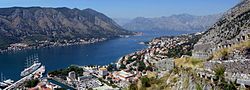
Dubrovnik, Croatia
Photo: kallerna, Wikimedia Commons (CC BY-SA 4.0)
← All destinations

Dubrovnik, Croatia

Among Byzantine walls, white-stone alleys polished by centuries of footsteps and secret coves beneath the ramparts, Dubrovnik is an open-air theatre where history, sea and overtourism coexist in a fragile balance. The 'Pearl of the Adriatic' should be experienced with respect: a few simple rules make it even more magical.

✓ Sources verified by hand on 2026-06-297 sources cited

What to see

Dubrovnik City Walls

A panoramic walk of about 2 km above the old town, a UNESCO site, with a view over the Adriatic and the red rooftops of the centre.

Stradun

The main street paved with polished white stone, the beating heart of city life among shops, cafés and baroque palaces.

Cathedral of the Assumption and treasury

A baroque cathedral holding a rich treasury of reliquaries, including fragments attributed to St Blaise.

✦ Hidden gems — off the standard guides

Buža Bar (Hole in the Wall)

A bar literally carved into a gap in the walls, overhanging the sea, ideal for a sunset drink away from the crowds.

Park Orsula

A panoramic hill alternative to Mount Srđ, reachable by a short free hike: the same view over Lokrum and the old town, without queues or a ticket.

Franciscan Monastery and historic pharmacy

It holds one of the oldest still-active monastic pharmacies in Europe and a quiet Romanesque cloister, often ignored by mass tours.

Gundulić Square market

A morning market of local produce, fruit, lavender and Dalmatian herbs, frequented more by residents than tourists.

Sveti Jakov cove

A less crowded beach reached by a scenic walk out of the centre, frequented mainly by locals.

Dubrovnik Synagogue

One of the oldest Sephardic synagogues in Europe still in use, small and little visited despite its great historical value.

Rožata

A dessert similar to crème caramel but flavoured with rose liqueur, a traditional Dubrovnik sweet with medieval origins.

Want an itinerary tailored to your dates in Dubrovnik?

Travel dates, where you stay and the kind of trip — we tailor this same verified dossier to your exact needs.

Coming soon
A staircase carved into the rock descends to the sea right below the walls: here, in a hidden gap, is the Buža Bar, where locals sip a drink at sunset away from the Stradun crowds.
A staircase carved into the rock descends to the sea right below the walls: here, in a hidden gap, is the Buža Bar, where locals sip a drink at sunset away from the Stradun crowds.Photo: Alex Proimos from Sydney, Australia, Wikimedia Commons (CC BY 2.0)

Before you go

Recurring scams and local rules worth knowing before you arrive.

⚠ Scams to know

Surcharges on unofficial taxis or without an agreed fare

medium confidence

The main routes actually have fixed fares: from the airport to the centre/Old Town you pay around €30-40 depending on the zone, prices displayed at the official taxi desks at the airport and valid year-round (in high season too). The surcharge risk mainly concerns city rides without a meter or unofficial drivers.

How to avoid it: For the airport check the fixed fare displayed at the official desks; in the city use apps like Uber/Bolt (price agreed in advance) or insist on the meter. Many taxis accept only cash.

Source

Pickpocketing in crowded tourist areas

low confidence

Pickpocketing is flagged as a general risk for visitors to very busy tourist destinations like Dubrovnik, without specific old-town details confirmed by a primary source.

How to avoid it: Keep bags and backpacks closed and in front of you in crowded areas, especially during cruise disembarkations.

Source

Invitations from strangers to unverified nightclubs

low confidence

A luring scheme towards bars with inflated bills, widespread in several European tourist destinations; not confirmed with specific details for Dubrovnik by a verifiable primary source.

How to avoid it: Never follow strangers, however friendly, into unverified venues; stay in well-frequented tourist areas.

Source

The €265 fine hoax for wheeled luggage

verified

The story of a €265 fine for dragging noisy wheeled luggage in the old town is a hoax: the city denied introducing such penalties. There is only a recommendation (the 'Respect the City' campaign) to use luggage discreetly; for 2026 luggage-storage points are planned in the busiest areas.

How to avoid it: There is no fine, but for courtesy and practicality on the cobbles it's better to use backpacks or soft bags and avoid dragging noisy suitcases during quiet hours.

Source

Extreme crowding during cruise-disembarkation hours

low confidence

Regardless of the exact official limits (not verified with certainty), at peak times the Stradun and the walls become very congested.

How to avoid it: Visit the walls and main monuments early in the morning or after late afternoon.

Source

Restaurants with 'tourist' menus and no clear prices near the Stradun

low confidence

Surcharges and opaque bills are a common visitor complaint in very busy tourist destinations.

How to avoid it: Always check the menu with prices displayed outside and prefer venues frequented by residents too, away from the main axis.

Source

⚖ Laws & penalties

Regulated Traffic Zone (ZCR) around the old town

high riskverified

Since 2 June 2025 a special traffic zone is in force around the old town to protect the heritage and reduce congestion; penalties range from €260 for private individuals to €1,320 for companies breaching the rules. Confirmed verbatim by the source.

Source

Ban on walking around in swimwear, bare-chested or nude in the old town

medium riskmedium confidence

As part of the city's 'Respect the City' campaign, walking in swimwear, bare-chested or nude in the UNESCO old town is banned. Several sources report penalties up to around €265 (a rule in force since summer 2020); the exact amount is cited by the media and not by a single official ordinance available online.

Source

Ban on climbing monuments, sleeping in public spaces and drinking alcohol near protected sites

medium riskmedium confidence

Part of the 'Respect the City' campaign: climbing monuments, sleeping in public spaces, drinking alcohol near protected sites and eating on monuments are penalizable behaviours in the old town. Confirmed by several news sources on the campaign; the amount of individual fines isn't detailed in a single ordinance available online.

Source
Among the ruins of the Benedictine monastery on the island of Lokrum, peacocks roam free, a legacy of an ancient legend that the island was cursed by an ousted abbot.
Among the ruins of the Benedictine monastery on the island of Lokrum, peacocks roam free, a legacy of an ancient legend that the island was cursed by an ousted abbot.Photo: JERRYE AND ROY KLOTZ MD, Wikimedia Commons (CC BY-SA 3.0)

Recurring events

Hover over a month on the timeline for details.

Budget & timing

Average daily cost

Season low (November-March)50-70€
Season mid (April-May, October)70-110€
Season high (June-September)120-180€

Rough estimate (lodging + meals + local transport), not a precise verified source.

Best time by type of trip

Sea and beaches June-September

Warmer water for swimming, but an old town very crowded by cruises in July-August.

Culture without crowds April-May, October

The walls and Stradun visitable with fewer tourists and more affordable accommodation.

Budget November-March

Much lower rates, though many venues and some attractions reduce their hours.

Did you know... The island of Lokrum, a few minutes by boat, has such a peculiar microclimate that it's said to be cursed, according to a local legend about a Benedictine abbot.

Getting around

Car recommended: No — The old town is entirely pedestrian and closed to private traffic; a car is only useful for trips out of town towards Konavle, the Pelješac peninsula or the Montenegro border.

An urban bus network (Libertas) connecting the Lapad and Babin Kuk districts and the port of Gruž to the old town, with a stop at Pile Gate, the main entrance to the walls.

  • Park in the outlying areas like Babin Kuk and take the bus to Pile Gate to avoid the steep central parking fees.
  • Buy bus tickets in advance at newsstands when possible: they usually cost less than on board.
  • Avoid driving during the cruise-ship disembarkation period (mid-morning), when traffic to the centre is congested.
  • For the Stradun and the old town always move on foot: private vehicle access is banned.

Safety

  • Dubrovnik is generally considered one of the safest destinations in Europe: the main risk is opportunistic petty crime and surcharges, not violence.
  • Use transport apps (Uber/Bolt) or metered taxis to avoid surcharges.
  • Be wary of spontaneous invitations to nightclubs from strangers.

Did you know... The Franciscan Monastery pharmacy is one of the oldest in Europe still in operation, running continuously since 1317.

Sources

Every source below was opened and checked by hand — not just cited. Entries that didn't hold up were downgraded to "low confidence" or dropped, not presented as certain.