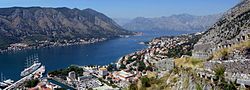
Ksamil, Albania
Photo: Pudelek (Marcin Szala), Wikimedia Commons (CC BY-SA 3.0)
← All destinations

Ksamil, Albania

Four islets a few strokes offshore, Caribbean-coloured water and Roman ruins twenty minutes' drive away: Ksamil is what the Amalfi Coast was before everyone discovered it, with the advantage (and the drawback) of still being under construction.

✓ Sources checked on 27 September 202616 sources cited

What to see in Ksamil?

14 places checked against the sources. The 11 gems the guidebooks skip come first, then the classics: every card has the hard facts on top and the why below.

On the map: yellow pins are the gems. Tap a pin to jump to its card.

✦ Hidden gems · off the standard guides

Monuments✦ gem

Butrint Archaeological Park

The park opens from 1 April to 31 October with last entry at 18:00 and closing at 20:00, and it is 20 minutes by car from Ksamil. There are free-entry days fixed each year, 18 April, 18 May, 21 May, 29 September and 28-29 November, plus the last Sunday of each month: note, though, that these apply only to Albanian citizens and not to foreign visitors. It is an archaeological site inside a nature reserve, so the route runs on beaten earth among the trees: closed shoes and mosquito repellent, because you walk alongside the lagoon. Allow at least 2 hours.

The Blue Eye (Syri i Kaltër)
Nature✦ gem

The Blue Eye (Syri i Kaltër)

It is a karst spring whose water comes out at a constant temperature of around ten degrees all year: the deep blue comes from the depth of the shaft, which has never been precisely measured. It is 30 minutes inland and the road ends in a car park from which you continue on foot or by internal shuttle. Swimming in the spring is forbidden and the ban is enforced: anyone going there to swim comes back disappointed. Early morning is better, before the coaches from Saranda.

Photo: Francesca Lo Manto, Wikimedia Commons (CC BY-SA 4.0)
Lëkurësi Castle (Saranda)
Monuments✦ gem

Lëkurësi Castle (Saranda)

It is an Ottoman fortress on the hill above Saranda, reached by car up a narrow, steep road: 10 minutes of climbing from the seafront, and around half an hour from Ksamil. You go up for the sunset, because from there the whole bay is visible and, on clear days, Corfu across the channel. Inside the castle there is a restaurant, so it is not an abandoned ruin but a place where people have dinner. Access to the panoramic terrace is free: you pay only if you sit down at a table.

Photo: Pasztilla¨aka Attila Terbócs, Wikimedia Commons (CC BY-SA 4.0)
Beaches✦ gem

Albanian Riviera beaches to the north

Between Ksamil and Saranda the coast is a run of coves reachable only with your own transport, often by dirt roads: they are the answer when the Ksamil beaches are full, which in August means between 11:00 and 17:00. They have no facilities, so water, shade and lunch have to be carried. It should be said that in winter almost everything shuts: the Albanian Riviera has a short season, and outside June to September many places and beach clubs are boarded up.

Food✦ gem

Raki

Albanian raki is a fruit spirit, usually from grapes, and it is offered as a gesture of hospitality: refusing is not rude but it surprises people. The strength is high and variable, because much raki is home-made and carries no label: what is served in houses is often stronger than the bottled kind. If you are driving, say so at once and without embarrassment: the Albanian drink-drive limit is low and there are checks along the coast in summer.

Beaches✦ gem

Plazhi i Pasqyrave (Mirror Beach)

The cove takes its name from the sun's reflections on the water, and it stays less crowded than the Ksamil beaches for a specific reason: the last few minutes of road are broken dirt track, so an ordinary car struggles. From Ksamil it is 10 minutes, but they should be counted as 10 slow minutes. Many people go by scooter or by boat. There are no facilities and no natural shade. It is a deliberate trade: you gain space and lose every comfort.

Beaches✦ gem

Pulëbardha Beach

It is a white-pebble cove between Ksamil and Saranda, sheltered from the wind and with very clear water: the pebbles are why the water stays transparent even when there are people in it, unlike the sandy Ksamil beaches, which cloud up. Water shoes are needed, because the pebbles are large and slippery going in. It is the more convenient alternative to the central beaches, because you reach it without dirt roads.

Monuments✦ gem

Ali Pasha Castle (Vivari Channel)

It is a fortress on an islet at the mouth of the Vivari channel, and what makes it memorable is how you get there: from the Butrint park you cross the channel on a cable-hauled raft, a rope ferry worked by an attendant, which is the only link and takes a couple of minutes. On the far side you continue by car or on foot for about fifteen minutes. The view from the fortress takes in the lagoon, the channel and the open sea, and there is almost never anyone there.

Monuments✦ gem

Monastery of the Forty Saints (Saranda)

It is the ruined Byzantine monastery that gave Saranda its name: Agioi Saranda means 'Forty Saints'. It stands on the hill above the town and is reached by a short climb, on foot or by car. There is no ticket office and no custodian: you walk among the apses and collapsed vaults, with the view over the Ionian as far as Corfu. It is one of the quietest places in the area precisely because nothing about it is organised.

Monuments✦ gem

Early Christian synagogue of Saranda

These are the remains of a 5th-century complex in the centre of Saranda, with floor mosaics documenting one of the oldest Jewish presences in the Balkans. The practical detail that catches people out: the mosaics are often covered with sand to protect them from sun and weather, so what you see is a fenced archaeological area and not the patterns in the photographs. The site is looked at freely from the street, with no ticket, and it is steps from the seafront.

Food✦ gem

Tavë kosi

It is the Albanian national dish: baked lamb with rice, under a layer of yoghurt and egg that gratinates into a firm custard. It is land cooking, so it is the answer when you have eaten fish three days running. You find it in family-run taverns rather than in the seafront restaurants of Ksamil, which almost all push fish, and it should be ordered straight out of the oven because reheating ruins the texture.

The classics

Beaches

Ksamil islands

The four islets are a few dozen metres offshore and can be reached by swimming if you swim well, or on kayaks and pedalos hired on the beach. The thing nobody says: the main beach is almost entirely taken up by operators renting loungers, and the free stretch is small. In August it pays to arrive early or to pay. The water stays shallow and clear for tens of metres, which makes it excellent for children and uninteresting for anyone who wants a real swim.

Food

Midhje, mussels from the Butrint lagoon

They are mussels farmed in the Butrint lagoon, where the fresh water of the Vivari channel meets the salt: the intermediate salinity gives a smaller, more flavoursome shellfish than the Mediterranean kind. They are served sautéed with garlic, white wine and lemon in almost every restaurant in the area, and cost a fraction of what they would in Italy. Some farmers take visitors out by boat among the lines: it is the most interesting thing to do on a rough-sea day.

Food

Byrek

It is the filled pastry (cheese, spinach or meat), sold in bakeries and kiosks for a few lek, and it is what people who live here have for breakfast: eaten standing, in slices cut from a large tray. It is also the cheapest beach lunch on the whole Riviera, and the reason it pays to walk into a bakery rather than a bar: the same thing, in a place on the water, costs several times as much.

How to plan your days in Ksamil?

Three routes for different travel styles, built only from this dossier's verified places. Realistic pace: 2-3 stops a day.

First time

2 days

The landmark sights, at the right pace.

Day 1

  • Ksamil islands

    The four islets are a few dozen metres offshore and can be reached by swimming if you swim well, or on kayaks and pedalos hired on the beach. The thing nobody says: the main beach is almost entirely taken up by operators renting loungers, and the free stretch is small. In August it pays to arrive early or to pay. The water stays shallow and clear for tens of metres, which makes it excellent for children and uninteresting for anyone who wants a real swim.

  • Midhje, mussels from the Butrint lagoon

    They are mussels farmed in the Butrint lagoon, where the fresh water of the Vivari channel meets the salt: the intermediate salinity gives a smaller, more flavoursome shellfish than the Mediterranean kind. They are served sautéed with garlic, white wine and lemon in almost every restaurant in the area, and cost a fraction of what they would in Italy. Some farmers take visitors out by boat among the lines: it is the most interesting thing to do on a rough-sea day.

Day 2

  • Byrek

    It is the filled pastry (cheese, spinach or meat), sold in bakeries and kiosks for a few lek, and it is what people who live here have for breakfast: eaten standing, in slices cut from a large tray. It is also the cheapest beach lunch on the whole Riviera, and the reason it pays to walk into a bakery rather than a bar: the same thing, in a place on the water, costs several times as much.

  • Raki✦ hidden gem

    Albanian raki is a fruit spirit, usually from grapes, and it is offered as a gesture of hospitality: refusing is not rude but it surprises people. The strength is high and variable, because much raki is home-made and carries no label: what is served in houses is often stronger than the bottled kind. If you are driving, say so at once and without embarrassment: the Albanian drink-drive limit is low and there are checks along the coast in summer.

Off the beaten path

2 days

Hidden gems away from the usual circuits.

Day 1

  • Butrint Archaeological Park✦ hidden gem

    The park opens from 1 April to 31 October with last entry at 18:00 and closing at 20:00, and it is 20 minutes by car from Ksamil. There are free-entry days fixed each year, 18 April, 18 May, 21 May, 29 September and 28-29 November, plus the last Sunday of each month: note, though, that these apply only to Albanian citizens and not to foreign visitors. It is an archaeological site inside a nature reserve, so the route runs on beaten earth among the trees: closed shoes and mosquito repellent, because you walk alongside the lagoon. Allow at least 2 hours.

  • The Blue Eye (Syri i Kaltër)✦ hidden gem

    It is a karst spring whose water comes out at a constant temperature of around ten degrees all year: the deep blue comes from the depth of the shaft, which has never been precisely measured. It is 30 minutes inland and the road ends in a car park from which you continue on foot or by internal shuttle. Swimming in the spring is forbidden and the ban is enforced: anyone going there to swim comes back disappointed. Early morning is better, before the coaches from Saranda.

Day 2

  • Lëkurësi Castle (Saranda)✦ hidden gem

    It is an Ottoman fortress on the hill above Saranda, reached by car up a narrow, steep road: 10 minutes of climbing from the seafront, and around half an hour from Ksamil. You go up for the sunset, because from there the whole bay is visible and, on clear days, Corfu across the channel. Inside the castle there is a restaurant, so it is not an abandoned ruin but a place where people have dinner. Access to the panoramic terrace is free: you pay only if you sit down at a table.

  • Albanian Riviera beaches to the north✦ hidden gem

    Between Ksamil and Saranda the coast is a run of coves reachable only with your own transport, often by dirt roads: they are the answer when the Ksamil beaches are full, which in August means between 11:00 and 17:00. They have no facilities, so water, shade and lunch have to be carried. It should be said that in winter almost everything shuts: the Albanian Riviera has a short season, and outside June to September many places and beach clubs are boarded up.

Food & markets

2 days

Eat and drink where locals actually go.

Day 1

  • Midhje, mussels from the Butrint lagoon

    They are mussels farmed in the Butrint lagoon, where the fresh water of the Vivari channel meets the salt: the intermediate salinity gives a smaller, more flavoursome shellfish than the Mediterranean kind. They are served sautéed with garlic, white wine and lemon in almost every restaurant in the area, and cost a fraction of what they would in Italy. Some farmers take visitors out by boat among the lines: it is the most interesting thing to do on a rough-sea day.

  • Raki✦ hidden gem

    Albanian raki is a fruit spirit, usually from grapes, and it is offered as a gesture of hospitality: refusing is not rude but it surprises people. The strength is high and variable, because much raki is home-made and carries no label: what is served in houses is often stronger than the bottled kind. If you are driving, say so at once and without embarrassment: the Albanian drink-drive limit is low and there are checks along the coast in summer.

Day 2

  • Tavë kosi✦ hidden gem

    It is the Albanian national dish: baked lamb with rice, under a layer of yoghurt and egg that gratinates into a firm custard. It is land cooking, so it is the answer when you have eaten fish three days running. You find it in family-run taverns rather than in the seafront restaurants of Ksamil, which almost all push fish, and it should be ordered straight out of the oven because reheating ruins the texture.

  • Byrek

    It is the filled pastry (cheese, spinach or meat), sold in bakeries and kiosks for a few lek, and it is what people who live here have for breakfast: eaten standing, in slices cut from a large tray. It is also the cheapest beach lunch on the whole Riviera, and the reason it pays to walk into a bakery rather than a bar: the same thing, in a place on the water, costs several times as much.

🧭

Build your itinerary

Tell us how many days you're staying and in which month: we'll compose an itinerary from this dossier's verified places, with notes about the period.

Your itinerary

1

Day 1

  • Ksamil islands

    The four islets are a few dozen metres offshore and can be reached by swimming if you swim well, or on kayaks and pedalos hired on the beach. The thing nobody says: the main beach is almost entirely taken up by operators renting loungers, and the free stretch is small. In August it pays to arrive early or to pay. The water stays shallow and clear for tens of metres, which makes it excellent for children and uninteresting for anyone who wants a real swim.

  • Butrint Archaeological Park✦ hidden gem

    The park opens from 1 April to 31 October with last entry at 18:00 and closing at 20:00, and it is 20 minutes by car from Ksamil. There are free-entry days fixed each year, 18 April, 18 May, 21 May, 29 September and 28-29 November, plus the last Sunday of each month: note, though, that these apply only to Albanian citizens and not to foreign visitors. It is an archaeological site inside a nature reserve, so the route runs on beaten earth among the trees: closed shoes and mosquito repellent, because you walk alongside the lagoon. Allow at least 2 hours.

  • Midhje, mussels from the Butrint lagoon

    They are mussels farmed in the Butrint lagoon, where the fresh water of the Vivari channel meets the salt: the intermediate salinity gives a smaller, more flavoursome shellfish than the Mediterranean kind. They are served sautéed with garlic, white wine and lemon in almost every restaurant in the area, and cost a fraction of what they would in Italy. Some farmers take visitors out by boat among the lines: it is the most interesting thing to do on a rough-sea day.

2

Day 2

  • The Blue Eye (Syri i Kaltër)✦ hidden gem

    It is a karst spring whose water comes out at a constant temperature of around ten degrees all year: the deep blue comes from the depth of the shaft, which has never been precisely measured. It is 30 minutes inland and the road ends in a car park from which you continue on foot or by internal shuttle. Swimming in the spring is forbidden and the ban is enforced: anyone going there to swim comes back disappointed. Early morning is better, before the coaches from Saranda.

  • Lëkurësi Castle (Saranda)✦ hidden gem

    It is an Ottoman fortress on the hill above Saranda, reached by car up a narrow, steep road: 10 minutes of climbing from the seafront, and around half an hour from Ksamil. You go up for the sunset, because from there the whole bay is visible and, on clear days, Corfu across the channel. Inside the castle there is a restaurant, so it is not an abandoned ruin but a place where people have dinner. Access to the panoramic terrace is free: you pay only if you sit down at a table.

  • Byrek

    It is the filled pastry (cheese, spinach or meat), sold in bakeries and kiosks for a few lek, and it is what people who live here have for breakfast: eaten standing, in slices cut from a large tray. It is also the cheapest beach lunch on the whole Riviera, and the reason it pays to walk into a bakery rather than a bar: the same thing, in a place on the water, costs several times as much.

3

Day 3

  • Albanian Riviera beaches to the north✦ hidden gem

    Between Ksamil and Saranda the coast is a run of coves reachable only with your own transport, often by dirt roads: they are the answer when the Ksamil beaches are full, which in August means between 11:00 and 17:00. They have no facilities, so water, shade and lunch have to be carried. It should be said that in winter almost everything shuts: the Albanian Riviera has a short season, and outside June to September many places and beach clubs are boarded up.

  • Plazhi i Pasqyrave (Mirror Beach)✦ hidden gem

    The cove takes its name from the sun's reflections on the water, and it stays less crowded than the Ksamil beaches for a specific reason: the last few minutes of road are broken dirt track, so an ordinary car struggles. From Ksamil it is 10 minutes, but they should be counted as 10 slow minutes. Many people go by scooter or by boat. There are no facilities and no natural shade. It is a deliberate trade: you gain space and lose every comfort.

  • Raki✦ hidden gem

    Albanian raki is a fruit spirit, usually from grapes, and it is offered as a gesture of hospitality: refusing is not rude but it surprises people. The strength is high and variable, because much raki is home-made and carries no label: what is served in houses is often stronger than the bottled kind. If you are driving, say so at once and without embarrassment: the Albanian drink-drive limit is low and there are checks along the coast in summer.

Want an itinerary tailored to your dates in Ksamil?

Travel dates, where you stay and the kind of trip: we tailor this same verified dossier to your exact needs.

Coming soon
One of Ksamil's beaches looking out over the islets, reachable by swimming or boat a few metres from the shore.
One of Ksamil's beaches looking out over the islets, reachable by swimming or boat a few metres from the shore.Photo: Wolfgang Sauber, Wikimedia Commons (CC BY-SA 4.0)

What to know before going to Ksamil?

Recurring scams and local rules worth knowing before you arrive.

⚠ Scams to know

Overcharging for umbrella and sunbeds on the islands

medium confidence

On Ksamil's beaches and islets the prices for an umbrella and two sunbeds have been reported at €25-50 a day, with some spots charging up to €15 an hour just for the parasol.

How to avoid it: Ask the price before sitting down and consider bringing your own towel/umbrella if possible; compare prices between different establishments along the coast.

Source

Water taxis to the islands

medium confidence

Boat rides out to the islets are haggled on the beach with no posted fare, so the price depends on how you bargain. There is something more serious than price here though: UK consular advice notes that boats and jet skis rented along the Albanian coast may lack adequate safety equipment, and recommends going through a licensed water sports centre.

How to avoid it: Agree the price and the return time before boarding, and check there are life jackets for everyone: if there are not, that is the reason to walk away, not the price.

Source

Paying in euro without asking what rate is applied

low confidence

Along the coast many places take euros alongside the lek, but the rate is set by the restaurant and is not displayed: you end up paying a lek bill converted at a worse rate than a bank would give

How to avoid it: Ask for the bill in lek and pay in lek, withdrawing from a bank ATM; if you pay in euro, ask what rate is being used first

Source

Taxis and boat trips agreed verbally on the quay

low confidence

Outside the larger towns taxis have no meter and boat trips are negotiated on the spot: without a price fixed beforehand, the figure appears at the end and is not open to discussion

How to avoid it: Agree the total price before setting off, for the ride or for the whole boat rather than per person, and put it in writing if the sum is large

Source

⚖ Laws & penalties

Zero tolerance for drink-driving

high riskverified

The legal blood-alcohol limit in Albania is 0.01%, among the strictest in Europe: in practice even a single beer or a glass of raki can put you over the limit. Failing a breath test at a checkpoint means immediate licence suspension and criminal proceedings; refusing the test can cost up to around 20,000 ALL (~€175) and licence suspension. Checkpoints are frequent at night and on holiday weekends.

Source

Car headlights on at all times, even by day

low riskverified

It's a legal requirement to keep headlights on at all times while driving, even in full daylight: forgetting incurs a fine of about €20-40 at checks. Traffic police pay particular attention to foreign-plated vehicles.

Source

Wild camping restricted in national parks and protected coastal dunes

medium risklow confidence

Recent environmental laws ban unauthorized camping in some national parks and protected coastal dunes to counter overtourism; in tourist areas and parks checks are frequent, with fines up to €1,500.

Source

Drone restrictions

medium riskverified

Every drone must be registered with the Albanian aviation authority (AAC) before flying; a separate flight permit is also required for tourists. Maximum altitude 120m, no flying over crowds (including beaches at peak times) and daytime only. Fines for an unregistered drone range from €100 to €1,000, up to €5,000 for serious breaches; near military facilities the drone can be confiscated.

Source

Accommodation tax (taksa e fjetjes) of Saranda Municipality

low riskmedium confidence

Ksamil comes under Saranda Municipality, which collects it through the properties: in the Ksamil administrative unit it is 105 lek (about €1) per person per night in 4- and 5-star hotels and 35 lek (about €0.35) in all other accommodation (hotels up to 3 stars, guesthouses, apartments). These are the figures of the last table published by the municipality, which the 2025 budget says is unchanged in structure: check your receipt.

Source
Turquoise, shallow water along the Ksamil coast, on the Albanian Riviera.
Turquoise, shallow water along the Ksamil coast, on the Albanian Riviera.Photo: Wolfgang Sauber, Wikimedia Commons (CC BY-SA 4.0)

What happens in Ksamil through the year?

Hover over a month on the timeline for details.

How much do you spend in Ksamil, and when to go?

Jan
Feb
Mar
Apr
May
Jun
Jul
Aug
Sep
Oct
Nov
Dec
  • low30-45€per day
  • mid45-70€per day
  • high70-120€per day

When it works best, by type of trip

Sea and beachesJune-September

Warm water and the islets at their best, but umbrella and accommodation prices at their peak and very crowded beaches in August.

Culture and natureMay, September-October

More manageable temperatures for visiting Butrint and the Blue Eye without the intense heat of high summer.

BudgetNovember-March

Much lower prices, but most restaurants and beach establishments close out of season.

Rough estimate (lodging + meals + local transport), not a precise verified source.

✦

Did you know... The Albanian lek remains the official currency, but along the Riviera many prices are informally quoted in euros: the exchange rate applied verbally in the venues is almost always less favourable than the bank rate.

How to get to Ksamil and around?

Car recommendedWithout a car you depend on infrequent local buses and taxis to reach Butrint, the Blue Eye and the more isolated Riviera beaches. To stay only on Ksamil's main beach it isn't needed.

Main connections

  • Corfu (new port) → SarandaHydrofoil or ferry (Finikas Lines, Ionian Seaways)
    Time
    25-30 min by hydrofoil, 50-70 min by ferry
    Price
    €30-40 each way in 2026

    Up to 13 crossings a day in summer, just one from mid-November to early March. Be at the terminal 40 minutes before (an hour with a vehicle). Albania is one hour behind Greece.

  • Corfu airport → Corfu portTaxi
    Time
    4 km, about 10 min
  • Saranda → KsamilLocal bus
    Time
    20-25 min, roughly hourly 7:30-21:30
    Price
    100-150 lek, cash on board
  • Tirana (South and North terminal, Kthesa e Kamzës) → SarandaTisa Travel or Olgeno bus
    Time
    5-6 h, 10 departures a day 5:30-22:00
    Price
    €17

    Ticket online on Gjirafa Travel or in cash at the terminal, next to the Casa Italia shopping centre where the airport bus also stops.

  • Tirana airport → SarandaBus with one change
    Time
    6-7 h
    Price
    from €21

    Single ticket on Gjirafa Travel; otherwise the airport bus (400 lek) to Casa Italia and a change at the terminal.

  • Bari → DurrësVentouris Ferries
    Time
    overnight 22:00-8:00, 9-10 h; daytime sailings in July and August

    Then 230 km by road to Ksamil, 4-5 hours' drive.

  • Brindisi → IgoumenitsaGrimaldi Lines ferry
    Time
    daytime 13:00-22:00 or overnight 23:00-9:00

    Then 53 km to Ksamil via the Qafë Botë border crossing, an hour and a half. Check-in two hours before.

You almost always arrive via Saranda: from Corfu port the hydrofoils (25-30 minutes) and ferries (50-70 minutes) of Finikas Lines and Ionian Seaways, which sell the same pooled service; in 2026 a ticket costs €32 on the ferry and €40 on the hydrofoil from June to late October, €30 in November, port taxes included. In summer there are up to thirteen crossings a day, from mid-November to early March just one (9:00 from Corfu, 10:00 from Saranda). From Saranda to Ksamil take the local bus (100-150 lek, i.e. €1-1.50, cash to the conductor on board; local guides quote different figures and there is no official fare list) or a taxi (20-25 minutes). Ksamil has no urban network: the village, beaches and islets are explored on foot.

  • Always carry cash in lek: many bars and restaurants in Ksamil prefer cash and don't always accept cards, especially outside the big hotels.
  • Check the real exchange rate before paying in euros: some venues apply unfavourable lek-euro conversions to those paying in foreign currency.
  • Don't count on taking a Corfu rental car into Albania: Ionian Seaways does not carry rental cars to Albania at all, and Finikas Lines requires written authorisation from the rental company plus the green card. Better to rent in Saranda.
  • Local Saranda-Ksamil buses leave roughly every hour, from 7:30 to 21:30: handy for those who don't want to rent a car just for short trips.

Is Ksamil safe?

⚠ Areas to avoid

  • Ksamil is generally safe for tourists: there are no specific areas known for violent crime against visitors.
  • Active building sites along the coast (hotel construction still under way even in season): watch out for makeshift fencing and materials left near the beaches.

Good to know

  • The main risks for tourists are financial (overcharging, currency exchange) rather than to personal safety.
  • Always carry a copy of your passport; keep the originals somewhere safe at your accommodation.
  • Emergency number in Albania: 112 (single police/ambulance/fire line).
Source
✦

Did you know... Until a few years ago Ksamil was a small fishing village: the building of hotels and bars along the coast is still under way every season, in part unregulated.

✦

Did you know... The name of Saranda, the town 20 minutes from Ksamil, comes from the Greek 'Agioi Saranda' (Forty Saints): the Byzantine monastery that inspired it still exists, in ruins, on the hill above the town.

Frequently asked questions about Ksamil

Short answers drawn from the verified data of this dossier: details and sources are in the sections above.

How much does a day in Ksamil cost?

Season low (November-March): 30-45€ per day; Season mid (April-May, October): 45-70€ per day; Season high (June-September): 70-120€ per day.

When to go to Ksamil?

Sea and beaches: June-September. Warm water and the islets at their best, but umbrella and accommodation prices at their peak and very crowded beaches in August. Culture and nature: May, September-October. More manageable temperatures for visiting Butrint and the Blue Eye without the intense heat of high summer. Budget: November-March. Much lower prices, but most restaurants and beach establishments close out of season.

Is Ksamil safe?

Ksamil is generally safe for tourists: there are no specific areas known for violent crime against visitors. The main risks for tourists are financial (overcharging, currency exchange) rather than to personal safety.

Do you need a car in Ksamil?

Yes. Without a car you depend on infrequent local buses and taxis to reach Butrint, the Blue Eye and the more isolated Riviera beaches. To stay only on Ksamil's main beach it isn't needed.

How do you get to Ksamil?

Corfu (new port) → Saranda: Hydrofoil or ferry (Finikas Lines, Ionian Seaways), 25-30 min by hydrofoil, 50-70 min by ferry, €30-40 each way in 2026; Corfu airport → Corfu port: Taxi, 4 km, about 10 min; Saranda → Ksamil: Local bus, 20-25 min, roughly hourly 7:30-21:30, 100-150 lek, cash on board.

Which hidden gems to see in Ksamil, off the guidebooks?

Butrint Archaeological Park, The Blue Eye (Syri i Kaltër), Lëkurësi Castle (Saranda), Albanian Riviera beaches to the north, Raki, Plazhi i Pasqyrave (Mirror Beach), Pulëbardha Beach, Ali Pasha Castle (Vivari Channel), Monastery of the Forty Saints (Saranda), Early Christian synagogue of Saranda, Tavë kosi.

Which scams to avoid in Ksamil?

Overcharging for umbrella and sunbeds on the islands; Water taxis to the islands; Paying in euro without asking what rate is applied; Taxis and boat trips agreed verbally on the quay.

Sources

Every source below was opened and read, not just cited. Entries that didn't hold up were downgraded to "low confidence" or dropped, not presented as certain.

Related destinations

Other dossiers close by country, area or kind of trip.