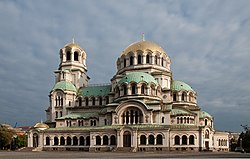
Belgrade, Serbia
Photo: Olovni, Wikimedia Commons (CC BY-SA 4.0)
← All destinations

Belgrade, Serbia

A fortress on the spur where the Sava runs into the Danube, the brutalist blocks of New Belgrade on the far bank, floating nightclubs and public transport that's free for everyone: Belgrade is not an elegant city and doesn't try to be — it's alive, rough-edged and surprisingly cheap.

✓ Sources verified by hand on 28 August 20266 sources cited

What to see

Monuments3

Kalemegdan Fortress and the Victor

The citadel on the spur where the Sava meets the Danube, destroyed and rebuilt by Romans, Ottomans and Austrians: walls, cannon, a huge park and the Victor statue looking out over the confluence. The park is free to enter and it's the place to be at sunset.

Church of Saint Sava

One of the largest Orthodox churches in the world, begun in 1935 and only finished in its mosaics in recent years: the gold-covered interior dome is the showpiece, and the crypt below is another fully decorated space. Free entry.

Knez Mihailova and Republic Square

The pedestrian avenue linking Republic Square to the fortress, lined with eclectic buildings, bookshops and historic cafés: it's the city's thermometer, where demonstrations, buskers and the evening stroll all cross paths.

Beaches1

Ada Ciganlija

The Sava island turned into a peninsula and a swimmable lake: Belgraders call it 'Belgrade's sea'. Gravel beaches, kiosks, beach volleyball courts and a cycle path around the lake — in summer half the city is here.

Museums2

Nikola Tesla Museum

The museum that holds the inventor's archive and his ashes, in a gilded urn. Visits are by guided tour only, about 45 minutes, including a live demonstration with the Tesla coil: 800 dinars in English, cash in dinars only, departures every hour.

Museum of Yugoslavia and the House of Flowers

The complex that gathers the memory of the vanished country and Tito's tomb, among Youth Day relay batons and gifts received from half the world. Ticket 800 dinars (400 for students); closed Mondays, free entry on the first Thursday of the month.

Food3

Ćevapi, pljeskavica and the grill

The Serbian grill is a religion: ćevapi in portions of five or ten, a pljeskavica the size of the plate, all with warm lepinja bread, raw onion and kajmak. In neighbourhood joints you eat your fill for a few euros.

Burek and the bakery breakfast

The spiral of flaky pastry filled with meat, cheese or spinach, cut and sold by weight and washed down with drinking yoghurt: this is the national breakfast, bought in the round-the-clock pekare, and the cheapest meal in town.

Rakija and the kafanas

Rakija — plum (šljivovica), apricot, grape — is drunk before a meal, not after, and every family insists theirs is the best. In the historic kafanas it comes with meze, live music and conversations that never end.

Nightlife2

Skadarlija

The cobbled street of the late-19th-century bohemians, now lined with kafanas serving live music, ćevapi and rakija into the small hours. It's touristy and the prices show it, but on summer evenings the atmosphere is still the real thing.

Splavovi, the floating clubs

The raft-nightclubs moored on the Sava and the Danube are Belgrade's nocturnal institution, from turbofolk to techno. Enormous fun, but also where the most creative bills happen: ask for the price list and pay round by round.

✦ Hidden gems — off the standard guides

Zemun and the Gardoš Tower

Until 1918 this was an Austro-Hungarian town facing the Ottoman Empire: low houses, the fishermen's quarter on the Danube and the 1896 Gardoš Tower with the best view over the confluence. Half an hour away by bus, and it feels like another city.

New Belgrade and the brutalist blocks

On the far bank of the Sava, the socialist city built from scratch from the 1950s: blocks 21, 22 and 23, and the Genex Tower, one of the icons of Yugoslav brutalism. Walking through it is an urban-planning experience no tour will offer you.

Museum of Contemporary Art

Reopened in 2017 after fifteen years shut, in its 1965 modernist pavilion in Ušće park: the 20th-century Yugoslav collection is outstanding and almost no foreign visitors get there. Combine it with a walk to the confluence.

Bajrakli Mosque and the Dorćol quarter

The only surviving Ottoman mosque of the hundred-plus Belgrade once had, tucked down a side street in Dorćol: around it lies the liveliest quarter for independent coffee shops, neighbourhood bars and restaurants where Belgraders actually eat.

Mount Avala and its tower

Half an hour south of the city: a wooded hill with Meštrović's Monument to the Unknown Hero and the 205-metre television tower, rebuilt in 2010 after the bombing of 1999. From the viewing platform you can see the whole of Šumadija.

Sample itineraries

Three routes for different travel styles, built only from this dossier's verified places. Realistic pace: 2-3 stops a day.

First time

2 days

The landmark sights, at the right pace.

Day 1

  • Kalemegdan Fortress and the Victor

    The citadel on the spur where the Sava meets the Danube, destroyed and rebuilt by Romans, Ottomans and Austrians: walls, cannon, a huge park and the Victor statue looking out over the confluence. The park is free to enter and it's the place to be at sunset.

  • Church of Saint Sava

    One of the largest Orthodox churches in the world, begun in 1935 and only finished in its mosaics in recent years: the gold-covered interior dome is the showpiece, and the crypt below is another fully decorated space. Free entry.

  • Knez Mihailova and Republic Square

    The pedestrian avenue linking Republic Square to the fortress, lined with eclectic buildings, bookshops and historic cafés: it's the city's thermometer, where demonstrations, buskers and the evening stroll all cross paths.

Day 2

  • Nikola Tesla Museum

    The museum that holds the inventor's archive and his ashes, in a gilded urn. Visits are by guided tour only, about 45 minutes, including a live demonstration with the Tesla coil: 800 dinars in English, cash in dinars only, departures every hour.

  • Museum of Yugoslavia and the House of Flowers

    The complex that gathers the memory of the vanished country and Tito's tomb, among Youth Day relay batons and gifts received from half the world. Ticket 800 dinars (400 for students); closed Mondays, free entry on the first Thursday of the month.

  • Skadarlija

    The cobbled street of the late-19th-century bohemians, now lined with kafanas serving live music, ćevapi and rakija into the small hours. It's touristy and the prices show it, but on summer evenings the atmosphere is still the real thing.

Off the beaten path

2 days

Hidden gems away from the usual circuits.

Day 1

  • Zemun and the Gardoš Towerhidden gem

    Until 1918 this was an Austro-Hungarian town facing the Ottoman Empire: low houses, the fishermen's quarter on the Danube and the 1896 Gardoš Tower with the best view over the confluence. Half an hour away by bus, and it feels like another city.

  • New Belgrade and the brutalist blockshidden gem

    On the far bank of the Sava, the socialist city built from scratch from the 1950s: blocks 21, 22 and 23, and the Genex Tower, one of the icons of Yugoslav brutalism. Walking through it is an urban-planning experience no tour will offer you.

  • Museum of Contemporary Arthidden gem

    Reopened in 2017 after fifteen years shut, in its 1965 modernist pavilion in Ušće park: the 20th-century Yugoslav collection is outstanding and almost no foreign visitors get there. Combine it with a walk to the confluence.

Day 2

  • Bajrakli Mosque and the Dorćol quarterhidden gem

    The only surviving Ottoman mosque of the hundred-plus Belgrade once had, tucked down a side street in Dorćol: around it lies the liveliest quarter for independent coffee shops, neighbourhood bars and restaurants where Belgraders actually eat.

  • Mount Avala and its towerhidden gem

    Half an hour south of the city: a wooded hill with Meštrović's Monument to the Unknown Hero and the 205-metre television tower, rebuilt in 2010 after the bombing of 1999. From the viewing platform you can see the whole of Šumadija.

Food & markets

2 days

Eat and drink where locals actually go.

Day 1

  • Ćevapi, pljeskavica and the grill

    The Serbian grill is a religion: ćevapi in portions of five or ten, a pljeskavica the size of the plate, all with warm lepinja bread, raw onion and kajmak. In neighbourhood joints you eat your fill for a few euros.

  • Burek and the bakery breakfast

    The spiral of flaky pastry filled with meat, cheese or spinach, cut and sold by weight and washed down with drinking yoghurt: this is the national breakfast, bought in the round-the-clock pekare, and the cheapest meal in town.

  • Rakija and the kafanas

    Rakija — plum (šljivovica), apricot, grape — is drunk before a meal, not after, and every family insists theirs is the best. In the historic kafanas it comes with meze, live music and conversations that never end.

Day 2

  • Skadarlija

    The cobbled street of the late-19th-century bohemians, now lined with kafanas serving live music, ćevapi and rakija into the small hours. It's touristy and the prices show it, but on summer evenings the atmosphere is still the real thing.

  • Splavovi, the floating clubs

    The raft-nightclubs moored on the Sava and the Danube are Belgrade's nocturnal institution, from turbofolk to techno. Enormous fun, but also where the most creative bills happen: ask for the price list and pay round by round.

🧭

Build your itinerary

Tell us how many days you're staying and in which month: we'll compose an itinerary from this dossier's verified places, with notes about the period.

Your itinerary

1

Day 1

  • Kalemegdan Fortress and the Victor

    The citadel on the spur where the Sava meets the Danube, destroyed and rebuilt by Romans, Ottomans and Austrians: walls, cannon, a huge park and the Victor statue looking out over the confluence. The park is free to enter and it's the place to be at sunset.

  • Church of Saint Sava

    One of the largest Orthodox churches in the world, begun in 1935 and only finished in its mosaics in recent years: the gold-covered interior dome is the showpiece, and the crypt below is another fully decorated space. Free entry.

  • Skadarlija

    The cobbled street of the late-19th-century bohemians, now lined with kafanas serving live music, ćevapi and rakija into the small hours. It's touristy and the prices show it, but on summer evenings the atmosphere is still the real thing.

2

Day 2

  • Knez Mihailova and Republic Square

    The pedestrian avenue linking Republic Square to the fortress, lined with eclectic buildings, bookshops and historic cafés: it's the city's thermometer, where demonstrations, buskers and the evening stroll all cross paths.

  • Nikola Tesla Museum

    The museum that holds the inventor's archive and his ashes, in a gilded urn. Visits are by guided tour only, about 45 minutes, including a live demonstration with the Tesla coil: 800 dinars in English, cash in dinars only, departures every hour.

  • Splavovi, the floating clubs

    The raft-nightclubs moored on the Sava and the Danube are Belgrade's nocturnal institution, from turbofolk to techno. Enormous fun, but also where the most creative bills happen: ask for the price list and pay round by round.

3

Day 3

  • Museum of Yugoslavia and the House of Flowers

    The complex that gathers the memory of the vanished country and Tito's tomb, among Youth Day relay batons and gifts received from half the world. Ticket 800 dinars (400 for students); closed Mondays, free entry on the first Thursday of the month.

  • Ada Ciganlija

    The Sava island turned into a peninsula and a swimmable lake: Belgraders call it 'Belgrade's sea'. Gravel beaches, kiosks, beach volleyball courts and a cycle path around the lake — in summer half the city is here.

  • Ćevapi, pljeskavica and the grill

    The Serbian grill is a religion: ćevapi in portions of five or ten, a pljeskavica the size of the plate, all with warm lepinja bread, raw onion and kajmak. In neighbourhood joints you eat your fill for a few euros.

Want an itinerary tailored to your dates in Belgrade?

Travel dates, where you stay and the kind of trip — we tailor this same verified dossier to your exact needs.

Coming soon
The Church of Saint Sava floodlit at night, beside the monument to Karađorđe.
The Church of Saint Sava floodlit at night, beside the monument to Karađorđe.Photo: Petar Milošević, Wikimedia Commons (CC BY-SA 4.0)

Before you go

Recurring scams and local rules worth knowing before you arrive.

⚠ Scams to know

Taxis that don't switch on the meter

verified

Arrivals at the airport or the bus station are approached by drivers offering an 'all-in' price well above the real fare: the city's tourist organisation is clear that passengers should pay only what the meter shows.

How to avoid it: At the airport collect the fixed-price voucher from the electronic kiosks before you go out, or call one of the registered companies; in the city insist on the meter and, if something doesn't add up, call the city complaints line.

Source

Inflated bills in bars, clubs and on the splavovi

medium confidence

In the more tourist-facing night venues the displayed price list may not match the final bill, bottles you never ordered can appear, or someone invites you to a 'trusted' place that then produces absurd figures. Some nightlife venues are also linked to criminal circles.

How to avoid it: Ask for the price list before ordering, pay round by round rather than opening a tab, and never follow someone who has just approached you in the street into an unknown venue. In any case, avoid raising your voice or squaring up to the staff.

Source

Pickpocketing in tourist areas and at transport hubs

verified

Pickpockets operate in tourist areas, at the airport, on public transport and at bus stations: criminals assume foreigners carry cash, and in Belgrade cash really is needed.

How to avoid it: Split your cash between two places, keep your phone out of your back pocket and pay attention at rush hour on the buses towards New Belgrade and Zemun.

Source

Paying in euros instead of dinars

medium confidence

A number of tourist venues take cash euros but at a very poor exchange rate, and some street changers work at worse rates than the licensed menjačnice and the banks.

How to avoid it: Withdraw dinars from bank ATMs, which are everywhere in the centre and in shopping centres, and change money only at licensed offices that display the rate.

Source

⚖ Laws & penalties

Registration with the police within 24 hours

medium riskverified

Anyone entering Serbia must register their stay with the local police within 24 hours of arrival. Hotels do this automatically at check-in, but people staying in private homes or rented flats must do it themselves: without registration you risk a fine, arrest and a court appearance.

Source

You must carry your passport or ID card

medium riskverified

Identity documents must be carried on you: the police can ask for them and checks are not unusual in nightlife areas and around the stadiums on match days.

Source

Severe penalties for drugs, cannabis included

high riskverified

Possession and trafficking of narcotics, cannabis included, carry severe penalties, with no different treatment for foreign tourists.

Source

No photographing military or police installations

medium riskverified

Photographing military or police buildings can lead to arrest: in a city full of institutional buildings and ruins from the 1999 bombing, it's worth being careful about what you frame.

Source

Care with entry and exit rules via Kosovo

medium riskmedium confidence

Serbian car hire companies often forbid taking vehicles into Kosovo, and the Serbia-Kosovo border crossings follow particular rules: if your itinerary includes them, check the conditions before you set off rather than improvising at the border.

Source
Skadarlija at dawn: the cobbles of the bohemian street before the kafanas open.
Skadarlija at dawn: the cobbles of the bohemian street before the kafanas open.Photo: Zoran Životić, Wikimedia Commons (CC BY 3.0)

Recurring events

Hover over a month on the timeline for details.

Budget & timing

Average daily cost

Season low (November-March)40-70€
Season mid (April-May, October)55-90€
Season high (June-September)70-115€

Rough estimate (lodging + meals + local transport), not a precise verified source.

Best time by type of trip

Rivers and terraces May-June

The best season by far: perfect temperatures, terraces and splavovi reopening, Ada Ciganlija not yet crowded and very long days.

Nightlife and festivals July-August

When the city lives on the water between floating clubs and festivals, with the Beer Fest in late August — but with fierce heat and a muggy centre.

Museums and low prices November-March

Winter Belgrade costs very little, the kafanas are full and the museums empty: continental cold and short days in exchange for the most authentic version of the city.

Did you know... The Nikola Tesla Museum keeps the inventor's ashes in a gilded spherical urn, and every guided tour ends with a live Tesla coil demonstration: visitors hold neon tubes that light up by themselves.

Getting around

Car recommended: No — Belgrade has no metro but the centre walks well and public transport is free: a car is only useful for leaving the city, and central parking runs on SMS-paid zones that are awkward for a foreigner.

Since 1 January 2025 buses, trams, trolleybuses and the BG Voz train are free on all urban and suburban lines, with no ticket: you just get on. The exceptions are the 'E' minibus lines and the A1 airport express shuttle, paid on board. For taxis the meter applies, and at the airport you can collect a fixed-price zone voucher from the electronic kiosks in arrivals.

  • Don't look for the ticket machine: on city transport there is nothing left to pay or validate.
  • Keep cash in dinars: many museums, kafanas and markets don't take cards, and the Nikola Tesla Museum takes cash only.
  • The Museum of Yugoslavia is closed on Mondays and free on the first Thursday of the month: pair it with Topčider and a stop at Kalenić market.
  • Zemun and New Belgrade each deserve half a day: they're a few minutes away by bus and tell two completely different Belgrade stories.

Safety

Areas to avoid

  • There are no off-limits districts and the city is calm by day: watch for pickpockets in tourist areas, at the airport and at bus stations.
  • Around nightlife venues and stadiums on match days there can be violence linked to football firms and organised crime: avoid arguments and move away if the mood shifts.
  • Criminals assume foreigners carry cash: take out only what you need for the day.
  • On the splavovi and near the rivers, take care getting home at night: narrow gangways, poor light and cold water even in summer.
  • Single emergency number: 112.

Did you know... The House of Flowers, inside the Museum of Yugoslavia complex, is Tito's tomb: every 25 May, the date of his official birthday, people still gather with the youth relay batons that once crossed the whole country.

Sources

Every source below was opened and checked by hand — not just cited. Entries that didn't hold up were downgraded to "low confidence" or dropped, not presented as certain.

Related destinations

Other dossiers close by country, area or kind of trip.