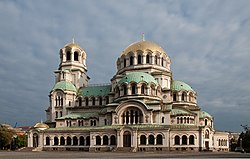
Tirana, Albania
Photo: Pudelek, Wikimedia Commons (CC BY-SA 4.0)
← All destinations

Tirana, Albania

Grey blocks repainted in colour by a mayor who was a painter, nuclear bunkers turned into museums, a district once off limits to ordinary citizens and now full of bars, and a cable car that lifts you to a thousand metres in a quarter of an hour: Tirana is the fastest-changing capital in Europe, and it still costs very little.

✓ Sources verified by hand on 28 August 20266 sources cited

What to see

Monuments3

Skanderbeg Square

The vast pedestrian square, repaved with stone from every corner of Albania and slightly domed like a low hill: around it stand the national museum, the city hall, the mosque and the clock tower. It's where any walk around the city starts.

The Pyramid of Tirana

Built in 1988 as Hoxha's mausoleum, then a nightclub, a NATO base and a graffiti-covered ruin: since 2023 it has been a youth centre with outdoor steps that anyone can climb to the top, free, for the view along the boulevard.

Et'hem Bey Mosque and the Clock Tower

The small early-19th-century mosque, with frescoes of trees and waterfalls that are very rare in Islamic art, a survivor of the state atheism imposed from 1967; next to it the 1822 clock tower, which you can climb for a close-up view over the square.

Nature2

Dajti Ekspres cable car

The longest cable car in the Balkans climbs in fifteen minutes from 300 to 1,050 metres on Mount Dajti, with Tirana opening up below and views as far as the sea. About 500 lek a ride according to the official site; closed on Tuesdays, running 9am to 6.30pm (7pm at weekends).

The Grand Park and the artificial lake

The large park south of the centre around the artificial lake: pines, running paths, kiosks and rowing boats. It's where Tirana takes refuge in the hot hours, and where you see how much the city has changed in twenty years.

Museums3

Bunk'Art 1

The nuclear bunker built for Enver Hoxha at the foot of Mount Dajti, five floors and over a hundred rooms dug into the hillside, now a museum on the dictatorship and on the Italian and German occupations. Open daily 9.30am-5.30pm; allow at least two hours and bring a jumper, it's cool inside.

Bunk'Art 2

The second bunker, right in the centre behind the interior ministry, tells the story of the Sigurimi secret police: smaller than the first and more focused on everyday repression. Open daily 9.30am-6.30pm, and takes barely an hour.

National History Museum

The national museum beneath the huge mosaic 'The Albanians' that dominates the square: from Illyria to the Romans, from the Ottomans to Skanderbeg and on to the room devoted to communist terror. The fastest way to line up two thousand years of Albanian history.

Food2

Byrek and neighbourhood bakeries

The filled pastry — cheese, spinach or meat — that Albanians eat for breakfast and mid-morning, sold by the slice for a few lek in bakeries on every street. With a salty yoghurt or a dhallë it's the cheapest lunch in the city.

Tavë kosi, fërgesë and qofte

Albanian home cooking: baked lamb with rice and yoghurt (tavë kosi), peppers and fresh curd cheese in a pan (fërgesë), spiced grilled meatballs. In the restaurants around Pazari i Ri a full meal costs a few euros.

Nightlife1

Blloku

Until 1991 this was the district reserved for the nomenklatura, closed to ordinary citizens and guarded: today it's the quarter of bars, restaurants and boutiques, and Hoxha's villa is still there, empty, among the nightlife.

Markets1

Pazari i Ri (New Bazaar)

The covered market restored in 2017 and the grid of colourful lanes around it: stalls of fruit, cheese, spices and mountain honey by day, restaurants and bars in the evening. The best place to eat well for very little.

✦ Hidden gems — off the standard guides

House of Leaves

The villa where the Sigurimi bugged and filed Albanians, now the national museum of secret surveillance: hidden microphones, cameras built into handbags and the files of those watched. Open daily 9am-7pm; the price isn't published online, you pay at the desk.

Postbllok memorial

Three objects on a street corner at the entrance to Blloku: an original bunker, pillars from the Spaç prison mine and a piece of the Berlin Wall. The smallest and most effective memorial in the city, and it costs nothing.

Krujë

An hour north: Skanderbeg's citadel perched on the mountain, the national museum devoted to the hero who held off the Ottomans, and the old bazaar of wooden workshops along the climb. A half-day trip by bus from the northern terminal.

Petrela Castle

An Illyrian-Byzantine fortress on a rocky spur some fifteen kilometres from the city, with a terrace restaurant looking over the Erzen valley. It's mostly Tirana families who go on Sundays, and it's half an hour away by taxi.

Raki, coffee and kafene culture

Albania has one of the highest densities of cafés in the world, and in Tirana the ritual lasts hours: a macchiato at a pavement table, plum or grape raki offered after a meal, and conversation as the main activity. Accept when it's offered in someone's home: refusing is a small discourtesy.

Sample itineraries

Three routes for different travel styles, built only from this dossier's verified places. Realistic pace: 2-3 stops a day.

First time

2 days

The landmark sights, at the right pace.

Day 1

  • Skanderbeg Square

    The vast pedestrian square, repaved with stone from every corner of Albania and slightly domed like a low hill: around it stand the national museum, the city hall, the mosque and the clock tower. It's where any walk around the city starts.

  • The Pyramid of Tirana

    Built in 1988 as Hoxha's mausoleum, then a nightclub, a NATO base and a graffiti-covered ruin: since 2023 it has been a youth centre with outdoor steps that anyone can climb to the top, free, for the view along the boulevard.

  • Et'hem Bey Mosque and the Clock Tower

    The small early-19th-century mosque, with frescoes of trees and waterfalls that are very rare in Islamic art, a survivor of the state atheism imposed from 1967; next to it the 1822 clock tower, which you can climb for a close-up view over the square.

Day 2

  • Bunk'Art 1

    The nuclear bunker built for Enver Hoxha at the foot of Mount Dajti, five floors and over a hundred rooms dug into the hillside, now a museum on the dictatorship and on the Italian and German occupations. Open daily 9.30am-5.30pm; allow at least two hours and bring a jumper, it's cool inside.

  • Bunk'Art 2

    The second bunker, right in the centre behind the interior ministry, tells the story of the Sigurimi secret police: smaller than the first and more focused on everyday repression. Open daily 9.30am-6.30pm, and takes barely an hour.

  • National History Museum

    The national museum beneath the huge mosaic 'The Albanians' that dominates the square: from Illyria to the Romans, from the Ottomans to Skanderbeg and on to the room devoted to communist terror. The fastest way to line up two thousand years of Albanian history.

Off the beaten path

2 days

Hidden gems away from the usual circuits.

Day 1

  • House of Leaveshidden gem

    The villa where the Sigurimi bugged and filed Albanians, now the national museum of secret surveillance: hidden microphones, cameras built into handbags and the files of those watched. Open daily 9am-7pm; the price isn't published online, you pay at the desk.

  • Postbllok memorialhidden gem

    Three objects on a street corner at the entrance to Blloku: an original bunker, pillars from the Spaç prison mine and a piece of the Berlin Wall. The smallest and most effective memorial in the city, and it costs nothing.

  • Krujëhidden gem

    An hour north: Skanderbeg's citadel perched on the mountain, the national museum devoted to the hero who held off the Ottomans, and the old bazaar of wooden workshops along the climb. A half-day trip by bus from the northern terminal.

Day 2

  • Petrela Castlehidden gem

    An Illyrian-Byzantine fortress on a rocky spur some fifteen kilometres from the city, with a terrace restaurant looking over the Erzen valley. It's mostly Tirana families who go on Sundays, and it's half an hour away by taxi.

  • Raki, coffee and kafene culturehidden gem

    Albania has one of the highest densities of cafés in the world, and in Tirana the ritual lasts hours: a macchiato at a pavement table, plum or grape raki offered after a meal, and conversation as the main activity. Accept when it's offered in someone's home: refusing is a small discourtesy.

Food & markets

2 days

Eat and drink where locals actually go.

Day 1

  • Byrek and neighbourhood bakeries

    The filled pastry — cheese, spinach or meat — that Albanians eat for breakfast and mid-morning, sold by the slice for a few lek in bakeries on every street. With a salty yoghurt or a dhallë it's the cheapest lunch in the city.

  • Tavë kosi, fërgesë and qofte

    Albanian home cooking: baked lamb with rice and yoghurt (tavë kosi), peppers and fresh curd cheese in a pan (fërgesë), spiced grilled meatballs. In the restaurants around Pazari i Ri a full meal costs a few euros.

  • Raki, coffee and kafene culturehidden gem

    Albania has one of the highest densities of cafés in the world, and in Tirana the ritual lasts hours: a macchiato at a pavement table, plum or grape raki offered after a meal, and conversation as the main activity. Accept when it's offered in someone's home: refusing is a small discourtesy.

Day 2

  • Pazari i Ri (New Bazaar)

    The covered market restored in 2017 and the grid of colourful lanes around it: stalls of fruit, cheese, spices and mountain honey by day, restaurants and bars in the evening. The best place to eat well for very little.

  • Blloku

    Until 1991 this was the district reserved for the nomenklatura, closed to ordinary citizens and guarded: today it's the quarter of bars, restaurants and boutiques, and Hoxha's villa is still there, empty, among the nightlife.

🧭

Build your itinerary

Tell us how many days you're staying and in which month: we'll compose an itinerary from this dossier's verified places, with notes about the period.

Your itinerary

1

Day 1

  • Skanderbeg Square

    The vast pedestrian square, repaved with stone from every corner of Albania and slightly domed like a low hill: around it stand the national museum, the city hall, the mosque and the clock tower. It's where any walk around the city starts.

  • The Pyramid of Tirana

    Built in 1988 as Hoxha's mausoleum, then a nightclub, a NATO base and a graffiti-covered ruin: since 2023 it has been a youth centre with outdoor steps that anyone can climb to the top, free, for the view along the boulevard.

  • Pazari i Ri (New Bazaar)

    The covered market restored in 2017 and the grid of colourful lanes around it: stalls of fruit, cheese, spices and mountain honey by day, restaurants and bars in the evening. The best place to eat well for very little.

2

Day 2

  • Et'hem Bey Mosque and the Clock Tower

    The small early-19th-century mosque, with frescoes of trees and waterfalls that are very rare in Islamic art, a survivor of the state atheism imposed from 1967; next to it the 1822 clock tower, which you can climb for a close-up view over the square.

  • Bunk'Art 1

    The nuclear bunker built for Enver Hoxha at the foot of Mount Dajti, five floors and over a hundred rooms dug into the hillside, now a museum on the dictatorship and on the Italian and German occupations. Open daily 9.30am-5.30pm; allow at least two hours and bring a jumper, it's cool inside.

  • Blloku

    Until 1991 this was the district reserved for the nomenklatura, closed to ordinary citizens and guarded: today it's the quarter of bars, restaurants and boutiques, and Hoxha's villa is still there, empty, among the nightlife.

3

Day 3

  • Bunk'Art 2

    The second bunker, right in the centre behind the interior ministry, tells the story of the Sigurimi secret police: smaller than the first and more focused on everyday repression. Open daily 9.30am-6.30pm, and takes barely an hour.

  • National History Museum

    The national museum beneath the huge mosaic 'The Albanians' that dominates the square: from Illyria to the Romans, from the Ottomans to Skanderbeg and on to the room devoted to communist terror. The fastest way to line up two thousand years of Albanian history.

  • Byrek and neighbourhood bakeries

    The filled pastry — cheese, spinach or meat — that Albanians eat for breakfast and mid-morning, sold by the slice for a few lek in bakeries on every street. With a salty yoghurt or a dhallë it's the cheapest lunch in the city.

Want an itinerary tailored to your dates in Tirana?

Travel dates, where you stay and the kind of trip — we tailor this same verified dossier to your exact needs.

Coming soon
The Pyramid of Tirana after its 2023 rescue: from Hoxha's mausoleum to a youth centre with steps open to everyone.
The Pyramid of Tirana after its 2023 rescue: from Hoxha's mausoleum to a youth centre with steps open to everyone.Photo: BBB2021, Wikimedia Commons (CC BY-SA 4.0)

Before you go

Recurring scams and local rules worth knowing before you arrive.

⚠ Scams to know

Meterless taxis from the airport and in the centre

medium confidence

Those waiting for tourists at the arrivals exit quote flat fares far above the going rate, and in the centre the meter can happen to 'not work' precisely when a foreigner gets in.

How to avoid it: From the airport take the official bus (400 lek, hourly, around the clock, stopping behind the Opera House) or order the ride from an app; in the city insist on the meter or agree the price before getting in.

Source

Pickpocketing in tourist areas and on transport

verified

Petty theft is the crime that most often affects visitors: it happens in the crowded parts of the centre, on urban buses and at the airport, while crime against foreigners is otherwise rare.

How to avoid it: Keep documents separate from cash and don't leave your phone and wallet on café tables: in the open-air venues of Blloku that's the commonest mistake.

Source

Crossing the road as you would at home

verified

Driving in Albania is described as very hazardous, aggressive and erratic, with one of the highest road-death rates in Europe: zebra crossings don't guarantee priority and scooters run red lights.

How to avoid it: Cross where Albanians cross, looking both ways even on one-way streets, and think twice before hiring a car to get around the city: in Tirana you don't need one.

Source

Running out of cash

medium confidence

Many museums, city buses, markets and small restaurants take only cash lek, and several ATMs charge high fixed fees on foreign-card withdrawals.

How to avoid it: Withdraw larger amounts in one go from the main banks' ATMs, keep small notes for the bus fare (40 lek, paid to the conductor) and don't count on paying for everything in euros.

Source

⚖ Laws & penalties

Very severe penalties for drugs

high riskverified

Possession of narcotics carries sentences of between 5 and 10 years, and dealing up to 15; the airports have advanced detection technology. There is no leniency for tourists, nor for small quantities.

Source

Lighting fires is banned from April to October

medium riskverified

In the fire season, April to October, lighting fires outdoors is illegal and penalties range from fines to imprisonment: this includes improvised barbecues on Dajti and in the hill parks.

Source

You must stay at the scene of a road accident

medium riskverified

If you are involved in an accident you must stop and remain at the scene until the police arrive; leaving is a criminal offence. Also avoid reacting to provocative driving, which is common in the city.

Source

Same-sex relationships are legal and legally protected

low riskverified

Same-sex relationships are legal and Albanian law includes anti-discrimination protections, but society remains conservative outside the venues of Blloku: public displays of affection can draw unwanted attention.

Source
Et'hem Bey Mosque and the 1822 Clock Tower, survivors of state atheism.
Et'hem Bey Mosque and the 1822 Clock Tower, survivors of state atheism.Photo: Brams, Wikimedia Commons (Public domain)

Recurring events

Hover over a month on the timeline for details.

Budget & timing

Average daily cost

Season low (November-March)35-60€
Season mid (April-May, October)45-75€
Season high (June-September)55-95€

Rough estimate (lodging + meals + local transport), not a precise verified source.

Best time by type of trip

City and Mount Dajti April-June

Perfect temperatures for walking the city and going up the mountain, green hills and long days before the heat and the summer exodus.

Museums and day trips September-October

The city fills up again after August, the heat breaks and Krujë or Petrela are seen in the best light of the year.

Lowest prices November-March

Rooms and flights at their cheapest and empty museums, with Dita e Verës on 14 March as a surprise festival — but it rains a lot and the days are short.

Did you know... Blloku was the district reserved for party leaders, sealed off by checkpoints and forbidden to ordinary Albanians until 1991: today it's the bar and nightlife quarter, and Hoxha's villa still stands there in the middle of it, empty.

Getting around

Car recommended: No — Central Tirana can be walked end to end in half an hour, the traffic is chaotic and parking is scarce: a car is only worth it for exploring the rest of Albania, not the city. Driving here is one of the more stressful experiences in the Balkans.

There is no metro: there are more than twenty urban bus lines, with a 40 lek fare paid in cash to the conductor on board, running roughly from 6am to 11pm every few minutes. From Rinas airport the official bus costs 400 lek, leaves every hour around the clock and takes 30-40 minutes, terminating behind the Opera House. Ride-hailing apps work well and cost little.

  • Always carry small notes: buses are cash-only and so are many museums.
  • The Dajti cable car is closed on Tuesdays: if you're short on days, plan it for another one and check the forecast — with low cloud you see nothing.
  • Bunk'Art 1 is out of town at the foot of Dajti, Bunk'Art 2 is central: if you only have time for one, the first is far more striking.
  • Walk watching your feet: uneven pavements, open manholes and scooters going the wrong way are normal here.

Safety

Areas to avoid

  • No district is off limits to visitors and crime against foreigners is rare: the main risk in Tirana is the traffic, not crime.
  • At night the outskirts are poorly lit and the pavements broken: for a late return, an app-booked taxi is the sensible option.
  • Albania is seismically active: tremors are frequent and in 2019 an earthquake hit Durrës and the Tirana area hard. Note where the exits are in your accommodation.
  • Drink bottled water and in summer avoid the middle of the day: in July and August the city regularly passes 35 degrees.
  • Single emergency number: 112.

Did you know... The Pyramid of Tirana, built in 1988 as Hoxha's mausoleum and then abandoned, reopened in 2023 with steps up its flanks that anyone can climb: from monument to a dictator to urban slide for teenagers.

Sources

Every source below was opened and checked by hand — not just cited. Entries that didn't hold up were downgraded to "low confidence" or dropped, not presented as certain.

Related destinations

Other dossiers close by country, area or kind of trip.