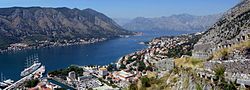
Split, Croatia
Photo: dronepicr, Wikimedia Commons (CC BY 2.0)
← All destinations

Split, Croatia

Croatia's second city grew up inside a Roman palace: Diocletian's Palace isn't a museum but a living quarter, with homes, bars and laundry hung between two-thousand-year-old columns. Between the seafront Riva, Marjan hill and the ferries to the islands, it's the Dalmatia that blends history and dolce vita.

✓ Sources verified by hand on 2026-06-294 sources cited

What to see

Diocletian's Palace

Not a closed site but a lived-in quarter within the Roman walls, among cellars, courtyards and homes: the living, UNESCO heart of the city.

Peristyle

The colonnaded square at the centre of the palace, with the cathedral bell tower and the Egyptian sphinxes: Split's monumental drawing room.

Cathedral of St Domnius and bell tower

Diocletian's former mausoleum turned cathedral, with the Romanesque bell tower to climb for a view over the rooftops and the sea.

✦ Hidden gems — off the standard guides

Varoš district

The old fishing hamlet of stone houses climbing towards Marjan: quiet alleys away from the palace crowds.

Klis Fortress

A spectacular fortress on a rocky spur above the city (a Game of Thrones set), with a 360° view over the coast: a classic day trip.

Bačvice Beach

The sandy urban beach where people play picigin, the ball game in the shallows typical of Split: local seaside life.

Rakija and Dalmatian wines

The fruit brandy (rakija) and Dalmatia's full-bodied reds like Plavac Mali: to taste in a traditional konoba.

Want an itinerary tailored to your dates in Split?

Travel dates, where you stay and the kind of trip — we tailor this same verified dossier to your exact needs.

Coming soon
The Peristyle of Diocletian's Palace: the colonnaded square at the centre of the imperial residence, today an open-air drawing room between the bell tower and the Egyptian sphinxes.
The Peristyle of Diocletian's Palace: the colonnaded square at the centre of the imperial residence, today an open-air drawing room between the bell tower and the Egyptian sphinxes.Photo: TimeTravelRome, Wikimedia Commons (CC BY 2.0)

Before you go

Recurring scams and local rules worth knowing before you arrive.

⚠ Scams to know

Tourist restaurants inside and around the palace

low confidence

In the most trodden areas some venues rely on passing trade with uneven quality, small portions and inflated bills.

How to avoid it: Move away from the palace's main streets towards Varoš or the quieter konobas, and check menus and prices (including fish, often by weight).

Source

Taxis and transfers with inflated fares

low confidence

From the harbour, the airport and in tourist areas some drivers apply arbitrary fares.

How to avoid it: Use apps like Bolt or agree the price before getting in; for the airport consider the shuttle.

Source

Pickpocketing in the summer crowds

low confidence

In high season, between the crowded palace and Riva, pickpocketing can happen.

How to avoid it: Keep your belongings safe in the narrower, busier streets of the palace.

Source

⚖ Laws & penalties

Fines for beachwear in the centre

medium riskmedium confidence

Split has introduced municipal ordinances penalizing walking around the old town in swimwear, a bikini or bare-chested, with fines up to around €150: put a shirt on once away from the beach.

Source

Drinking alcohol in the street restricted

low risklow confidence

Drinking alcohol in some public areas of the centre is subject to municipal limits and bans, with possible fines.

Source

Bus ticket to be validated

low riskverified

The Promet ticket must be validated on boarding; it's cheaper to buy it in the app or at kiosks as it costs more on board.

Source
Split seen from Marjan hill: the old town, the harbour and the Dalmatian islands on the horizon, from the lookouts of the 'city's lungs'.
Split seen from Marjan hill: the old town, the harbour and the Dalmatian islands on the horizon, from the lookouts of the 'city's lungs'.Photo: Soska, Wikimedia Commons (CC BY-SA 3.0)

Recurring events

Hover over a month on the timeline for details.

Budget & timing

Average daily cost

Season low (November-March)60-100€
Season mid (April-June, September-October)100-150€
Season high (July-August (and Ultra Europe))150-230€

Rough estimate (lodging + meals + local transport), not a precise verified source.

Best time by type of trip

Spring and early autumn May-June, September

Ideal weather, the sea still enjoyable and the palace livable without the July-August crush and prices.

Dalmatian summer July-August

Islands, beaches and festivals at their peak, but an extremely crowded city and pricey accommodation, especially during Ultra Europe.

Mild low season October, April

Pleasant temperatures, lower prices and a more authentic city, with a few fewer ferries to the islands.

Did you know... The wooded hill of Marjan, overlooking the sea, is called 'the city's lungs': trails, lookouts and coves a few minutes from the centre.

Getting around

Car recommended: No — The palace and centre are a pedestrian maze: a car is useless and parking near the harbour is pricey and difficult. Everything is done on foot; for the outskirts and surroundings the Promet buses are enough.

The Promet urban bus network: a single city trip costs about €2 (€1 buying in the app, €3 on board from the driver). The centre and palace are walked; buses are for Marjan, the beaches and the suburbs. Ferries to the islands leave from the harbour.

  • Buy the bus ticket in the app (€1): on board from the driver it costs triple
  • The palace and centre are lived on foot: wear comfortable shoes for the cobbles
  • For Klis take bus 22; for the islands book the ferries in advance in high season
  • At dawn or sunset the Peristyle and the Riva are much quieter than at midday

Safety

  • Split is a safe city: the main risks are inflated bills in tourist venues and petty pickpocketing in high season
  • Remember not to walk around the old town in swimwear: it's penalizable
  • For fish at a restaurant always ask the price per kilo: it's charged by weight

Did you know... Split is the gateway to the Dalmatian islands: ferries leave the harbour for Hvar, Brač, Vis and Korčula.

Sources

Every source below was opened and checked by hand — not just cited. Entries that didn't hold up were downgraded to "low confidence" or dropped, not presented as certain.