Every VoyAVer dossier flags its 'hidden gems': real, verified places that stay off the main flows not because they're worth little, but because nobody puts them on the cover. This is an Italian selection, north to south.
North: secret canals, 19th-century arcades and clifftop villages
In Bologna the Finestrella on Via Piella opens onto a hidden canal and reveals the city's 'little Venice': few know it exists, and those who find it usually stumble on it by chance. Still in the center, the Archiginnasio houses the carved-wood Anatomical Theatre, a little-visited jewel steps from Piazza Maggiore.
In Turin the Galleria Subalpina (iron, glass and marble between Piazza Castello and Piazza Carlo Alberto) is a 19th-century salon with historic cafés that tourist flows brush past without entering. In Verona, ten minutes from the Arena, the Giusti Garden is a Renaissance garden with a belvedere over the city, quiet even at the height of summer.
In the Cinque Terre, Corniglia is the only village perched on the hillside rather than on the sea: the roughly 380 steps of the Lardarina put off most visitors, which is exactly why they're worth climbing.
South: underground cities, carved coasts and quarters still lived in
In Naples, forty meters below the alleys, Napoli Sotterranea runs through Greco-Roman cisterns and wartime shelters: a parallel city beneath the visible one. Above ground, San Gregorio Armeno, the street of nativity-scene artisans, works all year round, not just in December.
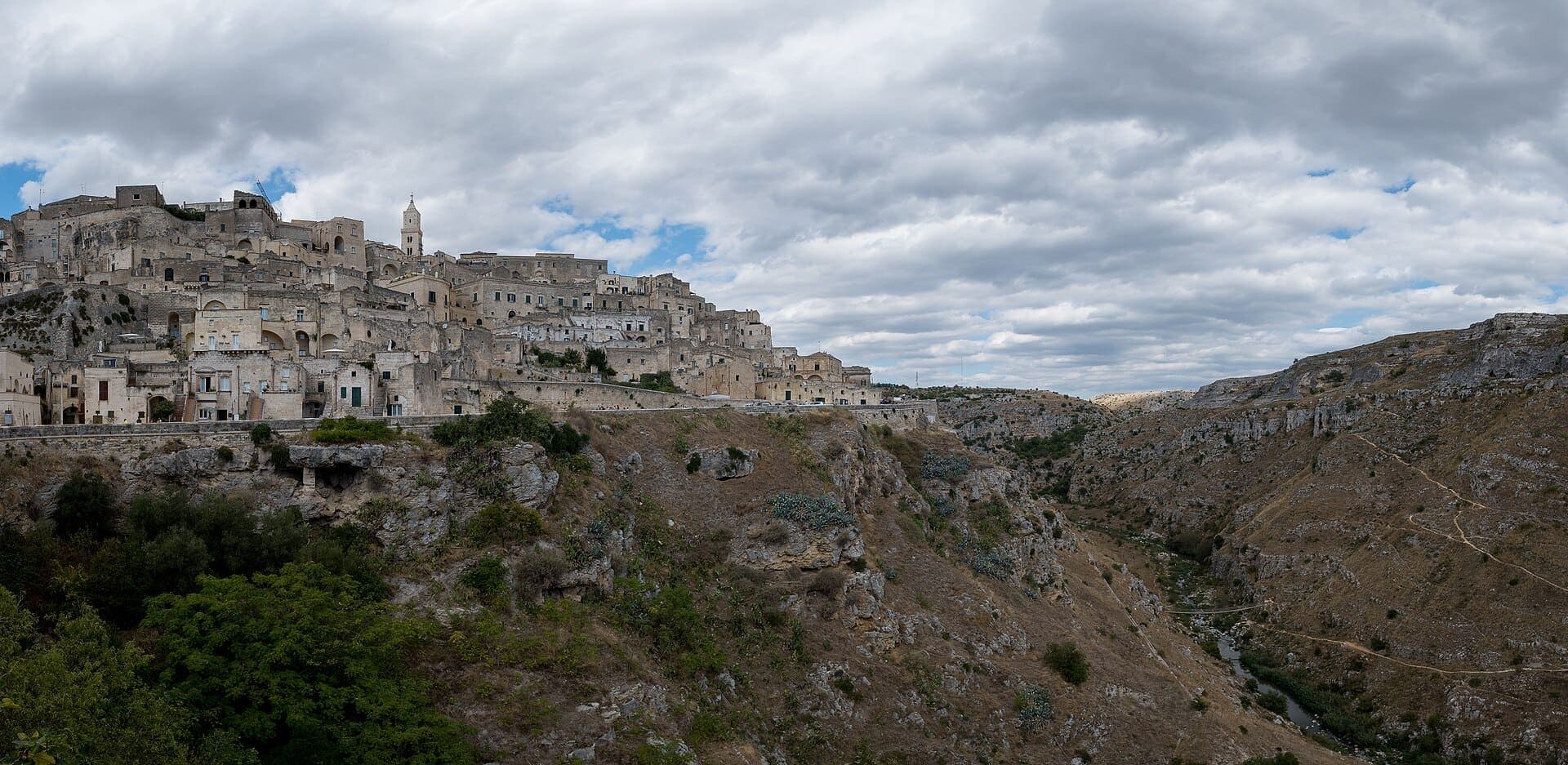
In Matera the rock churches like Madonna de Idris and Santa Lucia alle Malve, carved into the stone between the 9th and 13th centuries, preserve Byzantine frescoes and are often visited in solitude. Across the ravine, the Murgia Timone viewpoint offers the sweeping view of the Sassi that no spot in the center can match.
In Lecce the historic papier-mâché workshops still model saints and nativity figures out of paper, straw and glue, as the centuries-old tradition dictates. And in Polignano a Mare the cliffs everyone photographs from above hide sea caves reachable only by boat or by swimming: the opposite point of view, and the better one.
Still in Puglia, two gems that sit right beside what everyone goes to see. In Alberobello the district worth walking is the one nobody crosses: the Aia Piccola, five hundred and ninety trulli five minutes on foot from the Rione Monti, where there are no shops because the quarter is still lived in, with vegetable plots, washing on the line and residents' cars parked in front of the cones. And in Ostuni, outside the white labyrinth, the Masseria Brancati keeps around eight hundred olive trees listed as a national monument and an underground mill cut into the rock: the guided visit lasts seventy minutes, needs booking at least a day ahead, and does not run on Sundays.
In the dossiers, hidden gems are marked with a dedicated badge inside the sights section: if a destination interests you, it's the first thing to check to get off the standard route.