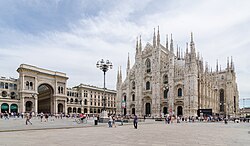
Turin, Italy
Photo: Abbrey82, Wikimedia Commons (CC BY-SA 4.0)
← All destinations

Turin, Italy

Elegant and underrated, Italy's first capital, Turin lines up kilometres of arcades, baroque squares and historic cafés under the gaze of the Alps. A city of chocolate, cinema and the aperitivo, regal but relaxed, perfect to discover on foot at a leisurely pace.

✓ Sources checked on 16 September 202610 sources cited

What to see in Turin?

13 places checked against the sources. The 5 gems the guidebooks skip come first, then the classics: every card has the hard facts on top and the why below.

On the map: yellow pins are the gems. Tap a pin to jump to its card.

✦ Hidden gems · off the standard guides

Galleria Subalpina
Monuments✦ gem

Galleria Subalpina

A covered arcade of 1874 in iron, glass and stucco, between piazza Castello and piazza Carlo Alberto: free to walk through and thirty seconds long, which is why almost everyone misses it while passing right by. Inside are a historic café, an antiquarian bookshop and an arthouse cinema. It is the right place when it rains and you are in the centre without a plan; the best light for photographs is mid-morning, when it comes through the roof.

Photo: Isiwal, Wikimedia Commons (CC BY-SA 4.0)
Basilica of Superga
Monuments✦ gem

Basilica of Superga

Ticket
€6

You climb to the basilica on the rack tramway from Sassi, running since 1884: a return ticket costs €6 on weekdays and €9 on Sundays and holidays, dropping to €4 with the Abbonamento Musei. Mind the day: on Wednesdays the tramway does not run. Departures are hourly, from 10am on weekdays and 9am on Sundays. At the top are Juvarra's basilica, the Savoy tombs and the memorial to the Grande Torino football team, which crashed here in 1949.

Photo: Paris Orlando, Wikimedia Commons (CC BY-SA 4.0)
Quadrilatero Romano
Nightlife✦ gem

Quadrilatero Romano

The grid of streets of the Roman camp, still readable in the chequerboard plan: by day a district of small shops, by evening the aperitivo zone, with tables filling the narrow streets. Prices rise with the hour: before 7pm you pay for the glass, after that you pay for the seat. It is a short walk from Porta Palazzo, the largest open-air market in Europe, which in the morning is another city entirely.

Photo: Pmk58, Wikimedia Commons (CC BY-SA 4.0)
Murazzi del Po
Other✦ gem

Murazzi del Po

The embankments below the centre, on the Po: you go down the ramps beside piazza Vittorio and walk at water level, free and at any hour. For decades they were the heart of Turin nightlife, then closed for years and recovered in stages, so which arches are open changes from one year to the next. By day it is a riverside walk among the rowing clubs; at night, judge it as you would judge any riverbank.

Photo: Jorge Franganillo, Wikimedia Commons (CC BY 2.0)
Food✦ gem

Vitello tonnato and agnolotti

Traditional vitello tonnato has no mayonnaise: the sauce is tuna, anchovies, capers and hard-boiled egg beaten with oil, and it comes out much paler and less sweet than the version found across northern Italy. Agnolotti del plin take their name from the pinch that seals them, are tiny, and are also served without sauce, 'al tovagliolo', so the filling comes through. In the old trattorias they are made by hand and the irregular shape shows it.

The classics

Mole Antonelliana and Cinema Museum
Monuments

Mole Antonelliana and Cinema Museum

Ticket
€18
Hours
09:00-19:00
Closed
Tuesday

They are two separate tickets and it is worth knowing the figures first: the cinema museum costs 18 €, the panoramic lift up to the little temple at 85 metres costs 9, and the combined ticket 23, so anyone doing both saves four euro. Between 6 and 26 the rates drop to 16, 7 and 20 €, and under-5s enter free. It opens every day 09:00-19:00 except Tuesday. The lift is glass and crosses the void of the dome: anyone who dislikes heights will feel it, and the alternative is the stairway inside the dome's cavity. Check before going up, because it is stopped periodically for mandatory inspections that last weeks. Built in 1863 as a synagogue, it was never used as one.

Photo: Abbrey82, Wikimedia Commons (CC BY-SA 4.0)
Piazza San Carlo and the arcades
Monuments

Piazza San Carlo and the arcades

The square and the historic cafés under the arcades are crossed for free, and the arcades are the point: Turin has around 18 km of them, a good part linked to one another, built so the court could move about without getting wet. From piazza Castello you reach the Po almost entirely under cover. The two twin churches that close the square are not identical: looking at the facades you see the differences, and it is a game the Turinese set for outsiders.

Photo: Livioandronico2013, Wikimedia Commons (CC BY-SA 3.0)
Royal Palace and Cathedral (Chapel of the Shroud)
Monuments

Royal Palace and Cathedral (Chapel of the Shroud)

One misunderstanding to clear up: the Holy Shroud cannot be seen. It is kept in the cathedral inside a conservation case which is itself locked in a metal container, and the public expositions follow no calendar: the Pope decides them, and the last was in 2015. In the chapel you can stand before the glass doors, and along the left aisle screens explain the cloth. The Royal Palace and Guarini's chapel, by contrast, are visited on the Musei Reali ticket.

Photo: Mario Gabinio, Wikimedia Commons (CC BY 3.0 it)
Parco del Valentino and Borgo Medievale
Nature

Parco del Valentino and Borgo Medievale

The park is free and always open, and it is where Turin runs and sits in the sun by the river. The Borgo Medievale is not medieval: it is a reconstruction built for the 1884 Exhibition, copying castles and houses that actually exist in Piedmont and the Aosta Valley. Walking its streets costs nothing; only the Rocca, the part with furnished interiors, is ticketed. Beside it is the university's botanical garden, open only in season.

Photo: Ingcrafter, Wikimedia Commons (CC BY-SA 4.0)
Egyptian Museum
Museums

Egyptian Museum

Ticket
about €18
Hours
09:00-14:00

The ticket is around 18 € and has to be bought online: without a booking you do not get in at the door, because nothing is sold at the desk. It is the largest Egyptian collection outside Egypt after Cairo, founded in 1824 and rehung for its bicentenary. The hours change by day and Monday is the trap: it opens only 09:00-14:00, while Tuesday to Friday and Sunday it runs 09:00-18:30 and on Saturday until 20:00. The rooms are many and the route chronological: you need at least 2 and a half hours to do it without rushing, so Monday afternoon is not an option. The statue of Ramesses II and the intact tomb of Kha and Merit are the two things the queue is for.

Photo: Georgius LXXXIX at Italian Wikipedia, Wikimedia Commons (Public domain)
Food

Bicerin

Three layers that must not be stirred: coffee at the bottom, hot chocolate in the middle, cream of milk on top, served in a glass with a handle. It is drunk without a spoon, letting the layers arrive one at a time: stirring is the outsider's mistake. It was born in the 18th century in a place on piazza della Consolata that still carries the name and still makes it the old way. It costs more than a coffee and less than a breakfast: it is a dessert, not a drink.

Food

Gianduiotto and chocolate

It came out of Napoleon's continental blockade: short of cocoa, Turin's chocolatiers stretched it with hazelnuts from the Langhe, and gianduia was the result. The gianduiotto was the first individually wrapped chocolate in the world. The upturned-boat shape is still made by extrusion, and the historic chocolate shops sell by weight: a hundred grams costs little and lets you compare makers, who disagree about the cocoa and the hazelnut percentage.

Food

Turin aperitivo and vermouth

The aperitivo was born here, and the date is precise: vermouth was invented in Turin in 1786 by Antonio Benedetto Carpano, who opened his shop under the arcades of piazza Castello. The ritual is a glass and a buffet, served between 6pm and 9pm in the bars of the Quadrilatero and San Salvario, and in many places ten to fifteen euros is dinner. Real vermouth is drunk neat and cold with a twist of peel: the old bars serve it that way without being asked.

How to plan your days in Turin?

Three routes for different travel styles, built only from this dossier's verified places. Realistic pace: 2-3 stops a day.

First time

2 days

The landmark sights, at the right pace.

Day 1

  • Mole Antonelliana and Cinema Museum

    They are two separate tickets and it is worth knowing the figures first: the cinema museum costs 18 €, the panoramic lift up to the little temple at 85 metres costs 9, and the combined ticket 23, so anyone doing both saves four euro. Between 6 and 26 the rates drop to 16, 7 and 20 €, and under-5s enter free. It opens every day 09:00-19:00 except Tuesday. The lift is glass and crosses the void of the dome: anyone who dislikes heights will feel it, and the alternative is the stairway inside the dome's cavity. Check before going up, because it is stopped periodically for mandatory inspections that last weeks. Built in 1863 as a synagogue, it was never used as one.

  • Piazza San Carlo and the arcades

    The square and the historic cafés under the arcades are crossed for free, and the arcades are the point: Turin has around 18 km of them, a good part linked to one another, built so the court could move about without getting wet. From piazza Castello you reach the Po almost entirely under cover. The two twin churches that close the square are not identical: looking at the facades you see the differences, and it is a game the Turinese set for outsiders.

  • Royal Palace and Cathedral (Chapel of the Shroud)

    One misunderstanding to clear up: the Holy Shroud cannot be seen. It is kept in the cathedral inside a conservation case which is itself locked in a metal container, and the public expositions follow no calendar: the Pope decides them, and the last was in 2015. In the chapel you can stand before the glass doors, and along the left aisle screens explain the cloth. The Royal Palace and Guarini's chapel, by contrast, are visited on the Musei Reali ticket.

Day 2

  • Egyptian Museum

    The ticket is around 18 € and has to be bought online: without a booking you do not get in at the door, because nothing is sold at the desk. It is the largest Egyptian collection outside Egypt after Cairo, founded in 1824 and rehung for its bicentenary. The hours change by day and Monday is the trap: it opens only 09:00-14:00, while Tuesday to Friday and Sunday it runs 09:00-18:30 and on Saturday until 20:00. The rooms are many and the route chronological: you need at least 2 and a half hours to do it without rushing, so Monday afternoon is not an option. The statue of Ramesses II and the intact tomb of Kha and Merit are the two things the queue is for.

  • Parco del Valentino and Borgo Medievale

    The park is free and always open, and it is where Turin runs and sits in the sun by the river. The Borgo Medievale is not medieval: it is a reconstruction built for the 1884 Exhibition, copying castles and houses that actually exist in Piedmont and the Aosta Valley. Walking its streets costs nothing; only the Rocca, the part with furnished interiors, is ticketed. Beside it is the university's botanical garden, open only in season.

  • Bicerin

    Three layers that must not be stirred: coffee at the bottom, hot chocolate in the middle, cream of milk on top, served in a glass with a handle. It is drunk without a spoon, letting the layers arrive one at a time: stirring is the outsider's mistake. It was born in the 18th century in a place on piazza della Consolata that still carries the name and still makes it the old way. It costs more than a coffee and less than a breakfast: it is a dessert, not a drink.

Off the beaten path

2 days

Hidden gems away from the usual circuits.

Day 1

  • Galleria Subalpina✦ hidden gem

    A covered arcade of 1874 in iron, glass and stucco, between piazza Castello and piazza Carlo Alberto: free to walk through and thirty seconds long, which is why almost everyone misses it while passing right by. Inside are a historic café, an antiquarian bookshop and an arthouse cinema. It is the right place when it rains and you are in the centre without a plan; the best light for photographs is mid-morning, when it comes through the roof.

  • Basilica of Superga✦ hidden gem

    You climb to the basilica on the rack tramway from Sassi, running since 1884: a return ticket costs €6 on weekdays and €9 on Sundays and holidays, dropping to €4 with the Abbonamento Musei. Mind the day: on Wednesdays the tramway does not run. Departures are hourly, from 10am on weekdays and 9am on Sundays. At the top are Juvarra's basilica, the Savoy tombs and the memorial to the Grande Torino football team, which crashed here in 1949.

  • Quadrilatero Romano✦ hidden gem

    The grid of streets of the Roman camp, still readable in the chequerboard plan: by day a district of small shops, by evening the aperitivo zone, with tables filling the narrow streets. Prices rise with the hour: before 7pm you pay for the glass, after that you pay for the seat. It is a short walk from Porta Palazzo, the largest open-air market in Europe, which in the morning is another city entirely.

Day 2

  • Murazzi del Po✦ hidden gem

    The embankments below the centre, on the Po: you go down the ramps beside piazza Vittorio and walk at water level, free and at any hour. For decades they were the heart of Turin nightlife, then closed for years and recovered in stages, so which arches are open changes from one year to the next. By day it is a riverside walk among the rowing clubs; at night, judge it as you would judge any riverbank.

  • Vitello tonnato and agnolotti✦ hidden gem

    Traditional vitello tonnato has no mayonnaise: the sauce is tuna, anchovies, capers and hard-boiled egg beaten with oil, and it comes out much paler and less sweet than the version found across northern Italy. Agnolotti del plin take their name from the pinch that seals them, are tiny, and are also served without sauce, 'al tovagliolo', so the filling comes through. In the old trattorias they are made by hand and the irregular shape shows it.

Food & markets

2 days

Eat and drink where locals actually go.

Day 1

  • Bicerin

    Three layers that must not be stirred: coffee at the bottom, hot chocolate in the middle, cream of milk on top, served in a glass with a handle. It is drunk without a spoon, letting the layers arrive one at a time: stirring is the outsider's mistake. It was born in the 18th century in a place on piazza della Consolata that still carries the name and still makes it the old way. It costs more than a coffee and less than a breakfast: it is a dessert, not a drink.

  • Gianduiotto and chocolate

    It came out of Napoleon's continental blockade: short of cocoa, Turin's chocolatiers stretched it with hazelnuts from the Langhe, and gianduia was the result. The gianduiotto was the first individually wrapped chocolate in the world. The upturned-boat shape is still made by extrusion, and the historic chocolate shops sell by weight: a hundred grams costs little and lets you compare makers, who disagree about the cocoa and the hazelnut percentage.

  • Turin aperitivo and vermouth

    The aperitivo was born here, and the date is precise: vermouth was invented in Turin in 1786 by Antonio Benedetto Carpano, who opened his shop under the arcades of piazza Castello. The ritual is a glass and a buffet, served between 6pm and 9pm in the bars of the Quadrilatero and San Salvario, and in many places ten to fifteen euros is dinner. Real vermouth is drunk neat and cold with a twist of peel: the old bars serve it that way without being asked.

Day 2

  • Vitello tonnato and agnolotti✦ hidden gem

    Traditional vitello tonnato has no mayonnaise: the sauce is tuna, anchovies, capers and hard-boiled egg beaten with oil, and it comes out much paler and less sweet than the version found across northern Italy. Agnolotti del plin take their name from the pinch that seals them, are tiny, and are also served without sauce, 'al tovagliolo', so the filling comes through. In the old trattorias they are made by hand and the irregular shape shows it.

  • Quadrilatero Romano✦ hidden gem

    The grid of streets of the Roman camp, still readable in the chequerboard plan: by day a district of small shops, by evening the aperitivo zone, with tables filling the narrow streets. Prices rise with the hour: before 7pm you pay for the glass, after that you pay for the seat. It is a short walk from Porta Palazzo, the largest open-air market in Europe, which in the morning is another city entirely.

🧭

Build your itinerary

Tell us how many days you're staying and in which month: we'll compose an itinerary from this dossier's verified places, with notes about the period.

Your itinerary

1

Day 1

  • Mole Antonelliana and Cinema Museum

    They are two separate tickets and it is worth knowing the figures first: the cinema museum costs 18 €, the panoramic lift up to the little temple at 85 metres costs 9, and the combined ticket 23, so anyone doing both saves four euro. Between 6 and 26 the rates drop to 16, 7 and 20 €, and under-5s enter free. It opens every day 09:00-19:00 except Tuesday. The lift is glass and crosses the void of the dome: anyone who dislikes heights will feel it, and the alternative is the stairway inside the dome's cavity. Check before going up, because it is stopped periodically for mandatory inspections that last weeks. Built in 1863 as a synagogue, it was never used as one.

  • Piazza San Carlo and the arcades

    The square and the historic cafés under the arcades are crossed for free, and the arcades are the point: Turin has around 18 km of them, a good part linked to one another, built so the court could move about without getting wet. From piazza Castello you reach the Po almost entirely under cover. The two twin churches that close the square are not identical: looking at the facades you see the differences, and it is a game the Turinese set for outsiders.

  • Bicerin

    Three layers that must not be stirred: coffee at the bottom, hot chocolate in the middle, cream of milk on top, served in a glass with a handle. It is drunk without a spoon, letting the layers arrive one at a time: stirring is the outsider's mistake. It was born in the 18th century in a place on piazza della Consolata that still carries the name and still makes it the old way. It costs more than a coffee and less than a breakfast: it is a dessert, not a drink.

2

Day 2

  • Royal Palace and Cathedral (Chapel of the Shroud)

    One misunderstanding to clear up: the Holy Shroud cannot be seen. It is kept in the cathedral inside a conservation case which is itself locked in a metal container, and the public expositions follow no calendar: the Pope decides them, and the last was in 2015. In the chapel you can stand before the glass doors, and along the left aisle screens explain the cloth. The Royal Palace and Guarini's chapel, by contrast, are visited on the Musei Reali ticket.

  • Egyptian Museum

    The ticket is around 18 € and has to be bought online: without a booking you do not get in at the door, because nothing is sold at the desk. It is the largest Egyptian collection outside Egypt after Cairo, founded in 1824 and rehung for its bicentenary. The hours change by day and Monday is the trap: it opens only 09:00-14:00, while Tuesday to Friday and Sunday it runs 09:00-18:30 and on Saturday until 20:00. The rooms are many and the route chronological: you need at least 2 and a half hours to do it without rushing, so Monday afternoon is not an option. The statue of Ramesses II and the intact tomb of Kha and Merit are the two things the queue is for.

  • Gianduiotto and chocolate

    It came out of Napoleon's continental blockade: short of cocoa, Turin's chocolatiers stretched it with hazelnuts from the Langhe, and gianduia was the result. The gianduiotto was the first individually wrapped chocolate in the world. The upturned-boat shape is still made by extrusion, and the historic chocolate shops sell by weight: a hundred grams costs little and lets you compare makers, who disagree about the cocoa and the hazelnut percentage.

3

Day 3

  • Parco del Valentino and Borgo Medievale

    The park is free and always open, and it is where Turin runs and sits in the sun by the river. The Borgo Medievale is not medieval: it is a reconstruction built for the 1884 Exhibition, copying castles and houses that actually exist in Piedmont and the Aosta Valley. Walking its streets costs nothing; only the Rocca, the part with furnished interiors, is ticketed. Beside it is the university's botanical garden, open only in season.

  • Galleria Subalpina✦ hidden gem

    A covered arcade of 1874 in iron, glass and stucco, between piazza Castello and piazza Carlo Alberto: free to walk through and thirty seconds long, which is why almost everyone misses it while passing right by. Inside are a historic café, an antiquarian bookshop and an arthouse cinema. It is the right place when it rains and you are in the centre without a plan; the best light for photographs is mid-morning, when it comes through the roof.

  • Turin aperitivo and vermouth

    The aperitivo was born here, and the date is precise: vermouth was invented in Turin in 1786 by Antonio Benedetto Carpano, who opened his shop under the arcades of piazza Castello. The ritual is a glass and a buffet, served between 6pm and 9pm in the bars of the Quadrilatero and San Salvario, and in many places ten to fifteen euros is dinner. Real vermouth is drunk neat and cold with a twist of peel: the old bars serve it that way without being asked.

Want an itinerary tailored to your dates in Turin?

Travel dates, where you stay and the kind of trip: we tailor this same verified dossier to your exact needs.

Coming soon
The Galleria Subalpina, a 19th-century jewel of iron, glass and marble between Piazza Castello and Piazza Carlo Alberto, with its historic cafés.
The Galleria Subalpina, a 19th-century jewel of iron, glass and marble between Piazza Castello and Piazza Carlo Alberto, with its historic cafés.Photo: Isiwal, Wikimedia Commons (CC BY-SA 4.0)

What to know before going to Turin?

Recurring scams and local rules worth knowing before you arrive.

⚠ Scams to know

Pickpocketing around stations and markets

low confidence

Turin is calm, but pickpocketing can happen at Porta Nuova, on crowded transport and at the Porta Palazzo market.

How to avoid it: Keep your belongings safe in crowds and watch out for clusters and distractions at the market.

Source

Taxis with unclear fares

low confidence

On tourist or nighttime routes some drivers apply not-always-transparent surcharges.

How to avoid it: Ask for the meter and an estimate before setting off, or use official apps and public transport.

Source

Fake petitions and bracelets

low confidence

In the more touristy squares there can be fake signature drives or objects 'given away' then charged for.

How to avoid it: Don't sign anything in the street and don't accept items placed in your hand by strangers.

Source

⚖ Laws & penalties

Limited-traffic zone (ZTL) in the centre with cameras

medium riskmedium confidence

The old town has a limited-traffic zone with electronic gates active in certain hours: unauthorized access detected by camera is penalized under the Highway Code (art. 7 c.14) with a fine of €83 to €332 (reducible to €58.10 if paid within 5 days), with no licence points.

Source

Cover charge at restaurants

low risklow confidence

The cover charge (a few euros per person) must be shown on the menu; check the bill, especially in the more central venues.

Source

Urban decorum in monumental areas

low risklow confidence

Municipal rules ban behaviour that damages or defaces monuments and street furniture, with possible penalties.

Source

City of Turin tourist tax

low riskverified

From 2026 the per person per night rates went up: €3 in 1- and 2-star hotels (was €2.30), €3.50 in 3-star (€2.80), €4.50 in 4-star (€3.70), €5 in 5-star (unchanged), €3.80 in B&Bs (€2.30). Paid for a maximum of 7 nights, now counted per year rather than per quarter. Exempt are people with severe disabilities with one companion and police forces on duty; the other exemptions are on the city's website.

Source
The Basilica of Superga on the hill, Juvarra's baroque masterpiece reached by the historic rack tramway: behind it, the arc of the Alps.
The Basilica of Superga on the hill, Juvarra's baroque masterpiece reached by the historic rack tramway: behind it, the arc of the Alps.Photo: Paris Orlando, Wikimedia Commons (CC BY-SA 4.0)

What happens in Turin through the year?

Hover over a month on the timeline for details.

How much do you spend in Turin, and when to go?

Jan
Feb
Mar
Apr
May
Jun
Jul
Aug
Sep
Oct
Nov
Dec
  • low70-110€per day
  • mid110-160€per day
  • high160-220€per day

When it works best, by type of trip

Spring and cityApril-June

Mild weather for the arcades and parks, with the Book Fair in May for those who love events.

Autumn and cultureSeptember-November

Pleasant temperatures, Artissima and the start of Luci d'Artista; a perfect season for museums and cafés.

Luminous winterDecember-January

Luci d'Artista and markets with the snowy Alps behind; cold but scenic.

Rough estimate (lodging + meals + local transport), not a precise verified source.

✦

Did you know... The centre has about 18 kilometres of arcades, among the most extensive in Europe: you cross the city sheltered from rain and sun.

How to get to Turin and around?

No car neededThe centre is regular, flat and full of arcades: it's easily walked. There's a limited-traffic zone and parking is pricey, so a car is of little use; the metro and trams cover the rest.

The GTT network with one automatic metro line, trams and buses. The urban 'City 100' ticket costs €1.90 via app/contactless card (€2.00 on paper), valid 100 minutes and including one metro ride. The historic Sassi-Superga rack tramway climbs the hill to the basilica.

  • The 18 km of arcades let you cross the centre under cover: handy in rain or strong sun
  • For Superga take the rack tramway from Sassi: an unusual panoramic trip
  • The automatic metro links Lingotto, Porta Nuova and the centre in minutes
  • For the aperitivo head to the Quadrilatero Romano and San Salvario, the liveliest districts in the evening

Is Turin safe?

⚠ Areas to avoid

  • Around Porta Nuova and Porta Palazzo in the evening hours

Good to know

  • Turin is a generally safe city: the main risk is petty pickpocketing in crowded areas
  • In the evening nightlife concentrates in San Salvario, the Quadrilatero and the Murazzi: lively areas to enjoy with normal care
  • Watch out for organized distractions at the Porta Palazzo market, one of the largest in Europe
Source
✦

Did you know... The gianduiotto chocolate and the culture of the aperitivo were born here, as well as the Egyptian Museum, second in the world only to Cairo's.

Frequently asked questions about Turin

Short answers drawn from the verified data of this dossier: details and sources are in the sections above.

How much does a day in Turin cost?

Season low (January-February, July-August): 70-110€ per day; Season mid (March-April, September-October): 110-160€ per day; Season high (May (Book Fair), November-December): 160-220€ per day.

When to go to Turin?

Spring and city: April-June. Mild weather for the arcades and parks, with the Book Fair in May for those who love events. Autumn and culture: September-November. Pleasant temperatures, Artissima and the start of Luci d'Artista; a perfect season for museums and cafés. Luminous winter: December-January. Luci d'Artista and markets with the snowy Alps behind; cold but scenic.

Is Turin safe?

Around Porta Nuova and Porta Palazzo in the evening hours Turin is a generally safe city: the main risk is petty pickpocketing in crowded areas

Do you need a car in Turin?

No. The centre is regular, flat and full of arcades: it's easily walked. There's a limited-traffic zone and parking is pricey, so a car is of little use; the metro and trams cover the rest.

How do you get to Turin?

The GTT network with one automatic metro line, trams and buses. The urban 'City 100' ticket costs €1.90 via app/contactless card (€2.00 on paper), valid 100 minutes and including one metro ride. The historic Sassi-Superga rack tramway climbs the hill to the basilica.

Which hidden gems to see in Turin, off the guidebooks?

Galleria Subalpina, Basilica of Superga, Quadrilatero Romano, Murazzi del Po, Vitello tonnato and agnolotti.

Which scams to avoid in Turin?

Pickpocketing around stations and markets; Taxis with unclear fares; Fake petitions and bracelets.

Sources

Every source below was opened and read, not just cited. Entries that didn't hold up were downgraded to "low confidence" or dropped, not presented as certain.

Related destinations

Other dossiers close by country, area or kind of trip.