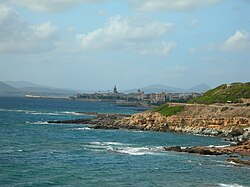
Polignano a Mare, Puglia, Italy
Photo: Enric, Wikimedia Commons (CC BY-SA 4.0)
← All destinations

Polignano a Mare, Puglia, Italy

A white town built on the edge of a cliff, with a restaurant inside a natural cave and divers who every September leap from 27 metres right above the smallest beach in Italy. Polignano is the Puglia that has learned to live with its own postcard panorama.

✓ Sources verified by hand on 11 July 20266 sources cited

What to see

Monuments1

Old town

White alleys sheer above the sea, with cliff views at every corner: the medieval core built practically on the edge of the precipice.

Beaches2

Lama Monachile

Polignano's signature beach, set between two rock walls below the old town and the Bourbon bridge. Iconic but very small and crowded in high summer.

Cala Porto

A small rocky cove right below the cliff-diving platforms: a popular spot among locals for jumping off the rocks, to attempt only if you know the depth of the entry points well.

Food1

Orecchiette and Puglian focaccia

Two classics of Puglian cooking easily found in the bakeries and trattorias of the old town, often at far more honest prices than the sea-view restaurants.

Other1

Grotta Palazzese

A historic restaurant carved into a natural sea cave, with tables a few metres from the water: one of the most photographed dining settings in Italy, booking needed well in advance.

✦ Hidden gems — off the standard guides

Polignano Caves (boat tour)

The cliffs visible from the sea hide a series of sea caves reachable only by boat or by swimming: a completely different view from the one seen from land.

Lungomare Domenico Modugno lookout

A viewpoint over Lama Monachile and the old town, reached by crossing the bridge and going down behind the Modugno statue: popular but few know how to get there, so rarely crowded.

Cala Fetente

A quieter beach than Lama Monachile, with a small restaurant offering use of the outdoor showers for €0.50.

Cala San Giovanni

About 1.5 km from the old town, a more isolated rocky cove with free parking nearby: a quiet alternative to the central beaches at peak times.

Burrata and friselle

Local burrata served on friselle (a typical Puglian twice-baked bread) moistened with fresh tomato and oil: a traditional summer snack, light and suited to the heat.

The 'caffè speciale' of the Super Mago del Gelo

Polignano's indulgent ritual: espresso with sugar, cream, lemon zest and amaretto liqueur, invented in the historic bar in the centre by the 'Super Mago del Gelo'. Drunk standing in the square, watching the passeggiata.

Sample itineraries

Three routes for different travel styles, built only from this dossier's verified places. Realistic pace: 2-3 stops a day.

First time

2 days

The landmark sights, at the right pace.

Day 1

  • Old town

    White alleys sheer above the sea, with cliff views at every corner: the medieval core built practically on the edge of the precipice.

  • Lama Monachile

    Polignano's signature beach, set between two rock walls below the old town and the Bourbon bridge. Iconic but very small and crowded in high summer.

  • Grotta Palazzese

    A historic restaurant carved into a natural sea cave, with tables a few metres from the water: one of the most photographed dining settings in Italy, booking needed well in advance.

Day 2

  • Cala Porto

    A small rocky cove right below the cliff-diving platforms: a popular spot among locals for jumping off the rocks, to attempt only if you know the depth of the entry points well.

  • Orecchiette and Puglian focaccia

    Two classics of Puglian cooking easily found in the bakeries and trattorias of the old town, often at far more honest prices than the sea-view restaurants.

Off the beaten path

2 days

Hidden gems away from the usual circuits.

Day 1

  • Polignano Caves (boat tour)hidden gem

    The cliffs visible from the sea hide a series of sea caves reachable only by boat or by swimming: a completely different view from the one seen from land.

  • Lungomare Domenico Modugno lookouthidden gem

    A viewpoint over Lama Monachile and the old town, reached by crossing the bridge and going down behind the Modugno statue: popular but few know how to get there, so rarely crowded.

  • Cala Fetentehidden gem

    A quieter beach than Lama Monachile, with a small restaurant offering use of the outdoor showers for €0.50.

Day 2

  • Cala San Giovannihidden gem

    About 1.5 km from the old town, a more isolated rocky cove with free parking nearby: a quiet alternative to the central beaches at peak times.

  • Burrata and frisellehidden gem

    Local burrata served on friselle (a typical Puglian twice-baked bread) moistened with fresh tomato and oil: a traditional summer snack, light and suited to the heat.

Food & markets

1 days

Eat and drink where locals actually go.

Day 1

  • Orecchiette and Puglian focaccia

    Two classics of Puglian cooking easily found in the bakeries and trattorias of the old town, often at far more honest prices than the sea-view restaurants.

  • Burrata and frisellehidden gem

    Local burrata served on friselle (a typical Puglian twice-baked bread) moistened with fresh tomato and oil: a traditional summer snack, light and suited to the heat.

  • The 'caffè speciale' of the Super Mago del Gelohidden gem

    Polignano's indulgent ritual: espresso with sugar, cream, lemon zest and amaretto liqueur, invented in the historic bar in the centre by the 'Super Mago del Gelo'. Drunk standing in the square, watching the passeggiata.

🧭

Build your itinerary

Tell us how many days you're staying and in which month: we'll compose an itinerary from this dossier's verified places, with notes about the period.

Your itinerary

1

Day 1

  • Old town

    White alleys sheer above the sea, with cliff views at every corner: the medieval core built practically on the edge of the precipice.

  • Grotta Palazzese

    A historic restaurant carved into a natural sea cave, with tables a few metres from the water: one of the most photographed dining settings in Italy, booking needed well in advance.

  • Orecchiette and Puglian focaccia

    Two classics of Puglian cooking easily found in the bakeries and trattorias of the old town, often at far more honest prices than the sea-view restaurants.

2

Day 2

  • Lama Monachile

    Polignano's signature beach, set between two rock walls below the old town and the Bourbon bridge. Iconic but very small and crowded in high summer.

  • Cala Porto

    A small rocky cove right below the cliff-diving platforms: a popular spot among locals for jumping off the rocks, to attempt only if you know the depth of the entry points well.

  • Burrata and frisellehidden gem

    Local burrata served on friselle (a typical Puglian twice-baked bread) moistened with fresh tomato and oil: a traditional summer snack, light and suited to the heat.

3

Day 3

  • Polignano Caves (boat tour)hidden gem

    The cliffs visible from the sea hide a series of sea caves reachable only by boat or by swimming: a completely different view from the one seen from land.

  • Lungomare Domenico Modugno lookouthidden gem

    A viewpoint over Lama Monachile and the old town, reached by crossing the bridge and going down behind the Modugno statue: popular but few know how to get there, so rarely crowded.

  • The 'caffè speciale' of the Super Mago del Gelohidden gem

    Polignano's indulgent ritual: espresso with sugar, cream, lemon zest and amaretto liqueur, invented in the historic bar in the centre by the 'Super Mago del Gelo'. Drunk standing in the square, watching the passeggiata.

Want an itinerary tailored to your dates in Polignano a Mare?

Travel dates, where you stay and the kind of trip — we tailor this same verified dossier to your exact needs.

Coming soon
The statue of Domenico Modugno, writer and singer of 'Volare', born in Polignano a Mare and celebrated right above the bay of Lama Monachile.
The statue of Domenico Modugno, writer and singer of 'Volare', born in Polignano a Mare and celebrated right above the bay of Lama Monachile.Photo: Lucamato, Wikimedia Commons (CC BY-SA 4.0)

Before you go

Recurring scams and local rules worth knowing before you arrive.

⚠ Scams to know

Parking outside the white/blue lines

verified

The centre is a limited-traffic zone with strictly enforced parking rules: those who leave their car outside the marked spaces almost always get a fine.

How to avoid it: Park only within the white lines (free) or blue (paid); alternatively use the free area behind the station and walk.

Source

Jumping off the rocks without knowing the spot

low confidence

Some access points like Cala Porto and the Grottone have deep water but other stretches of cliff are shallow or uneven; there are no lifeguards on most of the coves.

How to avoid it: Only jump at spots known and regularly used by locals, never headfirst into waters you don't know, and avoid it entirely if travelling with children or on your first try.

Source

Extreme crowding at Lama Monachile in the middle of the day

low confidence

Being Polignano's smallest and most photographed beach, at midday in high season it becomes almost impossible to find a spot on the rocks.

How to avoid it: Go early in the morning or late afternoon, or choose one of the alternative coves like Cala Fetente or Cala San Giovanni.

Source

⚖ Laws & penalties

Limited-traffic zone and parking rules in the old town

medium riskmedium confidence

The old town is a limited-traffic zone: unauthorized access at the gates is penalized under the Highway Code (art. 7 c.14) with a fine of €83 to €332. Parking is allowed only in the white lines (free) or blue (paid); parking elsewhere incurs fines (around €42 for a no-parking offence) and possible removal of the vehicle.

Source

No lifeguard supervision on most of the coves

medium risklow confidence

Unlike organized beach clubs, many of Polignano's small rocky beaches have no lifeguards: safety in the water is the individual visitor's responsibility.

Source
The Bourbon bridge over Lama Monachile, the classic vantage point over the beach set between the cliffs.
The Bourbon bridge over Lama Monachile, the classic vantage point over the beach set between the cliffs.Photo: Diana Cimino Cocco, Wikimedia Commons (CC BY-SA 4.0)

Recurring events

Hover over a month on the timeline for details.

Budget & timing

Average daily cost

Season low (November-March)45-65€
Season mid (April-May, October)65-95€
Season high (June-September)95-145€

Rough estimate (lodging + meals + local transport), not a precise verified source.

Best time by type of trip

Sea and beaches June-September

Warm sea, perfect for jumping off the rocks, but Lama Monachile and the old town very crowded, especially during the Red Bull stage in September.

Family and photography May, October

Pleasant temperatures and far fewer crowds to enjoy the viewpoints and old town without the intense July-August heat.

Budget November-March

Much lower accommodation prices, though much of the beach life and the chiringuitos stop out of season.

Did you know... Beneath the white houses of the old town opens a system of natural sea caves (the Polignano Caves), visitable by boat or by swimming from the right access points.

Getting around

Car recommended: No — The old town is nearly entirely pedestrian with an active limited-traffic zone and very limited parking: it's best to leave the car in the free areas near the station and move on foot. A car stays useful only to reach the more isolated coves outside the centre or to travel to other Puglian towns.

Polignano is about 30 minutes from Bari, Puglia's main hub, with frequent regional trains on the Bari-Lecce/Brindisi line. Polignano station is a few minutes' walk from the old town.

  • Park only within the white lines (free) or blue (paid): outside those, fines are practically guaranteed, up to €42, with possible removal of the vehicle.
  • Behind the train station there's one of the few completely free parking areas all year, 10-15 minutes' walk from the centre.
  • In high season aim for Piazza Aldo Moro and the nearby streets for paid parking; if full, the station area is almost always freer.
  • Go to Lama Monachile early in the morning or late afternoon: in the middle of summer days it's almost impossible to find space on the rocks.

Safety

Areas to avoid

  • Polignano a Mare is generally very safe: no specific area to avoid for tourists.
  • Take care on wet, uneven rocks around the sea caves: the main risk is an accidental fall, not crime.
  • Puglia in general has very low rates of violent crime compared with the big Italian cities.
  • Wear rock shoes to move around the rocky coves: the limestone can be slippery.
  • The emergency number in Italy: 112 (the single European emergency number).

Did you know... The most famous beach, Lama Monachile, is actually the mouth of an ancient river canyon (a Puglian 'lama') that ends straight in the sea between two rock walls.

Sources

Every source below was opened and checked by hand — not just cited. Entries that didn't hold up were downgraded to "low confidence" or dropped, not presented as certain.

Related destinations

Other dossiers close by country, area or kind of trip.