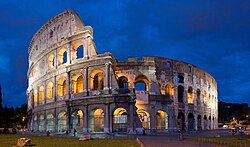
Verona, Italy
Photo: Didier Descouens, Wikimedia Commons (CC BY-SA 4.0)
← All destinations

Verona, Italy

The city of Romeo and Juliet is far more than a balcony: a Roman amphitheatre that in summer becomes the largest open-air opera house in the world, medieval squares, Scaliger bridges and the Adige embracing it. Romantic, yes, but also grounded and made for strolling.

✓ Sources verified by hand on 2026-06-295 sources cited

What to see

Verona Arena

A perfectly preserved Roman amphitheatre on Piazza Bra; in summer it becomes the largest open-air opera house in the world.

Juliet's House

The courtyard with the balcony and the statue of Juliet, the quintessential (and very crowded) romantic spot: literary myth more than history.

Piazza delle Erbe and Piazza dei Signori

The city's medieval and Renaissance heart, among the old market, the Lamberti Tower and the Scaliger palaces.

Castelvecchio and Ponte Scaligero

A brick medieval castle with a museum and the spectacular battlemented fortified bridge over the Adige.

Ponte Pietra and Roman Theatre

The rebuilt Roman bridge and, on the other bank, the Roman Theatre with a view over the rooftops: one of the finest views in Verona.

Basilica of San Zeno

A Romanesque masterpiece with famous bronze doors and a rose window, away from the crowds of the centre.

✦ Hidden gems — off the standard guides

Giusti Garden

A Renaissance Italian garden with hedges, statues and a lookout over the city: a quiet oasis little frequented by passing tourists.

Lamberti Tower

The city's tallest tower, climbed by lift or on foot, for the panorama over the rooftops and the Arena.

The Adige riverside and Castel San Pietro

The walk along the Adige to the Castel San Pietro lookout, with the postcard view of Ponte Pietra at sunset.

Pastissada de caval

A horse-meat stew long-cooked in wine, a traditional Veronese dish served with gnocchi too: strong and identity-defining.

Want an itinerary tailored to your dates in Verona?

Travel dates, where you stay and the kind of trip — we tailor this same verified dossier to your exact needs.

Coming soon
The keep of Castelvecchio and the Ponte Scaligero, the battlemented fortified bridge across the Adige: one of the most scenic medieval views in Verona.
The keep of Castelvecchio and the Ponte Scaligero, the battlemented fortified bridge across the Adige: one of the most scenic medieval views in Verona.Photo: Ввласенко, Wikimedia Commons (CC BY-SA 3.0)

Before you go

Recurring scams and local rules worth knowing before you arrive.

⚠ Scams to know

Pickpocketing in crowds (Arena and Piazza Bra)

low confidence

At the most touristy spots and on opera nights, with big gatherings, pickpocketing can happen.

How to avoid it: Keep your belongings in front of you in crowds, especially entering and leaving the shows.

Source

Tourist restaurants near the Arena

low confidence

Some venues right by Piazza Bra rely on passing trade with uneven quality and inflated bills.

How to avoid it: Move a few streets from the main squares and choose trattorias frequented by locals.

Source

Padlocks and 'letters to Juliet'

low confidence

Around Juliet's House, small tourist traps and pushy vendors thrive.

How to avoid it: Enjoy the courtyard without feeling obliged to spend; Verona's real charm is elsewhere, among squares and the river.

Source

⚖ Laws & penalties

Limited-traffic zone (ZTL) in the old town

medium riskmedium confidence

The centre is a limited-traffic zone with electronic gates: unauthorized access detected by camera is penalized under the Highway Code (art. 7 c.14) with a fine of €83 to €332 (reducible to €58.10 if paid within 5 days), with no licence points. Better to park outside and continue on foot.

Source

Cover charge at restaurants

low risklow confidence

The cover charge (a few euros per person) must be shown on the menu; check the bill in the more touristy venues, especially near the Arena.

Source

Decorum in monumental areas

low risklow confidence

Municipal rules ban behaviour that damages or defaces monuments and street furniture, with possible penalties.

Source
The Giusti Garden, a Renaissance Italian garden with geometric hedges, statues and a lookout over the city: a quiet oasis away from the crowds.
The Giusti Garden, a Renaissance Italian garden with geometric hedges, statues and a lookout over the city: a quiet oasis away from the crowds.Photo: Annika of Nine, Wikimedia Commons (CC BY-SA 4.0)

Recurring events

Hover over a month on the timeline for details.

Budget & timing

Average daily cost

Season low (January-March, November)80-120€
Season mid (April (no Vinitaly), October)120-170€
Season high (June-September (Opera), December)170-240€

Rough estimate (lodging + meals + local transport), not a precise verified source.

Best time by type of trip

Opera season June-September

The Arena in full swing and magical evenings, but a crowded city and high prices: book well in advance.

Spring and autumn April-May, October

Ideal weather for strolling among squares and hills; avoid April if you don't want Vinitaly prices.

Christmas atmosphere December

Markets and the great star in the Arena; cold but a scenic centre and less chaotic than summer.

Did you know... Verona is one of the best-preserved Roman cities in Italy and a UNESCO World Heritage site for its old town.

Getting around

Car recommended: No — The old town is compact, pedestrian and largely a limited-traffic zone: it's all walkable. A car is awkward and pricey; better to leave it at external car parks and continue on foot or by bus.

The ATV bus network; the centre is so compact that the bus is often only needed from the car parks or Porta Nuova station. A single urban ticket €2.00, to be validated on boarding (also via app or contactless card with Bip&Vai).

  • Verona is lived on foot: from the Arena to Castelvecchio to Ponte Pietra it's all a few minutes
  • For sunset climb to Castel San Pietro (on foot or by funicular): a postcard view over the Adige
  • On opera nights book dinner and accommodation in advance: the city fills up
  • From the park-and-ride car parks and from Porta Nuova there are handy buses to the centre

Safety

  • Verona is a very safe city: the main risk is petty pickpocketing in the crowds of the Arena and Piazza Bra
  • On opera nights, mind bags and phones in the crowds entering and leaving
  • The centre is small and well lit: it's easily walked even in the evening

Did you know... The Roman Ponte Pietra was blown up in World War II and then rebuilt by recovering the original stones from the river.

Sources

Every source below was opened and checked by hand — not just cited. Entries that didn't hold up were downgraded to "low confidence" or dropped, not presented as certain.