Everything has already been written about Florence, Venice and Milan; the useful question is not what to see but when to go, because between low and high season the bill doubles and the experience changes entirely. Genoa and Trieste are on the list for a different reason: they are the two that have not yet got used to being visited.
Florence: November and January, not June
Florence costs €60-85 a day between November and February and €120-190 from June to September. It is not only the price: in the cold months the queues at the Uffizi and the Accademia genuinely shorten, and the two things people come for are indoors.
Two pieces of information worth money. The Uffizi ticket costs less at the desk than online: €25 bought on the day, €29 booked in advance. And entry is free on the first Sunday of the month, but with no booking and no priority lane: you queue like everyone else.
The gem is free and twenty minutes' walk away: the basilica of San Miniato al Monte, where the monks sing vespers in Latin and Gregorian chant every afternoon at 6.30pm. Free entry, no booking; during services the church cannot be visited, so for the interior arrive earlier.
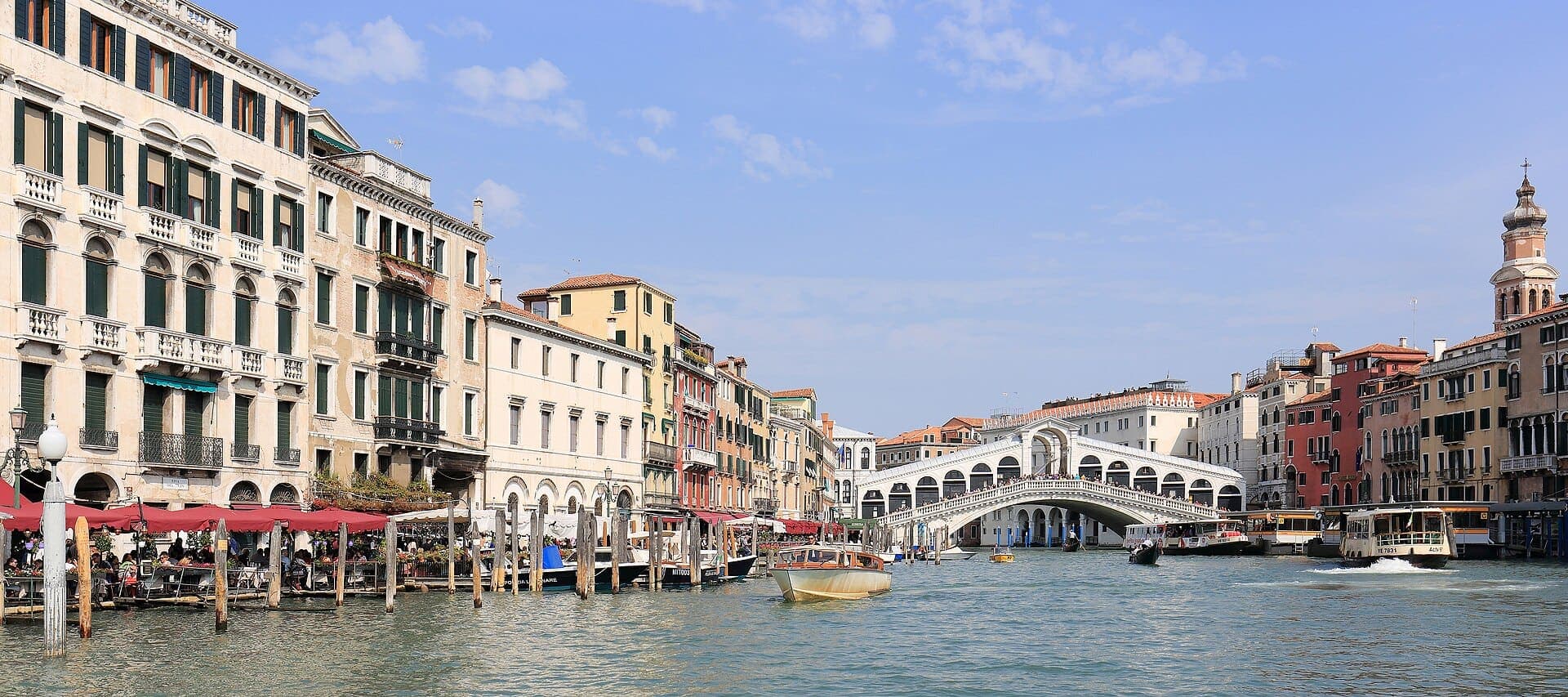
Venice: the news is that there is no longer an entry fee
Worth noting, because almost every guide still says otherwise: since 27 July 2026 the access fee is no longer in force and you enter Venice without paying anything and without registering. The city reserves the right to bring it back, so check before travelling.
The budget remains the criterion: €65-90 a day between November and January, €130-200 from June to September and during Carnival. November has near-empty lanes, with the risk of high water as the trade-off.
Two timing traps: St Mark's Basilica opens only at 2pm on Sunday mornings, and until then the sole space you can visit is the Museum with the Loggia dei Cavalli. The Rialto market runs on two timetables: the fish hall is closed Sunday and Monday, the fruit and vegetable stalls work from Monday.
Where there is nobody: Cannaregio, the sestiere where people still live, and the island of San Pietro di Castello, where the church was Venice's cathedral until 1807 and the campo in front is grass, with washing out.
Milan: it depends on the week, not the month
Milan is the only one of the five where events set the price: €70-100 a day in January and November, but €150-220 during Design Week in April and Fashion Week in September, when the hotels fill with people who are not there as tourists.
The Last Supper has to be booked with the right logic: exactly fifteen minutes, forty people per slot, booking compulsory for every ticket type, and tickets released in quarterly blocks. The release date matters more than the visit date.
The simplest saving: the courtyards of the Castello Sforzesco are crossed free every day from 7am to 7.30pm, and the museums inside cost €5, free on the first Sunday of the month. The Cimitero Monumentale is free and closed on non-holiday Mondays.
Genoa: the vertical city nobody considers
Genoa costs €110-160 a day in mid-season and has the largest medieval old town in Europe, where sunlight barely reaches because the houses are tall and the streets two metres wide.
The right way to move is the local way: public lifts and funiculars are not attractions but part of the AMT network and work with the ordinary urban ticket, like a bus. That takes you up to the Spianata di Castelletto, a free terrace, always open, over the rooftops and the port.
To look for in the cathedral: in the right aisle is a British 381-millimetre naval shell that came through the roof on 9 February 1941 and failed to explode. It is still there, with a plaque.
Trieste: the month matters, the bora matters more
Trieste costs €65-100 a day between November and March and €110-170 from June to August, and it is the only one of the five where the calendar is not enough: the bora can wipe out half a plan in a few hours. The Molo Audace, the two hundred and forty-six metres of concrete running into the gulf in front of Piazza Unità, turns slippery in a strong wind and gets closed; and the Rilke path, the flat kilometre and a half above the sea between Sistiana and Duino, is the first place in the area to shut.
The months that work best are May-June and September: twenty to twenty-five degrees, the bora rare, and days long enough to combine Miramare, the Carso and the old town. But winter has an argument of its own, and it is not only the price: between December and February the city is half empty, hotels are at their lowest and the historic cafés go back to being reading rooms rather than attractions.
Two details worth a day. The Miramare park is free but its seasonal hours tighten sharply, 8am to 7pm from April to September and closing at 4pm in January: turning up at sunset in winter means finding the gates shut. And at the counter a coffee costs a third of what it costs seated at the tables on Piazza Unità, so it pays to learn three words before going in: nero for an espresso, capo for a macchiato, capo in b if you want it in the little glass.
One thing to update against almost every guidebook: the Opicina tram, stopped since a crash in 2016, went back into service in the summer of 2026. With two limits, though: the city terminus stays provisionally in Piazza Dalmazia, ten minutes on foot from Piazza Unità, rather than Piazza Oberdan until the works scheduled through to June 2027 are finished, and capacity is cut to eighty per cent.
In short
Florence and Venice in winter, when they cost half and the queues vanish. Milan avoiding April and September unless you are there for design or fashion. Genoa in April-June or September-October, when the sea is still enjoyable and the Rolli Days open the private palaces. Trieste in May-June or September, or in April-May and October-November if the point is the osmize of the Carso, the farmhouses that sell their own wine and ham for a few days a year and open on a rota. In all of them the gap between low and high season is fifty to seventy euros a day: over a week for two people that is close to a thousand euros.