Trieste, Friuli Venezia Giulia, Italy
Photo: Diego Delso, Wikimedia Commons (CC BY-SA 4.0)
← All destinations

Trieste, Friuli Venezia Giulia, Italy

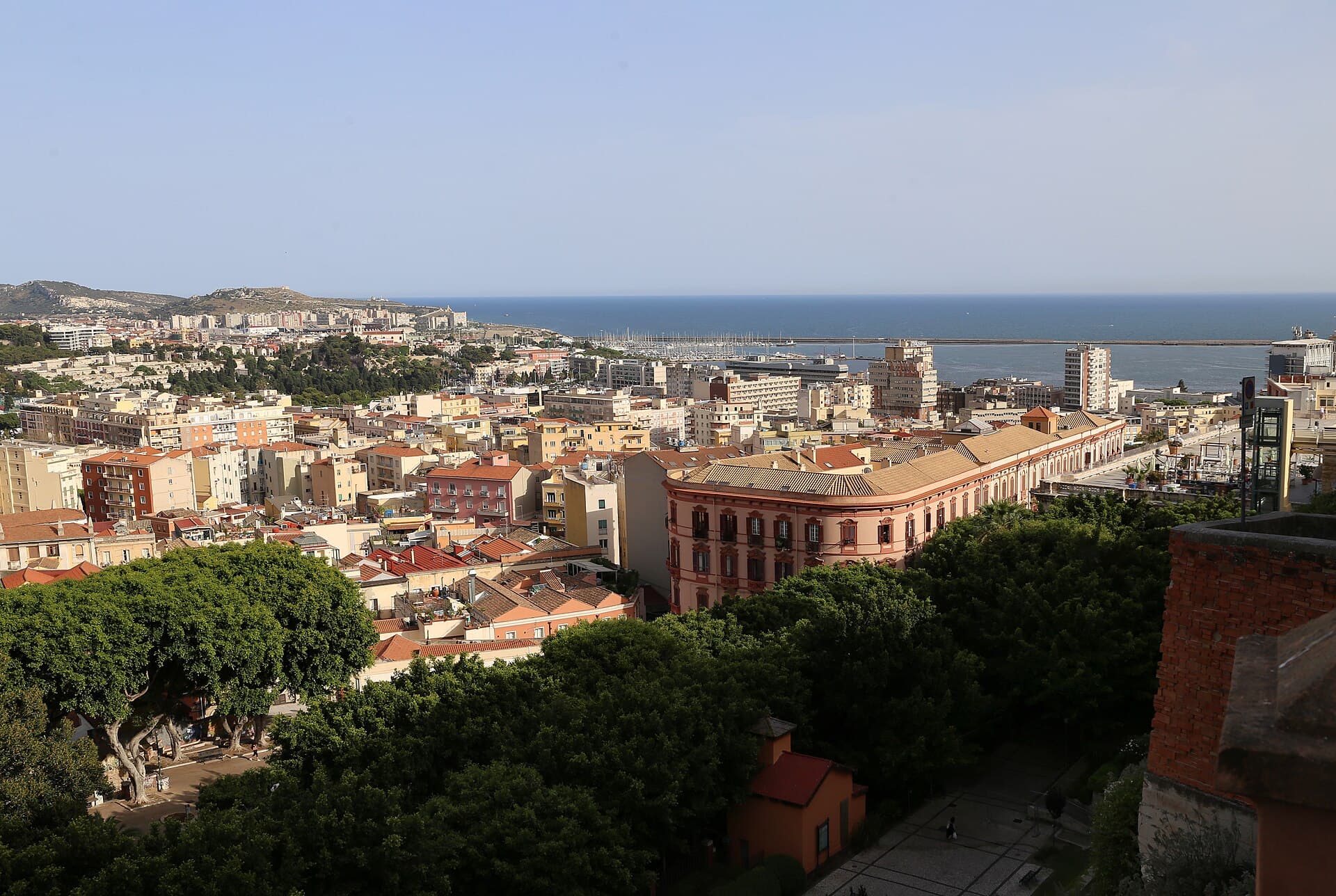
The Italy that speaks Mitteleuropean: Habsburg palaces facing the gulf, cafes with a vocabulary of their own, a wind that moves people around and a karst plateau starting behind the last building. A border city you walk end to end and drink standing at the counter.

✓ Sources verified by hand on 8 September 20268 sources cited

What to see

Monuments4

Piazza Unita d'Italia

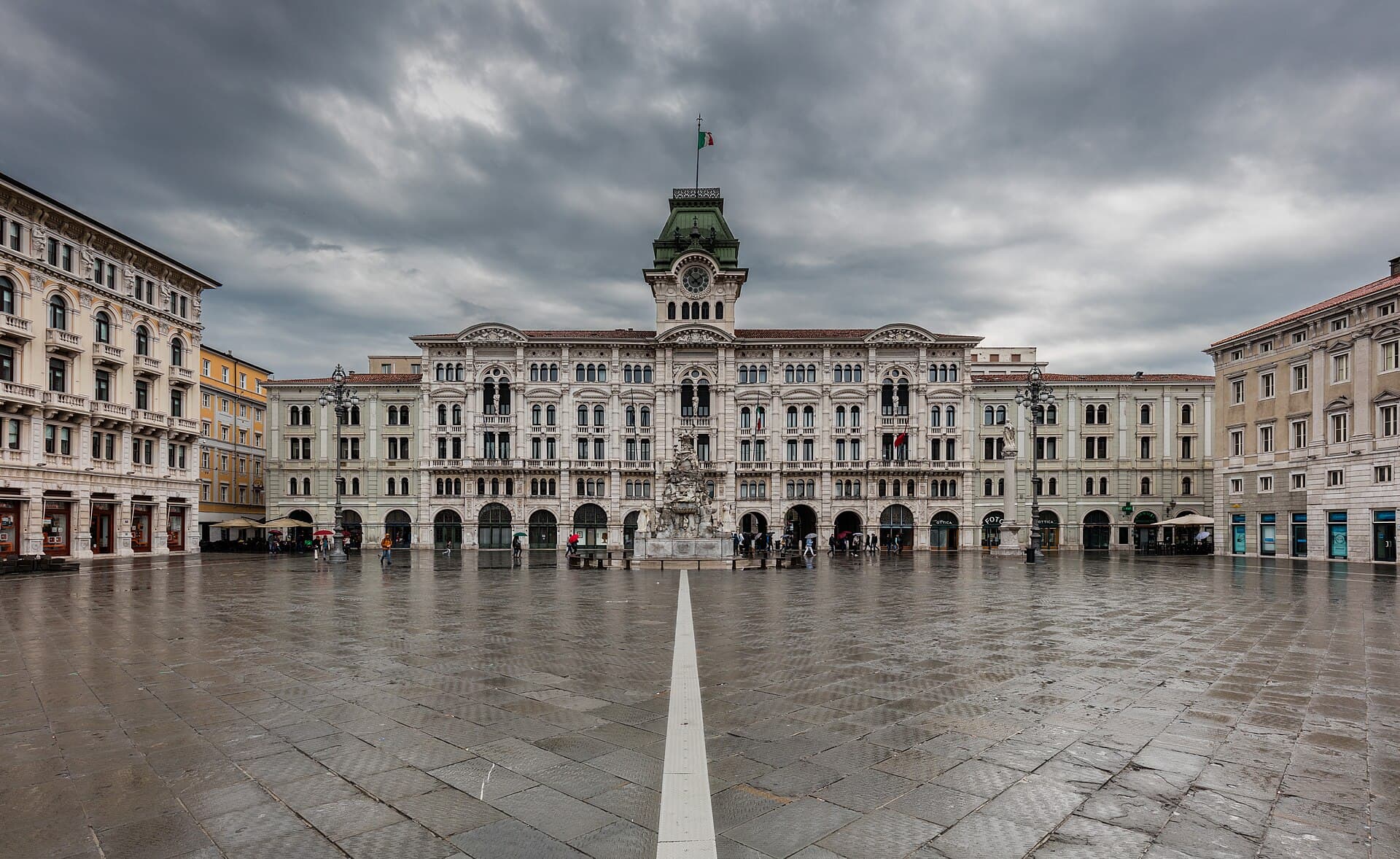
Closed on three sides by Habsburg palaces and open to the gulf on the fourth: the town hall with its clock tower, the Lloyd Triestino building, the Fountain of the Four Continents. It is 10 minutes on foot from the central station and 2 from the Molo Audace, so you pass through anyway. Crossing it costs nothing, sitting down does: a coffee at the tables in the square costs two or three times the same coffee taken at the counter a hundred metres away.

Miramare Castle and its park

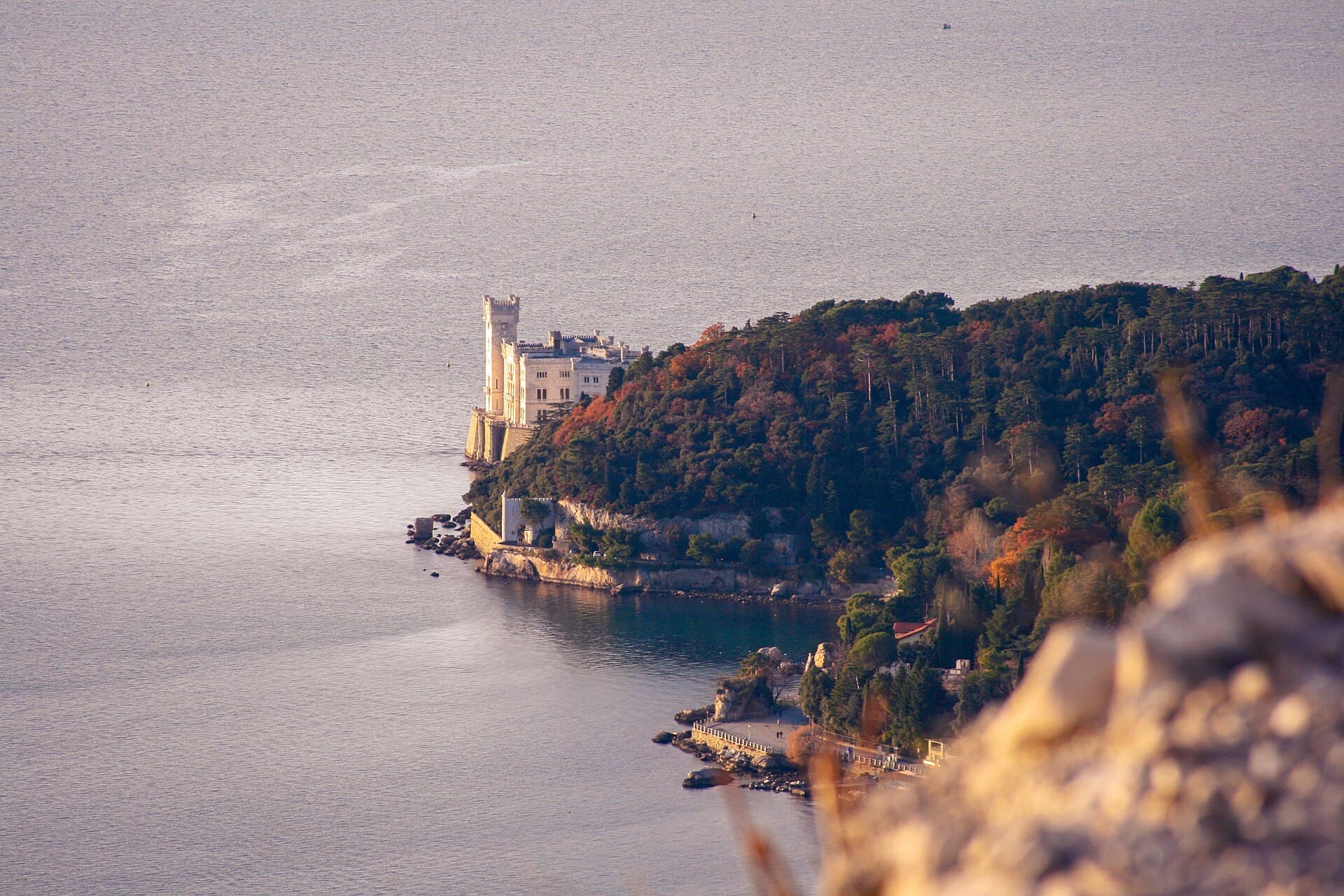
The white castle Archduke Maximilian built on the headland, with the original furnishings still in place. Museum open daily 9am-7pm, full ticket 17 euros including current exhibitions, reduced 7 euros for ages 11-17, free under 6 and on the first Sunday of the month. The twenty-two hectare park is free but its seasonal hours tighten sharply: 8am-7pm from April to September, closing at 4pm in January. Turning up at sunset in winter means finding the gates shut.

San Giusto Castle and cathedral

The 7-euro ticket (reduced 5) covers the walk around the walls and bastions, the castle museum with the Armoury and the Lapidario Tergestino: it is all included, there are no add-ons. Open 10am-7pm from 1 April to 11 October, then Tuesday to Sunday 10am-5pm with Monday closed. Free on the first Sunday of the month and on 3 November. The cathedral of San Giusto next door is free: Byzantine mosaics and a bell tower built by reusing a Roman temple.

Canal Grande and Borgo Teresiano

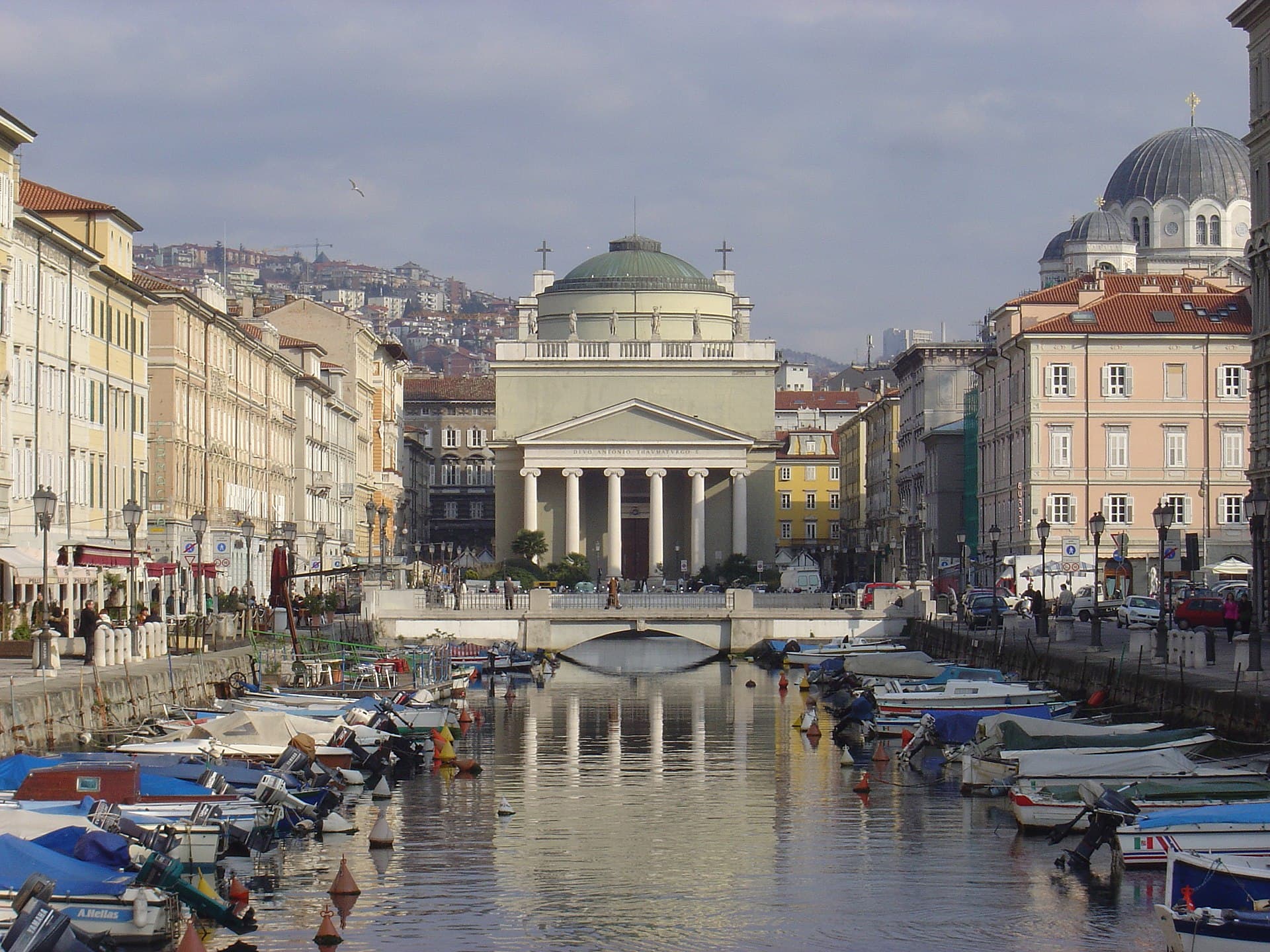
The 18th-century grid quarter built when Trieste became a free port, cut through by the canal that runs in between the buildings. At the end of the canal stands the neoclassical church of Sant'Antonio Taumaturgo, beside it the domes of Serbian Orthodox San Spiridione, and on the Ponte Rosso the statue of Joyce that everyone photographs. Thirty minutes covers the lot, and in the evening the bars along the canal fill up.

Nature1

Grotta Gigante

On the karst, 20 minutes by car from the centre: the largest single chamber in the world open to visitors, recognised by Guinness in 1995, on a route that drops and climbs about 100 metres over five hundred steps. Inside it is a constant 11 degrees all year, so a jumper is needed even in July. Entry is by guided tour at fixed times only and booking is compulsory: turning up without one is the simplest way to stay outside.

Beaches1

Barcola and the Topolini

The city beach is not a beach: it is a concrete terrace running for kilometres with round platforms locals call Topolini, where you lay a towel and get into the water down a ladder. It is free, reaches all the way under Miramare and is 30 minutes on foot from the centre along the sea, or a short bus ride. In summer it fills from seven in the morning, when people swim before going to the office.

Museums2

Risiera di San Sabba

The only Nazi concentration camp in Italy fitted with a crematorium, today a national monument. Entry is free: 9am-7pm from 1 March to 11 October with last entry at 6.30pm, 9am-5pm from 12 October. The audio guide costs 3.50 euros, runs about forty minutes and exists in seven languages, but the rental desk closes an hour before the museum. Buses 8 and 10 get you there from the centre, and there is free unattended parking behind the site.

Museo Revoltella

A 19th-century palace left to the city by Baron Revoltella, with its original furnishings, joined to a modern art gallery remodelled by Carlo Scarpa: the passage between the two halves is the highlight. Ticket 8 euros, reduced 6, open 10am-7pm with last entry at 6pm and closed on Tuesdays. Free on the first Sunday of the month, when there is a queue.
Food3

The historic cafes and the coffee vocabulary

Antico Caffe San Marco from 1914, Tommaseo from 1830, Specchi on Piazza Unita: all three sit within 10 minutes' walk of each other, mirrored and wood-panelled rooms where you can read a newspaper for an hour without anyone moving you on. The practical rule is to learn three words before going in: nero for an espresso, capo for a macchiato, capo in b if you want it in a small glass. At the counter you pay a third of what the same coffee costs seated on the square.

Triestine buffet and jota

A buffet is not a restaurant: it is a counter where you eat standing at any hour, and it stays open at 15.00 too, when restaurant kitchens are shut. The dish is porzina, ham cooked in a bread crust, sliced hot and served with kren (horseradish) and mustard; jota is the winter soup of sauerkraut, beans and potatoes. You spend a fraction of a sit-down lunch and it is the most Triestine thing you can order: Habsburg cooking that reached the Adriatic.

Karst wines and Mitteleuropean pastries

The plateau grows grapes found almost nowhere else: terrano, a dark and sharply acidic red, white vitovska, Istrian malvasia. The wineries all sit within 15 km of the centre and many double as osmize. The pastries come from the empire instead: presnitz and putizza (rolls filled with walnuts, raisins and spices) and strucolo, sold in the pastry shops by weight rather than by portion.

Other1

Molo Audace

Two hundred and forty-six metres of pier running into the gulf in front of Piazza Unita, free and always open: 5 minutes to walk out and back. This is where locals watch the sunset and where you see the bora arrive across the water. In strong wind it turns slippery and gets closed off: if the barriers are up at the far end, that is not a formality.

✦ Hidden gems · off the standard guides

The osmize of the karst

These are karst farmhouses allowed to sell their own wine and produce for a minimum of eight days and a maximum of a month each year, under an edict of Joseph II from 1784 that was never repealed: ham, cheese, hard-boiled eggs, terrano, wooden tables and no menu. They sit up on the plateau, 20 or 30 minutes by car from the centre, and you recognise them by the frasca hung at the entrance, a leafy branch. They open in rotation: check the updated calendar on osmize.com before getting in the car, or you will drive the plateau for nothing.

Victory Lighthouse

Seventy metres of lighthouse on the Gretta hill, about 4 km from the centre, built in the 1920s as a memorial to those lost at sea and still working: from the terrace you see the whole gulf as far as Istria. The difficulty is getting in: public openings are limited to specific days and seasons and need checking in advance, because this is not a museum with continuous hours. Even from outside, the climb to the terrace is worth the view.

Opicina tram

A hybrid of tram and funicular that climbs onto the karst pushed by a counterweight carriage on the steepest stretch. It stood idle from 2016 after a crash and returned to service in the summer of 2026, with two things to know: the city terminus stays provisionally at Piazza Dalmazia, 10 minutes on foot from Piazza Unita, rather than Piazza Oberdan until the works on that area finish, expected to run to June 2027; capacity is also capped at eighty per cent, with standing in the aisle not allowed.

Rilke Path and the Duino cliffs

A flat path above the sea between Sistiana and Duino, inside a nature reserve: 1.7 km each way, free, needing no fitness and taking about an hour there and back. It is named after Rainer Maria Rilke, who began the Duino Elegies here as a guest of the Thurn und Taxis princes. In strong bora it closes, and it is the first place to close.

Sample itineraries

Three routes for different travel styles, built only from this dossier's verified places. Realistic pace: 2-3 stops a day.

First time

2 days

The landmark sights, at the right pace.

Day 1

  • Piazza Unita d'Italia

    Closed on three sides by Habsburg palaces and open to the gulf on the fourth: the town hall with its clock tower, the Lloyd Triestino building, the Fountain of the Four Continents. It is 10 minutes on foot from the central station and 2 from the Molo Audace, so you pass through anyway. Crossing it costs nothing, sitting down does: a coffee at the tables in the square costs two or three times the same coffee taken at the counter a hundred metres away.

  • Miramare Castle and its park

    The white castle Archduke Maximilian built on the headland, with the original furnishings still in place. Museum open daily 9am-7pm, full ticket 17 euros including current exhibitions, reduced 7 euros for ages 11-17, free under 6 and on the first Sunday of the month. The twenty-two hectare park is free but its seasonal hours tighten sharply: 8am-7pm from April to September, closing at 4pm in January. Turning up at sunset in winter means finding the gates shut.

  • San Giusto Castle and cathedral

    The 7-euro ticket (reduced 5) covers the walk around the walls and bastions, the castle museum with the Armoury and the Lapidario Tergestino: it is all included, there are no add-ons. Open 10am-7pm from 1 April to 11 October, then Tuesday to Sunday 10am-5pm with Monday closed. Free on the first Sunday of the month and on 3 November. The cathedral of San Giusto next door is free: Byzantine mosaics and a bell tower built by reusing a Roman temple.

Day 2

  • Canal Grande and Borgo Teresiano

    The 18th-century grid quarter built when Trieste became a free port, cut through by the canal that runs in between the buildings. At the end of the canal stands the neoclassical church of Sant'Antonio Taumaturgo, beside it the domes of Serbian Orthodox San Spiridione, and on the Ponte Rosso the statue of Joyce that everyone photographs. Thirty minutes covers the lot, and in the evening the bars along the canal fill up.

  • Risiera di San Sabba

    The only Nazi concentration camp in Italy fitted with a crematorium, today a national monument. Entry is free: 9am-7pm from 1 March to 11 October with last entry at 6.30pm, 9am-5pm from 12 October. The audio guide costs 3.50 euros, runs about forty minutes and exists in seven languages, but the rental desk closes an hour before the museum. Buses 8 and 10 get you there from the centre, and there is free unattended parking behind the site.

  • Museo Revoltella

    A 19th-century palace left to the city by Baron Revoltella, with its original furnishings, joined to a modern art gallery remodelled by Carlo Scarpa: the passage between the two halves is the highlight. Ticket 8 euros, reduced 6, open 10am-7pm with last entry at 6pm and closed on Tuesdays. Free on the first Sunday of the month, when there is a queue.
Off the beaten path

2 days

Hidden gems away from the usual circuits.

Day 1

  • The osmize of the karsthidden gem

    These are karst farmhouses allowed to sell their own wine and produce for a minimum of eight days and a maximum of a month each year, under an edict of Joseph II from 1784 that was never repealed: ham, cheese, hard-boiled eggs, terrano, wooden tables and no menu. They sit up on the plateau, 20 or 30 minutes by car from the centre, and you recognise them by the frasca hung at the entrance, a leafy branch. They open in rotation: check the updated calendar on osmize.com before getting in the car, or you will drive the plateau for nothing.

  • Victory Lighthousehidden gem

    Seventy metres of lighthouse on the Gretta hill, about 4 km from the centre, built in the 1920s as a memorial to those lost at sea and still working: from the terrace you see the whole gulf as far as Istria. The difficulty is getting in: public openings are limited to specific days and seasons and need checking in advance, because this is not a museum with continuous hours. Even from outside, the climb to the terrace is worth the view.

  • Opicina tramhidden gem

    A hybrid of tram and funicular that climbs onto the karst pushed by a counterweight carriage on the steepest stretch. It stood idle from 2016 after a crash and returned to service in the summer of 2026, with two things to know: the city terminus stays provisionally at Piazza Dalmazia, 10 minutes on foot from Piazza Unita, rather than Piazza Oberdan until the works on that area finish, expected to run to June 2027; capacity is also capped at eighty per cent, with standing in the aisle not allowed.

Day 2

  • Rilke Path and the Duino cliffshidden gem

    A flat path above the sea between Sistiana and Duino, inside a nature reserve: 1.7 km each way, free, needing no fitness and taking about an hour there and back. It is named after Rainer Maria Rilke, who began the Duino Elegies here as a guest of the Thurn und Taxis princes. In strong bora it closes, and it is the first place to close.

  • Grotta Gigante

    On the karst, 20 minutes by car from the centre: the largest single chamber in the world open to visitors, recognised by Guinness in 1995, on a route that drops and climbs about 100 metres over five hundred steps. Inside it is a constant 11 degrees all year, so a jumper is needed even in July. Entry is by guided tour at fixed times only and booking is compulsory: turning up without one is the simplest way to stay outside.

Food & markets

2 days

Eat and drink where locals actually go.

Day 1

  • The historic cafes and the coffee vocabulary

    Antico Caffe San Marco from 1914, Tommaseo from 1830, Specchi on Piazza Unita: all three sit within 10 minutes' walk of each other, mirrored and wood-panelled rooms where you can read a newspaper for an hour without anyone moving you on. The practical rule is to learn three words before going in: nero for an espresso, capo for a macchiato, capo in b if you want it in a small glass. At the counter you pay a third of what the same coffee costs seated on the square.

  • The osmize of the karsthidden gem

    These are karst farmhouses allowed to sell their own wine and produce for a minimum of eight days and a maximum of a month each year, under an edict of Joseph II from 1784 that was never repealed: ham, cheese, hard-boiled eggs, terrano, wooden tables and no menu. They sit up on the plateau, 20 or 30 minutes by car from the centre, and you recognise them by the frasca hung at the entrance, a leafy branch. They open in rotation: check the updated calendar on osmize.com before getting in the car, or you will drive the plateau for nothing.

Day 2

  • Triestine buffet and jota

    A buffet is not a restaurant: it is a counter where you eat standing at any hour, and it stays open at 15.00 too, when restaurant kitchens are shut. The dish is porzina, ham cooked in a bread crust, sliced hot and served with kren (horseradish) and mustard; jota is the winter soup of sauerkraut, beans and potatoes. You spend a fraction of a sit-down lunch and it is the most Triestine thing you can order: Habsburg cooking that reached the Adriatic.

  • Karst wines and Mitteleuropean pastries

    The plateau grows grapes found almost nowhere else: terrano, a dark and sharply acidic red, white vitovska, Istrian malvasia. The wineries all sit within 15 km of the centre and many double as osmize. The pastries come from the empire instead: presnitz and putizza (rolls filled with walnuts, raisins and spices) and strucolo, sold in the pastry shops by weight rather than by portion.

🧭

Build your itinerary

Tell us how many days you're staying and in which month: we'll compose an itinerary from this dossier's verified places, with notes about the period.

Your itinerary

1

Day 1

  • Piazza Unita d'Italia

    Closed on three sides by Habsburg palaces and open to the gulf on the fourth: the town hall with its clock tower, the Lloyd Triestino building, the Fountain of the Four Continents. It is 10 minutes on foot from the central station and 2 from the Molo Audace, so you pass through anyway. Crossing it costs nothing, sitting down does: a coffee at the tables in the square costs two or three times the same coffee taken at the counter a hundred metres away.

  • Miramare Castle and its park

    The white castle Archduke Maximilian built on the headland, with the original furnishings still in place. Museum open daily 9am-7pm, full ticket 17 euros including current exhibitions, reduced 7 euros for ages 11-17, free under 6 and on the first Sunday of the month. The twenty-two hectare park is free but its seasonal hours tighten sharply: 8am-7pm from April to September, closing at 4pm in January. Turning up at sunset in winter means finding the gates shut.

  • The historic cafes and the coffee vocabulary

    Antico Caffe San Marco from 1914, Tommaseo from 1830, Specchi on Piazza Unita: all three sit within 10 minutes' walk of each other, mirrored and wood-panelled rooms where you can read a newspaper for an hour without anyone moving you on. The practical rule is to learn three words before going in: nero for an espresso, capo for a macchiato, capo in b if you want it in a small glass. At the counter you pay a third of what the same coffee costs seated on the square.

2

Day 2

  • San Giusto Castle and cathedral

    The 7-euro ticket (reduced 5) covers the walk around the walls and bastions, the castle museum with the Armoury and the Lapidario Tergestino: it is all included, there are no add-ons. Open 10am-7pm from 1 April to 11 October, then Tuesday to Sunday 10am-5pm with Monday closed. Free on the first Sunday of the month and on 3 November. The cathedral of San Giusto next door is free: Byzantine mosaics and a bell tower built by reusing a Roman temple.

  • Canal Grande and Borgo Teresiano

    The 18th-century grid quarter built when Trieste became a free port, cut through by the canal that runs in between the buildings. At the end of the canal stands the neoclassical church of Sant'Antonio Taumaturgo, beside it the domes of Serbian Orthodox San Spiridione, and on the Ponte Rosso the statue of Joyce that everyone photographs. Thirty minutes covers the lot, and in the evening the bars along the canal fill up.

  • Triestine buffet and jota

    A buffet is not a restaurant: it is a counter where you eat standing at any hour, and it stays open at 15.00 too, when restaurant kitchens are shut. The dish is porzina, ham cooked in a bread crust, sliced hot and served with kren (horseradish) and mustard; jota is the winter soup of sauerkraut, beans and potatoes. You spend a fraction of a sit-down lunch and it is the most Triestine thing you can order: Habsburg cooking that reached the Adriatic.

3

Day 3

  • Risiera di San Sabba

    The only Nazi concentration camp in Italy fitted with a crematorium, today a national monument. Entry is free: 9am-7pm from 1 March to 11 October with last entry at 6.30pm, 9am-5pm from 12 October. The audio guide costs 3.50 euros, runs about forty minutes and exists in seven languages, but the rental desk closes an hour before the museum. Buses 8 and 10 get you there from the centre, and there is free unattended parking behind the site.

  • Museo Revoltella

    A 19th-century palace left to the city by Baron Revoltella, with its original furnishings, joined to a modern art gallery remodelled by Carlo Scarpa: the passage between the two halves is the highlight. Ticket 8 euros, reduced 6, open 10am-7pm with last entry at 6pm and closed on Tuesdays. Free on the first Sunday of the month, when there is a queue.
  • Karst wines and Mitteleuropean pastries

    The plateau grows grapes found almost nowhere else: terrano, a dark and sharply acidic red, white vitovska, Istrian malvasia. The wineries all sit within 15 km of the centre and many double as osmize. The pastries come from the empire instead: presnitz and putizza (rolls filled with walnuts, raisins and spices) and strucolo, sold in the pastry shops by weight rather than by portion.

Want an itinerary tailored to your dates in Trieste?

Travel dates, where you stay and the kind of trip: we tailor this same verified dossier to your exact needs.

Coming soon
Miramare Castle on its headland: the museum is ticketed, the park around it free but closing early in winter.
Miramare Castle on its headland: the museum is ticketed, the park around it free but closing early in winter.Photo: Giuseppe Basile 99, Wikimedia Commons (CC BY-SA 4.0)

Before you go

Recurring scams and local rules worth knowing before you arrive.

⚠ Scams to know

Coffee and drinks at the tables on Piazza Unita

medium confidence

Table service on the main square carries a heavy mark-up compared with the counter: the same capo in b can cost three times as much. Tariffs must be displayed visibly inside the premises and extra charges disclosed in advance, with fines between 2,500 and 7,500 euros for failing to do so: in practice, though, the table-service list is not always easy to find.

How to avoid it: If you want the view, budget for it once. Otherwise order at the counter, where locals drink, or move to the historic cafes a hundred metres off the square, which cost less and have more character.

Source

Turning up at Grotta Gigante without a booking

verified

Entry is by guided tour at fixed times only and places are limited: people who arrive hoping for the next slot often do not get in at all, especially at weekends and when school groups are in.

How to avoid it: Book online before setting off, check the time of your slot and arrive a quarter of an hour early. And bring a jumper: it is 11 degrees inside all year.

Source

Underestimating the bora on the seafront and in the car

medium confidence

With gusts above 100 km/h walking the waterfront becomes dangerous, car doors are torn out of your hands and tiles and branches come down. The barriers on the Molo Audace and the closure of the Rilke Path are not formalities.

How to avoid it: Check the regional meteorological observatory's wind forecast the day before, hold the handrails on the downhill streets, open the car door with both hands and give up the pier and the clifftop paths on days of strong bora.

Source

Waiting at Piazza Oberdan for the Opicina tram

verified

The historic terminus is still out of use while the area is being rebuilt and the tram provisionally leaves from Piazza Dalmazia: many guides and maps still show the old departure point.

How to avoid it: Go straight to Piazza Dalmazia and allow for capacity being capped at eighty per cent, so at busy times you may have to wait for the next departure.

Source

Crossing into Slovenia by car without a vignette

medium confidence

The border is ten kilometres away and the temptation to nip over to Lipica or Postojna is strong, but Slovenian motorways and expressways require an electronic vignette tied to the plate. Enforcement is automatic plate recognition and the penalty starts at 300 euros.

How to avoid it: Buy the e-vignette on the official portal before you go: a week for a car costs 16 euros. Otherwise stay on the ordinary main roads, which do not require it, and allow more time.

Source

⚖ Laws & penalties

Strict restrictions apply in the Miramare marine protected area

medium riskmedium confidence

The reserve in front of the castle, established in 1986 and managed by WWF, has a fully protected zone where swimming, fishing, anchoring and free diving are prohibited: you enter the water only on the guided activities the body organises. The stretch of coast at Barcola, a little further on, is free and open for swimming.

Source

Slovenian motorways require an electronic vignette

medium riskmedium confidence

The vignette has been digital since 2021 and is tied to the vehicle's plate: you buy it on the official DARS portal giving the plate, country of registration and toll class. A week for a car costs 16 euros and anyone stopped without one pays 300 euros. It applies to rental cars too, which almost never come with it included.

Source

At the Risiera di San Sabba the conduct of a memorial site applies

low riskmedium confidence

Entry is free and nobody checks you at the gate, but the site is a national monument and a place of burial: silence, respectful dress and no posed photographs or drone filming are expected. It is a rule of respect before it is an enforced one, and it is the one distracted visitors break most often.

Source

On the karst fires are banned and paths must be respected

medium riskverified

The plateau is covered in scrub and pine and catches fire easily: the regional civil protection service lists the karst among the most exposed areas and notes that 97-98 per cent of forest fires are caused directly by people. There are two peak danger periods, 1 November to 30 April and 1 July to 31 August, and when maximum danger status is declared, fires, braziers and open-flame stoves are banned outside equipped areas.

Source

In the centre you park only in marked bays, and nearly all are paid

low riskmedium confidence

Blue-line parking in the centre is charged Monday to Saturday from 8am to 8pm and is free on Sundays, public holidays and every night between 8pm and 8am. Rates vary by zone and operator: from 50 cents an hour on the outskirts to 1.40 euros in the central red zone, and up to 1.70 in parts of the old town. Anyone arriving by car does better to leave it in a multi-storey and walk: distances in the centre are all under a kilometre.

Source
The Canal Grande in the Borgo Teresiano, with Sant'Antonio Taumaturgo at the end and the domes of San Spiridione on the right.
The Canal Grande in the Borgo Teresiano, with Sant'Antonio Taumaturgo at the end and the domes of San Spiridione on the right.Photo: Husond, Wikimedia Commons (CC BY-SA 4.0)

Recurring events

Hover over a month on the timeline for details.

Budget & timing

Average daily cost

Season low (November-March)65-100€
Season mid (April-May, September-October)85-130€
Season high (June-August)110-170€

Rough estimate (lodging + meals + local transport), not a precise verified source.

Best time by type of trip

City and cafes · May-June, September

Twenty to twenty-five degrees, bora rare, days long enough to combine Miramare, the karst and the old town. September adds sea still warm at Barcola and prices already falling from August.

Osmize and karst wine · April-May, October-November

Osmize open in rotation all year, but spring and late autumn are when most of them are open and when the plateau looks its best, with the sumac turning red in October.

Mitteleuropa in winter · December-February

A half-empty city, hotels at their lowest and the historic cafes back to being reading rooms rather than attractions. Allow for the bora, which blows hardest in these months and can shut down outdoor plans for a couple of days.

Did you know... James Joyce lived in Trieste for about ten years and worked here on Dubliners and Ulysses. Italo Svevo, a Triestine, took English lessons from him: today both have a statue in the centre, a few hundred metres apart.

Getting around

Car recommended: No. The centre is walked entirely on the flat, while parking in the city is expensive and scarce. A car is only useful for the karst and the osmize, which are scattered and have no convenient public link: Miramare, Barcola and the Risiera are all reachable by bus.

A Trieste Trasporti city ticket costs 1.50 euros and lasts 60 minutes, a network day pass 3.35 euros and a ten-journey carnet 13.50 euros. You validate on board, or pay directly with a contactless card on the Eva validators. Buses 8 and 10 serve the Risiera, the Grignano line serves Miramare, and the Opicina tram climbs onto the karst from its provisional terminus at Piazza Dalmazia. The station is ten minutes on foot from Piazza Unita and the trains for Venice and Udine leave from there.

  • The 3.35-euro day pass pays off on the third journey: doing Miramare and the Risiera on the same day already covers it.
  • Miramare, Barcola and the centre all sit on the same shoreline: you can do the lot on foot in one long day, about seven flat kilometres along the sea.
  • The osmize need a car and need the calendar on osmize.com checked that same morning: they open in rotation and there is no way to know once you are out there.
  • Slovenia is ten kilometres away, but taking a Slovenian motorway requires an electronic vignette tied to your number plate: without it the fine is 300 euros.

Safety

Areas to avoid

  • Trieste is one of the calmest cities in Italy and there are no districts to avoid. The only ordinary care is around the station and Piazza Liberta at night, where as at any transport hub you watch your bags more closely.
  • The real risk is meteorological rather than criminal: in strong bora the exposed spots (Molo Audace, the seafront, the Rilke Path, the Duino cliffs) become dangerous and are closed.
  • Check the wind before planning a day outdoors: with gusts above 100 km/h the waterfront and the clifftop paths are for another day.
  • At Barcola you get in down ladders and the bottom is rock and concrete: water shoes prevent cuts, and there are sea urchins.
  • On the karst in summer there is no water along the paths and fountains are rare: bring your own, even for a two-hour walk.
  • Single emergency number: 112.

Did you know... The bora blows from the north-east and its strongest gusts pass 150 km/h. Locals distinguish between bora chiara, the one with clear skies, and bora scura, the one that brings rain: in the most exposed streets ropes used to be strung up to hold on to.

Sources

Every source below was opened and checked by hand, not just cited. Entries that didn't hold up were downgraded to "low confidence" or dropped, not presented as certain.

Related destinations

Other dossiers close by country, area or kind of trip.