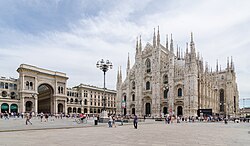
Genoa, Italy
Photo: Timothy A. Gonsalves, Wikimedia Commons (CC BY-SA 4.0)
← All destinations

Genoa, Italy

La Superba is a vertical, seafaring city, made of narrow, dark caruggi that open onto palaces fit for kings, a reborn harbour and fishing villages steps from the centre. Rough and authentic, it rewards those who explore it on foot, nose in the air, with a slice of focaccia in hand.

✓ Sources verified by hand on 29 June 20264 sources cited

What to see

Monuments3

Aquarium and Porto Antico

Italy's largest aquarium and the waterfront redesigned by Renzo Piano, with the panoramic Bigo and the Biosphere.

Via Garibaldi and the Palazzi dei Rolli

The street of UNESCO noble homes, with the Strada Nuova Museums (Palazzo Rosso, Bianco, Tursi): hidden baroque luxury.

Cathedral of San Lorenzo

The black-and-white striped cathedral in the heart of the caruggi, with the chapel of St John the Baptist.

Nature1

Boccadasse

A fishing village with pastel houses around a small pebble beach: a romantic postcard steps from the centre.

Food3

Pesto and trofie

Genoese pesto (basil, pine nuts, garlic, pecorino and parmesan) with trofie or trenette: the signature dish, born right here.

Genoese and Recco focaccia

The tall, oiled breakfast focaccia and the very thin cheese focaccia of Recco: a Ligurian gastronomic religion.

Farinata

A thin chickpea flatbread baked in a wood-fired oven, crisp and golden: humble, perfect street food from the hot-table shops.

Other1

The caruggi of the old town

The maze of medieval alleys among historic shops, votive shrines and sudden views: the city's authentic, labyrinthine heart.

✦ Hidden gems — off the standard guides

Spianata di Castelletto

A panoramic terrace over the rooftops and the harbour, reachable by a historic public lift: the finest, free view over the city.

Public funiculars and lifts

The network of lifts (like the Castelletto one) and funiculars to climb the hill: urban transport and viewpoint in one, to try like the locals.

La Lanterna

The medieval lighthouse that symbolizes the city, among the oldest in the world still in use, reachable by a seaside walk.

Mercato Orientale

The historic covered market among the caruggi, today street food too: the best way to taste everyday Ligurian cooking.

Pansoti and cima

Pansoti with walnut sauce and cima alla genovese (stuffed veal pocket): festive Ligurian cooking, from the trattoria.

Sample itineraries

Three routes for different travel styles, built only from this dossier's verified places. Realistic pace: 2-3 stops a day.

First time

2 days

The landmark sights, at the right pace.

Day 1

  • Aquarium and Porto Antico

    Italy's largest aquarium and the waterfront redesigned by Renzo Piano, with the panoramic Bigo and the Biosphere.

  • Via Garibaldi and the Palazzi dei Rolli

    The street of UNESCO noble homes, with the Strada Nuova Museums (Palazzo Rosso, Bianco, Tursi): hidden baroque luxury.

  • Cathedral of San Lorenzo

    The black-and-white striped cathedral in the heart of the caruggi, with the chapel of St John the Baptist.

Day 2

  • The caruggi of the old town

    The maze of medieval alleys among historic shops, votive shrines and sudden views: the city's authentic, labyrinthine heart.

  • Boccadasse

    A fishing village with pastel houses around a small pebble beach: a romantic postcard steps from the centre.

  • Pesto and trofie

    Genoese pesto (basil, pine nuts, garlic, pecorino and parmesan) with trofie or trenette: the signature dish, born right here.

Off the beaten path

2 days

Hidden gems away from the usual circuits.

Day 1

  • Spianata di Castellettohidden gem

    A panoramic terrace over the rooftops and the harbour, reachable by a historic public lift: the finest, free view over the city.

  • Public funiculars and liftshidden gem

    The network of lifts (like the Castelletto one) and funiculars to climb the hill: urban transport and viewpoint in one, to try like the locals.

  • La Lanternahidden gem

    The medieval lighthouse that symbolizes the city, among the oldest in the world still in use, reachable by a seaside walk.

Day 2

  • Mercato Orientalehidden gem

    The historic covered market among the caruggi, today street food too: the best way to taste everyday Ligurian cooking.

  • Pansoti and cimahidden gem

    Pansoti with walnut sauce and cima alla genovese (stuffed veal pocket): festive Ligurian cooking, from the trattoria.

Food & markets

2 days

Eat and drink where locals actually go.

Day 1

  • Pesto and trofie

    Genoese pesto (basil, pine nuts, garlic, pecorino and parmesan) with trofie or trenette: the signature dish, born right here.

  • Genoese and Recco focaccia

    The tall, oiled breakfast focaccia and the very thin cheese focaccia of Recco: a Ligurian gastronomic religion.

  • Farinata

    A thin chickpea flatbread baked in a wood-fired oven, crisp and golden: humble, perfect street food from the hot-table shops.

Day 2

  • Pansoti and cimahidden gem

    Pansoti with walnut sauce and cima alla genovese (stuffed veal pocket): festive Ligurian cooking, from the trattoria.

  • Mercato Orientalehidden gem

    The historic covered market among the caruggi, today street food too: the best way to taste everyday Ligurian cooking.

🧭

Build your itinerary

Tell us how many days you're staying and in which month: we'll compose an itinerary from this dossier's verified places, with notes about the period.

Your itinerary

1

Day 1

  • Aquarium and Porto Antico

    Italy's largest aquarium and the waterfront redesigned by Renzo Piano, with the panoramic Bigo and the Biosphere.

  • Via Garibaldi and the Palazzi dei Rolli

    The street of UNESCO noble homes, with the Strada Nuova Museums (Palazzo Rosso, Bianco, Tursi): hidden baroque luxury.

  • Pesto and trofie

    Genoese pesto (basil, pine nuts, garlic, pecorino and parmesan) with trofie or trenette: the signature dish, born right here.

2

Day 2

  • Cathedral of San Lorenzo

    The black-and-white striped cathedral in the heart of the caruggi, with the chapel of St John the Baptist.

  • The caruggi of the old town

    The maze of medieval alleys among historic shops, votive shrines and sudden views: the city's authentic, labyrinthine heart.

  • Genoese and Recco focaccia

    The tall, oiled breakfast focaccia and the very thin cheese focaccia of Recco: a Ligurian gastronomic religion.

3

Day 3

  • Boccadasse

    A fishing village with pastel houses around a small pebble beach: a romantic postcard steps from the centre.

  • Spianata di Castellettohidden gem

    A panoramic terrace over the rooftops and the harbour, reachable by a historic public lift: the finest, free view over the city.

  • Farinata

    A thin chickpea flatbread baked in a wood-fired oven, crisp and golden: humble, perfect street food from the hot-table shops.

Want an itinerary tailored to your dates in Genoa?

Travel dates, where you stay and the kind of trip — we tailor this same verified dossier to your exact needs.

Coming soon
Boccadasse, the fishing village with pastel houses huddled around a small pebble beach: a postcard minutes from the centre.
Boccadasse, the fishing village with pastel houses huddled around a small pebble beach: a postcard minutes from the centre.Photo: patano, Wikimedia Commons (CC BY-SA 3.0)

Before you go

Recurring scams and local rules worth knowing before you arrive.

⚠ Scams to know

Pickpocketing and dark caruggi areas at night

low confidence

Some alleys of the old town (towards the harbour and the Maddalena/via Pré area) are poorly lit and less quiet in the evening.

How to avoid it: At night move along the main, busier streets, avoiding the more isolated alleys; keep your belongings safe.

Source

Tourist restaurants near the Aquarium

low confidence

On the more touristy waterfront some venues rely on passing trade with uneven quality and inflated bills.

How to avoid it: Head into the caruggi and look for trattorias and sciamadde (fry shops) frequented by Genoese.

Source

Taxis with unclear fares

low confidence

On tourist or nighttime routes there can be not-always-transparent surcharges.

How to avoid it: Ask for the meter and an estimate before setting off, or use public transport, which is widespread even on the hill.

Source

⚖ Laws & penalties

Limited-traffic zone (ZTL) in the old town

medium riskmedium confidence

The centre and the caruggi are largely a limited-traffic/pedestrian zone with electronic gates: unauthorized access detected by camera is penalized under the Highway Code (art. 7 c.14) with a fine of €83 to €332 (reducible to €58.10 if paid within 5 days), with no licence points.

Source

Cover charge at restaurants

low risklow confidence

The cover charge (a few euros per person) must be shown on the menu; check the bill in the more touristy waterfront venues.

Source

Urban decorum in monumental areas

low risklow confidence

Municipal rules ban behaviour that defaces monuments and the old town, with possible penalties.

Source
Via Garibaldi and the Palazzi dei Rolli, the aristocratic homes of the 16th-17th centuries and a UNESCO site: a concentration of baroque luxury hidden among the caruggi.
Via Garibaldi and the Palazzi dei Rolli, the aristocratic homes of the 16th-17th centuries and a UNESCO site: a concentration of baroque luxury hidden among the caruggi.Photo: Mateus2019, Wikimedia Commons (CC BY-SA 3.0)

Recurring events

Hover over a month on the timeline for details.

Budget & timing

Average daily cost

Season low (January-March, November)70-110€
Season mid (April-May, October)110-160€
Season high (June-September, December)160-220€

Rough estimate (lodging + meals + local transport), not a precise verified source.

Best time by type of trip

Spring and sea April-June

Mild weather for the caruggi and seafront, Rolli Days on some dates and the Ligurian villages within a day trip.

Autumn and culture September-October

The sea still enjoyable, the Boat Show in September and a lively city without the summer heat.

Mild winter December-February

A gentler climate than many northern cities, markets and moderate prices; the odd rainy day.

Did you know... Genoese pesto was born here, and blue jeans owe their name to the 'blue of Genoa' (bleu de Gênes) of the sailors' work fabric.

Getting around

Car recommended: No — The caruggi are a pedestrian labyrinth and the city is vertical: a car is useless in the centre, with a limited-traffic zone and pricey parking. Everything is done on foot, with the metro, buses and the characteristic lifts/funiculars.

The AMT network with one metro line, buses, funiculars and public lifts that climb the hill. An ordinary ticket costs €2.00, valid 110 minutes across the whole AMT network; with the new fare plan the metro is free 24 hours a day.

  • Use the public lifts (like the Castelletto one): transport and viewpoint in one, with the urban ticket
  • It's easy to get lost in the caruggi: download an offline map and enjoy the labyrinth unhurried
  • For Boccadasse take the bus along corso Italia: a postcard village minutes from the centre
  • The metro links Brignole, the centre and the Porto Antico avoiding traffic, and it's free 24 hours a day

Safety

Areas to avoid

  • The more isolated alleys of the old town towards the harbour and the via Pré/Maddalena area, especially at night
  • Genoa is on the whole safe: the risk is petty pickpocketing and some dark old-town alleys in the evening
  • By day the caruggi are fascinating and alive; at night prefer the well-lit main streets
  • Watch out for the height differences and steps: the city is vertical, comfortable shoes a must

Did you know... The city is full of funiculars and public lifts that overcome the steep height differences: urban transport that climbs and descends the hill.

Sources

Every source below was opened and checked by hand — not just cited. Entries that didn't hold up were downgraded to "low confidence" or dropped, not presented as certain.

Related destinations

Other dossiers close by country, area or kind of trip.