Five cities between the Baltic and Poland with two things in common: old towns worth as much as their western equivalents, and budgets under a hundred euros a day for most of the year. All covered by verified dossiers, and all linked to each other by direct flights or night trains.
Tallinn: the most medieval, and the most digital
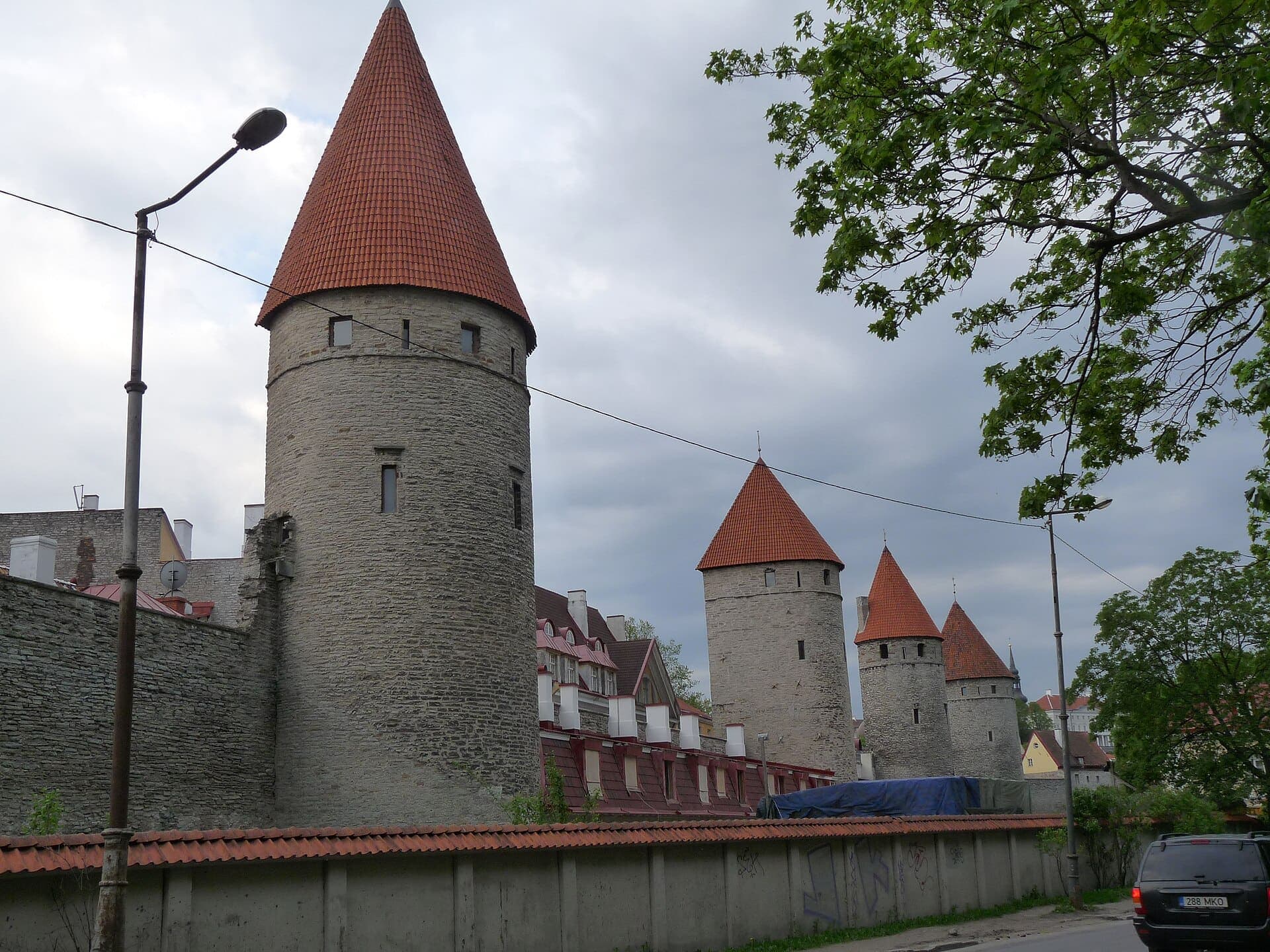
Tallinn has an old town of walls, pointed towers and cobbled lanes, and it is the most digital capital in Europe, where Skype was born and people vote online. The contrast is its character.
Two constraints to note, because they wreck the trip for anyone who does not know them: the town hall tower can only be climbed from 1 June to 31 August, and St Olav's tower only from April to October. KUMU, the art museum, is closed on Mondays from October to April but open on Mondays from May to September.
The district that explains today's city is Telliskivi, a former railway yard turned creative hub: going in costs nothing, and inside is Fotografiska, which on Fridays stays open until midnight with the ticket at ten euros from 8pm.
Riga: the Art Nouveau nobody expects
About a third of the buildings in central Riga are Art Nouveau: the highest concentration in Europe, and not a figure of speech. The façades on Alberta iela are by Mikhail Eisenstein, father of the director of October, built between 1901 and 1908 as rental blocks.
The central market is made from five German army zeppelin hangars erected here in 1930, and is UNESCO-listed along with the old town. One thing to know: on the first Monday of the month the pavilions close at 3pm for the sanitary day.
Budget: €90-140 a day in mid-season, €55-90 between January and March.
Vilnius: baroque and a surreal republic
Vilnius has the largest baroque complex in Eastern Europe, UNESCO-listed since 1994, and what rewards you is pushing on doors: behind the façades are dozens of open passageway courtyards, unsignposted and almost always empty.
Across the river is Užupis, the district that declared itself an independent republic in 1997, with a president, an anthem and an army of about a dozen. The constitution is fixed to metal plaques in over thirty languages, and some articles are serious and others are not.
It is the cheapest of the three Baltic capitals: €85-130 a day in mid-season, €50-85 in low.
Gdańsk: where the 20th century began, twice
Two enormous things began in Gdańsk: the Second World War, at dawn on 1 September 1939 at Westerplatte, and its peaceful end in the East, with the shipyard strike that gave rise to Solidarity.
The European Solidarity Centre, the museum at the shipyard, is often less crowded than the monuments in the centre and is the most important thing to see. Westerplatte is reached by bus or boat.
It costs €60-95 a day in mid-season, and is the base for Sopot, minutes away by train, which has the longest wooden pier in Europe and the Baltic beaches.
Wrocław: the dwarves and an enormous square
Wrocław was German under the name Breslau, almost entirely destroyed in 1945 and reborn Polish, and it has one of the largest medieval squares in Europe. Scattered through the streets are over a thousand bronze dwarves, heirs of an anti-communist protest movement that used absurdity against censorship.
To look for: Ostrów Tumski, the cathedral island, where the gas lamps are lit by hand every evening at dusk by a lamplighter in costume; and the Panorama Racławicka, a 360-degree painting 114 metres long inside a rotunda built for it.
It is the cheapest of the five: €60-95 a day in mid-season, €45-70 in low.
When to go
From May to August the days are enormously long and all five are at their best, with prices at their peak: €130-200 a day for the Baltic capitals. December is the second season: the Christmas markets in Tallinn and Wrocław are among the finest in Europe, the cold is severe and prices climb again. The best compromise remains April-May or September-October, when you can still be outdoors and pay a third less.