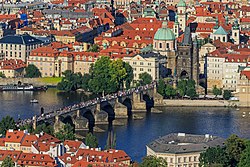
Tallinn, Estonia
Photo: Dmitry G, Wikimedia Commons (Public domain)
← All destinations

Tallinn, Estonia

A fairy-tale medieval city (walls, pointed towers and cobbled alleys), that's also Europe's most digital capital, where Skype was born and people vote online. Tallinn alternates Gothic spires and creative quarters carved from old factories, all at still-human prices.

✓ Sources checked on 12 October 20265 sources cited

What to see in Tallinn?

14 places checked against the sources. The 6 gems the guidebooks skip come first, then the classics: every card has the hard facts on top and the why below.

On the map: yellow pins are the gems. Tap a pin to jump to its card.

✦ Hidden gems · off the standard guides

Telliskivi Creative City
Nightlife✦ gem

Telliskivi Creative City

A former industrial railway yard turned creative quarter: walking in and wandering among the sheds, the murals and the shops costs nothing. The centrepiece is Fotografiska, open from 9am and running until midnight on Fridays: from 8pm on Friday the ticket drops to €10 against the €14-17 full rate, which is the best window. Under-15s go free. It is a quarter of an hour on foot from the old town, behind the station, past the Balti Jaam market.

Photo: Relkmsaiia, Wikimedia Commons (CC BY-SA 4.0)
Monuments✦ gem

St Catherine's Passage (Katariina käik)

A covered lane some fifty metres long between Vene and Müürivahe, free and always open, with 14th- and 15th-century tombstones set into its walls, recovered from St Catherine's, the ruined Dominican priory that gives it its name. Along one side are the craft workshops, working glass, ceramics and hats with their doors open: they are real workshops on workshop hours, so in the evening and on Sundays you find the lane but not the work.

Kalamaja district
Other✦ gem

Kalamaja district

Entry
free

A former fishermen's and workers' district just outside the walls, with two-storey wooden houses on a stone base and a central doorway: the type is actually called the 'Tallinn house' and dates from the early 20th century. Nothing is charged and there is nothing to visit: you walk, and in twenty minutes you reach the sea. On the way is the Balti Jaam market, a real market with smoked-fish counters rather than a food hall.

Photo: Dmitry G, Wikimedia Commons (Public domain)
Lennusadam (Seaplane Harbour)
Museums✦ gem

Lennusadam (Seaplane Harbour)

Twenty-two euros full, eleven for young people and students, forty for the family ticket; free under 8. The hangar dates from the 1920s and was the first building in the world with a reinforced-concrete dome unsupported from inside: it was made for seaplanes, which is why there are no columns. At its centre is the submarine Lembit, from 1936, which you go inside. For thirty euros the combined ticket adds the Fat Margaret tower and lasts a week.

Photo: Hiiumaa mudeliklubi, Wikimedia Commons (CC BY-SA 4.0)
Food✦ gem

Kalev marzipan

Estonia's claim on marzipan starts at a pharmacy on the town hall square, where by tradition it was made as a medicine. Today the Kalev factory runs a marzipan room in the centre where you can watch the figurines being hand-painted and paint one yourself. Watch the price: the same boxes sold in old-town shops cost far more than in the supermarket, where Kalev is an ordinary industrial brand.

Food✦ gem

Vana Tallinn

A dark rum-based liqueur with vanilla, citrus and spices, made since 1960 and by now a city symbol. The practical advice matters more than the description: in the old town's souvenir shops it costs two or three times what it does in a supermarket or the port duty-free, and it is exactly the same bottle. It is drunk neat and very cold, or a measure of it in black coffee, which is how Estonians take it in winter.

The classics

Town Hall Square (Raekoja plats)
Monuments

Town Hall Square (Raekoja plats)

Ticket
€7
Steps
115

The square is free to cross, but the town hall tower is not, and above all it is almost never open: you can climb only from 1 June to 31 August, it costs €7 (€5 for students) and it is 115 steps to the gallery thirty-four metres up. The tower was built between 1402 and 1404 and Old Thomas, the city's emblem, turns as a weathervane on top. Outside those three summer months there is the square and nothing else, and the cafés with the highest prices in the old town.

Photo: PIERRE ANDRE LECLERCQ, Wikimedia Commons (CC BY-SA 4.0)
Toompea Hill and Alexander Nevsky Cathedral
Monuments

Toompea Hill and Alexander Nevsky Cathedral

Entry
free

The upper town has been a separate municipality since the Middle Ages: Toompea belonged to the nobles and bishops, the lower town to the merchants, and the two had separate walls and gates that were shut at night. The Alexander Nevsky Orthodox cathedral is free to enter but photography inside is not allowed; it was built between 1894 and 1900 by the Russian Empire directly facing the castle, as a political statement, and after independence there were proposals to pull it down. The Estonian parliament sits in the building opposite.

Photo: rene boulay, Wikimedia Commons (CC BY-SA 3.0)
St Olaf's Church (Oleviste)
Monuments

St Olaf's Church (Oleviste)

The church is free to enter; climbing the tower costs €10 and is only possible from April to October: in the other months the stair door is locked and there is no alternative. It is two hundred and fifty-eight steps up a stone spiral that narrows as it rises, with no passing places: anyone claustrophobic will feel it. The spire reaches a hundred and twenty-four metres and for a stretch of the 16th century was probably the tallest building in the world, before lightning set it on fire more than once.

Photo: rene boulay, Wikimedia Commons (CC BY-SA 3.0)
Monuments

Medieval walls and towers

These are among the best-preserved medieval walls in Europe, and most of them are looked at from outside for nothing, walking the perimeter. Getting up on them needs tickets for the individual stretches: at the Hellemann tower it is €4 (€2 students) for about two hundred metres of wall-walk to the Munkadetagune tower; another stretch runs between the Nunna, Sauna and Kuldjala towers. The city museums sell one ticket covering several towers: ask for it at the first one.

Monuments

Kadriorg Palace and park

Hours
10:00-20:00

Sixteen euros for KUMU, eleven reduced, open Tuesday to Thursday 10am-8pm and Friday to Sunday 10am-6pm, with the desk closing half an hour earlier. The trap is Monday: from May to September it is open, from October to April it is closed. The baroque Kadriorg palace, commissioned by Peter the Great in 1718, is a separate museum with its own ticket. Tram 1 or 3 from the centre gets you there in a quarter of an hour, and the park around it is free.

Nature

Kohtuotsa and Patkuli viewpoints

Two public terraces on the edge of Toompea, free and open at any hour: Kohtuotsa looks over the red roofs, the spires and the harbour, Patkuli over the wall towers, and it is reached from the lower town up a staircase of more than a hundred and fifty steps. Kohtuotsa is the one with 'The Times We Had' painted on the wall, the backdrop of half the photographs of Tallinn. At dawn and late in the day they are empty; mid-morning the cruise-ship groups arrive all at once.

Food

Leib (rye black bread)

Black rye bread is not ordered: it arrives on its own, often before anything else and without anyone asking, and that is how a meal opens in Estonia. It is sour, dense and moist, made with a sourdough starter and baked long, and has nothing in common with the sweeter rye breads of the rest of northern Europe. In supermarkets it takes up a whole shelf: it is the cheapest edible souvenir there is and it survives the journey home.

Food

Game and winter soups

Elk, wild boar, thick soups and spiced beer are the menu of the 'medieval' taverns around the square, the candlelit ones with waiters in costume. Take them for what they are: reconstructions for visitors, at twice the prices of the rest of the city, with the bill growing through the extras. Real Estonian cooking, seasonal and game-based, is better eaten in the restaurants of Kalamaja and Telliskivi, where the same meats cost less and nobody dresses as an innkeeper.

How to plan your days in Tallinn?

Three routes for different travel styles, built only from this dossier's verified places. Realistic pace: 2-3 stops a day.

First time

2 days

The landmark sights, at the right pace.

Day 1

  • Town Hall Square (Raekoja plats)

    The square is free to cross, but the town hall tower is not, and above all it is almost never open: you can climb only from 1 June to 31 August, it costs €7 (€5 for students) and it is 115 steps to the gallery thirty-four metres up. The tower was built between 1402 and 1404 and Old Thomas, the city's emblem, turns as a weathervane on top. Outside those three summer months there is the square and nothing else, and the cafés with the highest prices in the old town.

  • Toompea Hill and Alexander Nevsky Cathedral

    The upper town has been a separate municipality since the Middle Ages: Toompea belonged to the nobles and bishops, the lower town to the merchants, and the two had separate walls and gates that were shut at night. The Alexander Nevsky Orthodox cathedral is free to enter but photography inside is not allowed; it was built between 1894 and 1900 by the Russian Empire directly facing the castle, as a political statement, and after independence there were proposals to pull it down. The Estonian parliament sits in the building opposite.

  • St Olaf's Church (Oleviste)

    The church is free to enter; climbing the tower costs €10 and is only possible from April to October: in the other months the stair door is locked and there is no alternative. It is two hundred and fifty-eight steps up a stone spiral that narrows as it rises, with no passing places: anyone claustrophobic will feel it. The spire reaches a hundred and twenty-four metres and for a stretch of the 16th century was probably the tallest building in the world, before lightning set it on fire more than once.

Day 2

  • Medieval walls and towers

    These are among the best-preserved medieval walls in Europe, and most of them are looked at from outside for nothing, walking the perimeter. Getting up on them needs tickets for the individual stretches: at the Hellemann tower it is €4 (€2 students) for about two hundred metres of wall-walk to the Munkadetagune tower; another stretch runs between the Nunna, Sauna and Kuldjala towers. The city museums sell one ticket covering several towers: ask for it at the first one.

  • Kadriorg Palace and park

    Sixteen euros for KUMU, eleven reduced, open Tuesday to Thursday 10am-8pm and Friday to Sunday 10am-6pm, with the desk closing half an hour earlier. The trap is Monday: from May to September it is open, from October to April it is closed. The baroque Kadriorg palace, commissioned by Peter the Great in 1718, is a separate museum with its own ticket. Tram 1 or 3 from the centre gets you there in a quarter of an hour, and the park around it is free.

  • Kohtuotsa and Patkuli viewpoints

    Two public terraces on the edge of Toompea, free and open at any hour: Kohtuotsa looks over the red roofs, the spires and the harbour, Patkuli over the wall towers, and it is reached from the lower town up a staircase of more than a hundred and fifty steps. Kohtuotsa is the one with 'The Times We Had' painted on the wall, the backdrop of half the photographs of Tallinn. At dawn and late in the day they are empty; mid-morning the cruise-ship groups arrive all at once.

Off the beaten path

2 days

Hidden gems away from the usual circuits.

Day 1

  • Telliskivi Creative City✦ hidden gem

    A former industrial railway yard turned creative quarter: walking in and wandering among the sheds, the murals and the shops costs nothing. The centrepiece is Fotografiska, open from 9am and running until midnight on Fridays: from 8pm on Friday the ticket drops to €10 against the €14-17 full rate, which is the best window. Under-15s go free. It is a quarter of an hour on foot from the old town, behind the station, past the Balti Jaam market.

  • St Catherine's Passage (Katariina käik)✦ hidden gem

    A covered lane some fifty metres long between Vene and Müürivahe, free and always open, with 14th- and 15th-century tombstones set into its walls, recovered from St Catherine's, the ruined Dominican priory that gives it its name. Along one side are the craft workshops, working glass, ceramics and hats with their doors open: they are real workshops on workshop hours, so in the evening and on Sundays you find the lane but not the work.

  • Kalamaja district✦ hidden gem

    A former fishermen's and workers' district just outside the walls, with two-storey wooden houses on a stone base and a central doorway: the type is actually called the 'Tallinn house' and dates from the early 20th century. Nothing is charged and there is nothing to visit: you walk, and in twenty minutes you reach the sea. On the way is the Balti Jaam market, a real market with smoked-fish counters rather than a food hall.

Day 2

  • Lennusadam (Seaplane Harbour)✦ hidden gem

    Twenty-two euros full, eleven for young people and students, forty for the family ticket; free under 8. The hangar dates from the 1920s and was the first building in the world with a reinforced-concrete dome unsupported from inside: it was made for seaplanes, which is why there are no columns. At its centre is the submarine Lembit, from 1936, which you go inside. For thirty euros the combined ticket adds the Fat Margaret tower and lasts a week.

  • Kalev marzipan✦ hidden gem

    Estonia's claim on marzipan starts at a pharmacy on the town hall square, where by tradition it was made as a medicine. Today the Kalev factory runs a marzipan room in the centre where you can watch the figurines being hand-painted and paint one yourself. Watch the price: the same boxes sold in old-town shops cost far more than in the supermarket, where Kalev is an ordinary industrial brand.

Food & markets

2 days

Eat and drink where locals actually go.

Day 1

  • Leib (rye black bread)

    Black rye bread is not ordered: it arrives on its own, often before anything else and without anyone asking, and that is how a meal opens in Estonia. It is sour, dense and moist, made with a sourdough starter and baked long, and has nothing in common with the sweeter rye breads of the rest of northern Europe. In supermarkets it takes up a whole shelf: it is the cheapest edible souvenir there is and it survives the journey home.

  • Kalev marzipan✦ hidden gem

    Estonia's claim on marzipan starts at a pharmacy on the town hall square, where by tradition it was made as a medicine. Today the Kalev factory runs a marzipan room in the centre where you can watch the figurines being hand-painted and paint one yourself. Watch the price: the same boxes sold in old-town shops cost far more than in the supermarket, where Kalev is an ordinary industrial brand.

  • Game and winter soups

    Elk, wild boar, thick soups and spiced beer are the menu of the 'medieval' taverns around the square, the candlelit ones with waiters in costume. Take them for what they are: reconstructions for visitors, at twice the prices of the rest of the city, with the bill growing through the extras. Real Estonian cooking, seasonal and game-based, is better eaten in the restaurants of Kalamaja and Telliskivi, where the same meats cost less and nobody dresses as an innkeeper.

Day 2

  • Vana Tallinn✦ hidden gem

    A dark rum-based liqueur with vanilla, citrus and spices, made since 1960 and by now a city symbol. The practical advice matters more than the description: in the old town's souvenir shops it costs two or three times what it does in a supermarket or the port duty-free, and it is exactly the same bottle. It is drunk neat and very cold, or a measure of it in black coffee, which is how Estonians take it in winter.

  • Telliskivi Creative City✦ hidden gem

    A former industrial railway yard turned creative quarter: walking in and wandering among the sheds, the murals and the shops costs nothing. The centrepiece is Fotografiska, open from 9am and running until midnight on Fridays: from 8pm on Friday the ticket drops to €10 against the €14-17 full rate, which is the best window. Under-15s go free. It is a quarter of an hour on foot from the old town, behind the station, past the Balti Jaam market.

🧭

Build your itinerary

Tell us how many days you're staying and in which month: we'll compose an itinerary from this dossier's verified places, with notes about the period.

Your itinerary

1

Day 1

  • Town Hall Square (Raekoja plats)

    The square is free to cross, but the town hall tower is not, and above all it is almost never open: you can climb only from 1 June to 31 August, it costs €7 (€5 for students) and it is 115 steps to the gallery thirty-four metres up. The tower was built between 1402 and 1404 and Old Thomas, the city's emblem, turns as a weathervane on top. Outside those three summer months there is the square and nothing else, and the cafés with the highest prices in the old town.

  • Toompea Hill and Alexander Nevsky Cathedral

    The upper town has been a separate municipality since the Middle Ages: Toompea belonged to the nobles and bishops, the lower town to the merchants, and the two had separate walls and gates that were shut at night. The Alexander Nevsky Orthodox cathedral is free to enter but photography inside is not allowed; it was built between 1894 and 1900 by the Russian Empire directly facing the castle, as a political statement, and after independence there were proposals to pull it down. The Estonian parliament sits in the building opposite.

  • Leib (rye black bread)

    Black rye bread is not ordered: it arrives on its own, often before anything else and without anyone asking, and that is how a meal opens in Estonia. It is sour, dense and moist, made with a sourdough starter and baked long, and has nothing in common with the sweeter rye breads of the rest of northern Europe. In supermarkets it takes up a whole shelf: it is the cheapest edible souvenir there is and it survives the journey home.

2

Day 2

  • St Olaf's Church (Oleviste)

    The church is free to enter; climbing the tower costs €10 and is only possible from April to October: in the other months the stair door is locked and there is no alternative. It is two hundred and fifty-eight steps up a stone spiral that narrows as it rises, with no passing places: anyone claustrophobic will feel it. The spire reaches a hundred and twenty-four metres and for a stretch of the 16th century was probably the tallest building in the world, before lightning set it on fire more than once.

  • Medieval walls and towers

    These are among the best-preserved medieval walls in Europe, and most of them are looked at from outside for nothing, walking the perimeter. Getting up on them needs tickets for the individual stretches: at the Hellemann tower it is €4 (€2 students) for about two hundred metres of wall-walk to the Munkadetagune tower; another stretch runs between the Nunna, Sauna and Kuldjala towers. The city museums sell one ticket covering several towers: ask for it at the first one.

  • Game and winter soups

    Elk, wild boar, thick soups and spiced beer are the menu of the 'medieval' taverns around the square, the candlelit ones with waiters in costume. Take them for what they are: reconstructions for visitors, at twice the prices of the rest of the city, with the bill growing through the extras. Real Estonian cooking, seasonal and game-based, is better eaten in the restaurants of Kalamaja and Telliskivi, where the same meats cost less and nobody dresses as an innkeeper.

3

Day 3

  • Kadriorg Palace and park

    Sixteen euros for KUMU, eleven reduced, open Tuesday to Thursday 10am-8pm and Friday to Sunday 10am-6pm, with the desk closing half an hour earlier. The trap is Monday: from May to September it is open, from October to April it is closed. The baroque Kadriorg palace, commissioned by Peter the Great in 1718, is a separate museum with its own ticket. Tram 1 or 3 from the centre gets you there in a quarter of an hour, and the park around it is free.

  • Kohtuotsa and Patkuli viewpoints

    Two public terraces on the edge of Toompea, free and open at any hour: Kohtuotsa looks over the red roofs, the spires and the harbour, Patkuli over the wall towers, and it is reached from the lower town up a staircase of more than a hundred and fifty steps. Kohtuotsa is the one with 'The Times We Had' painted on the wall, the backdrop of half the photographs of Tallinn. At dawn and late in the day they are empty; mid-morning the cruise-ship groups arrive all at once.

  • Telliskivi Creative City✦ hidden gem

    A former industrial railway yard turned creative quarter: walking in and wandering among the sheds, the murals and the shops costs nothing. The centrepiece is Fotografiska, open from 9am and running until midnight on Fridays: from 8pm on Friday the ticket drops to €10 against the €14-17 full rate, which is the best window. Under-15s go free. It is a quarter of an hour on foot from the old town, behind the station, past the Balti Jaam market.

Want an itinerary tailored to your dates in Tallinn?

Travel dates, where you stay and the kind of trip: we tailor this same verified dossier to your exact needs.

Coming soon
Telliskivi Creative City: former railway warehouses turned into a creative quarter, among street art, studios, venues and the Fotografiska photography museum.
Telliskivi Creative City: former railway warehouses turned into a creative quarter, among street art, studios, venues and the Fotografiska photography museum.Photo: A.Savin, Wikimedia Commons (FAL)

What to know before going to Tallinn?

Recurring scams and local rules worth knowing before you arrive.

⚠ Scams to know

Old-town bars and clubs with inflated bills

low confidence

The UK official advice for Estonia notes that pickpockets are a problem in the bars and nightclubs of Tallinn's Old Town. The inflated-bill variant, after being invited to buy drinks, is much reported by visitors but does not appear in the advisory: treat it as a precaution rather than an established fact

How to avoid it: Only go to venues with clearly displayed prices and good reviews, pay one round at a time and be wary of anyone luring you in the street with invitations to venues.

Source

Taxis without a meter or with inflated fares

verified

The UK advice is explicit: unmarked taxis are illegal and should not be hailed in the street. A legitimate taxi has the price list on the rear window, the driver's licence visible, a working meter and TAKSO signage at the ranks

How to avoid it: Book through an app, the advice names Bolt, Forus and Uber, checking the car matches the one assigned to you, or insist on the meter in a licensed taxi.

Source

Pickpocketing in the busiest spots

low confidence

The pickpocketing the UK advice documents for Estonia concerns the bars and clubs of the Old Town rather than the daytime squares: at busy hours ordinary crowd precautions apply

How to avoid it: Keep bags and wallets in front of you in crowds and at the markets.

Source

⚖ Laws & penalties

Taxis required to use the meter and markings

low riskmedium confidence

The UK official advice lists what a legitimate taxi must have in Estonia: the price list on the rear window, the driver's licence in a visible place, a working meter and, at ranks, TAKSO signage. Unmarked taxis are illegal and hailing them in the street is advised against.

Source

Evening alcohol sales restricted

low riskverified

In Estonia the sale of alcohol in shops is banned from 10pm to 10am, a rule that applies in Tallinn too; the minimum age to buy and drink is 18. Bars and restaurants may serve alcohol beyond that time only for consumption on the premises, not to take away.

Source

Ticket to be validated on transport

low risklow confidence

On public transport the ticket must be validated on boarding and inspectors fine anyone without a valid one. Free travel is a benefit for residents registered in Tallinn, not for visitors: the conditions are on the city's site.

Source

No tourist tax in Tallinn

low riskmedium confidence

Estonia has no tax on overnight stays and the local taxes act does not list it among those municipalities may introduce. In July 2026 the City of Tallinn repeated that it does not want one, while Pärnu and the association of municipalities would welcome it; hoteliers first want a register of tourist apartments. In 2026 nothing is charged in Tallinn.

Source
St Catherine's Passage (Katariina käik), a cobbled medieval alley among artisan workshops and old tombstones set into the walls.
St Catherine's Passage (Katariina käik), a cobbled medieval alley among artisan workshops and old tombstones set into the walls.Photo: HartOve, Wikimedia Commons (CC BY 4.0)

What happens in Tallinn through the year?

Hover over a month on the timeline for details.

How much do you spend in Tallinn, and when to go?

Jan
Feb
Mar
Apr
May
Jun
Jul
Aug
Sep
Oct
Nov
Dec
  • low60-90€per day
  • mid90-140€per day
  • high140-200€per day

When it works best, by type of trip

Summer and white nightsJune-August

Very long days, terraces, Old Town Days and Midsummer; mild weather and the city at its liveliest.

Christmas magicDecember

One of the finest markets in Europe in the snowy old town; biting cold but a unique atmosphere.

Budget and quietApril-May, September-October

Fewer crowds and lower prices, with the old town enjoyable without the crush.

Rough estimate (lodging + meals + local transport), not a precise verified source.

✦

Did you know... Skype was born in Tallinn: Estonia is one of the most digitized countries in the world, with e-residency and online signing and voting.

How to get to Tallinn and around?

No car neededThe old town is pedestrian and cobbled, perfect on foot; a car is in the way and the cobbles awkward. For the rest, trams, buses and trolleybuses are enough, cheap and widespread.

A network of trams, buses and trolleybuses: free for Tallinn's registered residents, while tourists pay €2 for a one-hour ticket, bought by tapping a contactless bank card on the front-door validator, with a topped-up Ühiskaart smartcard (€3) or as a QR code in the Pilet.ee app; the day ticket costs €5.50, 3 days €9 and 5 days €11, and the Tallinn Card includes transport and museums. Licensed taxis must by law use the meter and display the company's markings.

  • For taxis use apps like Bolt that show the fare before the ride: you avoid surcharges
  • The old town is done entirely on foot: wear comfortable shoes for the cobbles
  • Buy the smartcard or the QR ticket for transport: free travel is only for registered residents
  • For Kadriorg and the Pirita seaside, trams and buses are handy and cheap

Is Tallinn safe?

Good to know

  • Tallinn is a safe city: the main risk for tourists is inflated bills in the old-town venues, not street crime
  • Watch out for petty pickpocketing in crowded spots and for nightlife scams
  • The old town's cobbles are slippery in rain and frost: mind your footing
Source
✦

Did you know... The Christmas market in Town Hall Square is regularly voted among the finest in Europe, with the tree set up here since 1441 according to local tradition.

Frequently asked questions about Tallinn

Short answers drawn from the verified data of this dossier: details and sources are in the sections above.

How much does a day in Tallinn cost?

Season low (January-March (excluding late December), November): 60-90€ per day; Season mid (April-May, September-October): 90-140€ per day; Season high (June-August, December): 140-200€ per day.

When to go to Tallinn?

Summer and white nights: June-August. Very long days, terraces, Old Town Days and Midsummer; mild weather and the city at its liveliest. Christmas magic: December. One of the finest markets in Europe in the snowy old town; biting cold but a unique atmosphere. Budget and quiet: April-May, September-October. Fewer crowds and lower prices, with the old town enjoyable without the crush.

Is Tallinn safe?

Tallinn is a safe city: the main risk for tourists is inflated bills in the old-town venues, not street crime

Do you need a car in Tallinn?

No. The old town is pedestrian and cobbled, perfect on foot; a car is in the way and the cobbles awkward. For the rest, trams, buses and trolleybuses are enough, cheap and widespread.

How do you get to Tallinn?

A network of trams, buses and trolleybuses: free for Tallinn's registered residents, while tourists pay €2 for a one-hour ticket, bought by tapping a contactless bank card on the front-door validator, with a topped-up Ühiskaart smartcard (€3) or as a QR code in the Pilet.ee app; the day ticket costs €5.50, 3 days €9 and 5 days €11, and the Tallinn Card includes transport and museums. Licensed taxis must by law use the meter and display the company's markings.

Which hidden gems to see in Tallinn, off the guidebooks?

Telliskivi Creative City, St Catherine's Passage (Katariina käik), Kalamaja district, Lennusadam (Seaplane Harbour), Kalev marzipan, Vana Tallinn.

Which scams to avoid in Tallinn?

Old-town bars and clubs with inflated bills; Taxis without a meter or with inflated fares; Pickpocketing in the busiest spots.

Sources

Every source below was opened and read, not just cited. Entries that didn't hold up were downgraded to "low confidence" or dropped, not presented as certain.

Related destinations

Other dossiers close by country, area or kind of trip.