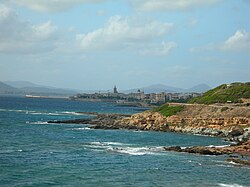
Villa Comunale (Lady Trevelyan's gardens)
The public gardens created by the same English noblewoman as Isola Bella, with bizarre brick 'Victorian follies', palms and a continuous balcony over the sea: free, cool and strangely ignored by the groups.
A Greek theatre suspended between Etna and the Ionian Sea, a baroque corso polished by two centuries of illustrious travellers and a cable car dropping to Isola Bella: Taormina is Sicily in stage-set version. Beautiful, pricey and best explored with a few strategies to dodge the crowds.
15 places checked against the sources. The 6 gems the guidebooks skip come first, then the classics: every card has the hard facts on top and the why below.
On the map: yellow pins are the gems. Tap a pin to jump to its card.
✦ Hidden gems · off the standard guides
The public gardens created by the same English noblewoman as Isola Bella, with bizarre brick 'Victorian follies', palms and a continuous balcony over the sea: free, cool and strangely ignored by the groups.
The little church is cut into the rock above the town and reached by the Saracen stair: about 30 minutes of steep steps with no shade, and there is no alternative by car to the top. From up there the theatre, the town and the coast come into one view, which never happens from the town itself. It costs nothing and has no closing time: sunset is the moment, but the descent in the dark wants a torch.
The acropolis-village 550 metres above Taormina: medieval alleys, the chequerboard piazzetta and the cafés where the ritual is almond wine. Reached by bus, ten minutes by car or a fine climb on foot.
The black basalt canyon carved by the Alcantara river about 20 km away: prismatic walls up to 25 metres high and icy water to wade through in summer. Combinable with the valley's villages in half a day.
They are the inland Messina villages where Coppola shot the Sicilian scenes of The Godfather, and the Bar Vitelli in Savoca is as it was, with the stills on the walls. They are about forty minutes by car from Taormina on narrow mountain roads, and there is no convenient public connection. It is an atmosphere trip for people who have seen the film: anyone who has not finds two handsome villages and nothing more.
It is an almond-flavoured liqueur invented in the cafés of Castelmola, the village above Taormina, and it is drunk cold in small glasses looking at the Etna. It is not a table wine and it is sweet: it is taken at sunset, which is the hour it exists for. With the Etna reds it is the wine souvenir of the area, and in Castelmola you buy it where it is made rather than in the shops on Taormina's corso.
The classics
The symbol: a Greek-Roman cavea carved into the hillside with Etna and the sea as scenery. Ticket €14 (reduced €7 for EU 18-25s, free under 18); go at opening or late afternoon for the best light and fewer groups.
The pedestrian drawing room crossing the town between Porta Messina and Porta Catania: palazzi, boutiques and the terrace of Piazza IX Aprile with the church of San Giuseppe, the clock tower and the view over the bay. The stroll is free; the coffee in the square is not.
Europe's highest active volcano (about 3,350 m), an hour and a half from Taormina: summit-crater excursions with a guide, lava flows and lunar landscapes. In winter you can combine snow and sea in the same day.
The islet-reserve joined to the pebble beach by a tongue of land: you visit the garden-museum (€6, reduced €3, 9am-4pm) and swim in transparent water. Early morning it's a dream; at noon in August, an anthill.
They are the two pebble bays below the town: Mazzarò with the historic beach clubs and Spisone longer and slightly cheaper. The practical point is that nearly all of it is club-run and the public access gaps are few and narrow, so in August they have to be taken early or there is no room. You go down by cable car, not by car: parking on the coast is as scarce as it is up in town.
It links the hilltop town to the coast in minutes (€3 one way, €5 return): the right way to combine the old town in the morning and the sea in the afternoon without hunting for parking twice. During maintenance there's the ASM replacement bus.
Granita is ordered in the morning with a brioche col tuppo, and it is dunked: it is breakfast, not dessert. The classic eastern Sicilian flavours are almond, lemon, pistachio and coffee with cream, and in the serious bars they are made without industrial bases, which shows in the texture, grainy rather than creamy. It costs a few euros and it is how to start the day before the corso fills.
Arancini with ragù or with butter, pizzette and cartocciate from the rosticcerie are the lunch that saves the budget in a town of expensive restaurants: you eat standing and pay a fraction. The rosticcerie are in the side streets off the corso, not on it, and that is where people from Taormina buy. In Taormina the arancino is masculine and pointed, unlike Palermo's: the difference is real and you notice it at once.
Raw red prawn, swordfish alla ghiotta with capers and olives, and pasta alla Norma with fried aubergine and salted ricotta, which is Catanese and at home here. The Etna DOC whites from carricante grow a short distance away on volcanic soil, and they are the right thing to drink with fish instead of a generic white. The trattorie off the corso cost markedly less than the ones with the view.
Three routes for different travel styles, built only from this dossier's verified places. Realistic pace: 2-3 stops a day.
The landmark sights, at the right pace.
Day 1
Ancient Theatre
The symbol: a Greek-Roman cavea carved into the hillside with Etna and the sea as scenery. Ticket €14 (reduced €7 for EU 18-25s, free under 18); go at opening or late afternoon for the best light and fewer groups.
Corso Umberto and Piazza IX Aprile
The pedestrian drawing room crossing the town between Porta Messina and Porta Catania: palazzi, boutiques and the terrace of Piazza IX Aprile with the church of San Giuseppe, the clock tower and the view over the bay. The stroll is free; the coffee in the square is not.
Isola Bella
The islet-reserve joined to the pebble beach by a tongue of land: you visit the garden-museum (€6, reduced €3, 9am-4pm) and swim in transparent water. Early morning it's a dream; at noon in August, an anthill.
Day 2
Taormina-Mazzarò cable car
It links the hilltop town to the coast in minutes (€3 one way, €5 return): the right way to combine the old town in the morning and the sea in the afternoon without hunting for parking twice. During maintenance there's the ASM replacement bus.
Mazzarò and Spisone beaches
They are the two pebble bays below the town: Mazzarò with the historic beach clubs and Spisone longer and slightly cheaper. The practical point is that nearly all of it is club-run and the public access gaps are few and narrow, so in August they have to be taken early or there is no room. You go down by cable car, not by car: parking on the coast is as scarce as it is up in town.
Mount Etna (day trip)
Europe's highest active volcano (about 3,350 m), an hour and a half from Taormina: summit-crater excursions with a guide, lava flows and lunar landscapes. In winter you can combine snow and sea in the same day.
Hidden gems away from the usual circuits.
Day 1
Villa Comunale (Lady Trevelyan's gardens)✦ hidden gem
The public gardens created by the same English noblewoman as Isola Bella, with bizarre brick 'Victorian follies', palms and a continuous balcony over the sea: free, cool and strangely ignored by the groups.
Madonna della Rocca sanctuary and Saracen Castle✦ hidden gem
The little church is cut into the rock above the town and reached by the Saracen stair: about 30 minutes of steep steps with no shade, and there is no alternative by car to the top. From up there the theatre, the town and the coast come into one view, which never happens from the town itself. It costs nothing and has no closing time: sunset is the moment, but the descent in the dark wants a torch.
Castelmola✦ hidden gem
The acropolis-village 550 metres above Taormina: medieval alleys, the chequerboard piazzetta and the cafés where the ritual is almond wine. Reached by bus, ten minutes by car or a fine climb on foot.
Day 2
Alcantara Gorges (day trip)✦ hidden gem
The black basalt canyon carved by the Alcantara river about 20 km away: prismatic walls up to 25 metres high and icy water to wade through in summer. Combinable with the valley's villages in half a day.
Savoca and Forza d'Agrò, the Godfather villages (day trip)✦ hidden gem
They are the inland Messina villages where Coppola shot the Sicilian scenes of The Godfather, and the Bar Vitelli in Savoca is as it was, with the stills on the walls. They are about forty minutes by car from Taormina on narrow mountain roads, and there is no convenient public connection. It is an atmosphere trip for people who have seen the film: anyone who has not finds two handsome villages and nothing more.
Eat and drink where locals actually go.
Day 1
Granita with brioche
Granita is ordered in the morning with a brioche col tuppo, and it is dunked: it is breakfast, not dessert. The classic eastern Sicilian flavours are almond, lemon, pistachio and coffee with cream, and in the serious bars they are made without industrial bases, which shows in the texture, grainy rather than creamy. It costs a few euros and it is how to start the day before the corso fills.
Arancini and Sicilian rosticceria
Arancini with ragù or with butter, pizzette and cartocciate from the rosticcerie are the lunch that saves the budget in a town of expensive restaurants: you eat standing and pay a fraction. The rosticcerie are in the side streets off the corso, not on it, and that is where people from Taormina buy. In Taormina the arancino is masculine and pointed, unlike Palermo's: the difference is real and you notice it at once.
Day 2
Ionian seafood and pasta alla Norma
Raw red prawn, swordfish alla ghiotta with capers and olives, and pasta alla Norma with fried aubergine and salted ricotta, which is Catanese and at home here. The Etna DOC whites from carricante grow a short distance away on volcanic soil, and they are the right thing to drink with fish instead of a generic white. The trattorie off the corso cost markedly less than the ones with the view.
Castelmola almond wine✦ hidden gem
It is an almond-flavoured liqueur invented in the cafés of Castelmola, the village above Taormina, and it is drunk cold in small glasses looking at the Etna. It is not a table wine and it is sweet: it is taken at sunset, which is the hour it exists for. With the Etna reds it is the wine souvenir of the area, and in Castelmola you buy it where it is made rather than in the shops on Taormina's corso.
Tell us how many days you're staying and in which month: we'll compose an itinerary from this dossier's verified places, with notes about the period.
Your itinerary
Day 1
Ancient Theatre
The symbol: a Greek-Roman cavea carved into the hillside with Etna and the sea as scenery. Ticket €14 (reduced €7 for EU 18-25s, free under 18); go at opening or late afternoon for the best light and fewer groups.
Corso Umberto and Piazza IX Aprile
The pedestrian drawing room crossing the town between Porta Messina and Porta Catania: palazzi, boutiques and the terrace of Piazza IX Aprile with the church of San Giuseppe, the clock tower and the view over the bay. The stroll is free; the coffee in the square is not.
Granita with brioche
Granita is ordered in the morning with a brioche col tuppo, and it is dunked: it is breakfast, not dessert. The classic eastern Sicilian flavours are almond, lemon, pistachio and coffee with cream, and in the serious bars they are made without industrial bases, which shows in the texture, grainy rather than creamy. It costs a few euros and it is how to start the day before the corso fills.
Day 2
Taormina-Mazzarò cable car
It links the hilltop town to the coast in minutes (€3 one way, €5 return): the right way to combine the old town in the morning and the sea in the afternoon without hunting for parking twice. During maintenance there's the ASM replacement bus.
Mount Etna (day trip)
Europe's highest active volcano (about 3,350 m), an hour and a half from Taormina: summit-crater excursions with a guide, lava flows and lunar landscapes. In winter you can combine snow and sea in the same day.
Arancini and Sicilian rosticceria
Arancini with ragù or with butter, pizzette and cartocciate from the rosticcerie are the lunch that saves the budget in a town of expensive restaurants: you eat standing and pay a fraction. The rosticcerie are in the side streets off the corso, not on it, and that is where people from Taormina buy. In Taormina the arancino is masculine and pointed, unlike Palermo's: the difference is real and you notice it at once.
Day 3
Isola Bella
The islet-reserve joined to the pebble beach by a tongue of land: you visit the garden-museum (€6, reduced €3, 9am-4pm) and swim in transparent water. Early morning it's a dream; at noon in August, an anthill.
Mazzarò and Spisone beaches
They are the two pebble bays below the town: Mazzarò with the historic beach clubs and Spisone longer and slightly cheaper. The practical point is that nearly all of it is club-run and the public access gaps are few and narrow, so in August they have to be taken early or there is no room. You go down by cable car, not by car: parking on the coast is as scarce as it is up in town.
Ionian seafood and pasta alla Norma
Raw red prawn, swordfish alla ghiotta with capers and olives, and pasta alla Norma with fried aubergine and salted ricotta, which is Catanese and at home here. The Etna DOC whites from carricante grow a short distance away on volcanic soil, and they are the right thing to drink with fish instead of a generic white. The trattorie off the corso cost markedly less than the ones with the view.
Want an itinerary tailored to your dates in Taormina?
Travel dates, where you stay and the kind of trip: we tailor this same verified dossier to your exact needs.

Recurring scams and local rules worth knowing before you arrive.
⚠ Scams to know
In summer, around the town gates and at Mazzarò, people offer to 'guard' your car for money. Taormina's public car parks are six, run by the municipal company ASM: Porta Catania, Lumbi, Porta Pasquale, Piazzale Piano Porto, Mazzeo and Mazzarò.
How to avoid it: Leave the car in one of the six ASM car parks (a shuttle runs from Lumbi to the centre) and don't give money to anyone 'guarding' cars in the street.
SourceIn the Permanent Hazard Zone, the area of the active summit craters, the Etna municipalities' ordinances only allow hikes with licensed alpine or volcanological guides: a tour promising the craters without a registered guide takes you where you are not allowed to go.
How to avoid it: Before booking, ask whether the hike is led by a licensed alpine or volcanological guide and how high it goes; remember that when the alert level rises, high-altitude hikes are suspended.
Source⚖ Laws & penalties
The centre is pedestrian and vehicle access is reserved for residents and permit holders, with restrictions tightened in high season and during events; outside marked bays fines are systematic and towing frequent. Guests staying in the centre must have their number plate registered by the hotel.
SourceIsola Bella is a managed nature reserve: removing pebbles, plants or any material, leaving the garden paths or landing outside opening hours (9am-4pm) is forbidden. Violations carry administrative fines.
SourceThe summit areas, roughly above 2,500 metres, are regulated by ordinances of the volcano's municipalities. In the Permanent Hazard Zone, which includes the active craters, you may only go up with licensed alpine or volcanological guides, at most 10 hikers per guide, with mountain clothing and a helmet; near active lava flows you must stay at least 50 metres away. During alert phases hikes are suspended.
SourcePer person per night, for the first 10 nights (from the eleventh you pay nothing): 5-star hotels €5, 4-star €4, 3-star €3, 2-star €2.50, 1-star €1.50; hotel residences €2 to €3.50; B&Bs €2.50 (3 stars) or €2 (1-2 stars); rented rooms, holiday homes and short lets €3; hostels, campsites and holiday villages €2. Rates in force since 1 September 2023 (council resolution 38/2023), shown as current on the municipality's PayTourist portal together with the regulation updated in April 2025.
Source
Hover over a month on the timeline for details.
When it works best, by type of trip
Warm water and long days without the July-August peak of heat and crowds: the best compromise for combining beach, Ancient Theatre and day trips.
Perfect weather for Etna, Alcantara and the panoramic stairways, softer prices and Etna often still snow-capped for photos from the theatre.
The most intimate Taormina: prices at their lowest, a half-empty corso and mild weather even in winter, but several lidos and some seasonal venues are closed.
Rough estimate (lodging + meals + local transport), not a precise verified source.
Did you know... Isola Bella, joined to the beach by a thin tongue of pebbles that appears and disappears with the tide, was bought in the 19th century by an English noblewoman, Florence Trevelyan, who turned it into a garden: today it's a nature reserve.
Main connections
Then a bus or taxi up to the town.
From Catania and its airport come the Interbus/Etna Trasporti buses (about 1h15); the train stops at Taormina-Giardini, down on the coast, with buses and taxis for the climb to the town. In town you walk; for the sea there's the cable car to Mazzarò, which for non-residents costs €8 a ride, €15 return or €20 for a day pass (ASM Taormina fares in September 2026; residents pay €2), or the local buses. Main car parks: Lumbi (with a free shuttle to the centre), Porta Catania and Porta Pasquale. From the airport: Taormina has none, the reference airport is Catania (CTA, about 47 km as the crow flies). By train you go from Catania Aeroporto Fontanarossa station to Taormina-Giardini, €6.50 and about an hour on direct services, then a bus or taxi up to the town. Watch out: some options offered by the ticketing system involve a change and take up to an hour and a half; the station is down on the coast, not in town.
⚠ Areas to avoid
Good to know
Did you know... In Castelmola, the balcony-village above Taormina, the speciality is almond wine: sipped in historic cafés with a view stretching from Etna to Calabria.
Short answers drawn from the verified data of this dossier: details and sources are in the sections above.
Season low (November-March): 60-95€ per day; Season mid (April-May, October): 85-140€ per day; Season high (June-September): 130-220€ per day.
Sea and town: June, September. Warm water and long days without the July-August peak of heat and crowds: the best compromise for combining beach, Ancient Theatre and day trips. Culture and walks: April-May, October. Perfect weather for Etna, Alcantara and the panoramic stairways, softer prices and Etna often still snow-capped for photos from the theatre. Budget and quiet: November-March. The most intimate Taormina: prices at their lowest, a half-empty corso and mild weather even in winter, but several lidos and some seasonal venues are closed.
Taormina is very safe: no areas to avoid, just watch for pickpockets at peak times on the corso and on the buses from Catania. The sea close to shore is generally calm, but the pebble bays drop away quickly: mind children and the currents around Isola Bella.
No. The old town is pedestrian and parking is scarce and expensive: a car is only useful for day trips (Etna, Alcantara, Savoca), not for Taormina itself. Drivers leave the car in the perimeter car parks and continue on foot or by shuttle.
Catania Aeroporto Fontanarossa (station) → Taormina-Giardini: Regional train, about 1 h on direct services, €6.50.
Villa Comunale (Lady Trevelyan's gardens), Madonna della Rocca sanctuary and Saracen Castle, Castelmola, Alcantara Gorges (day trip), Savoca and Forza d'Agrò, the Godfather villages (day trip), Castelmola almond wine.
Unlicensed parking attendants; Etna crater trips without a licensed guide.
Every source below was opened and read, not just cited. Entries that didn't hold up were downgraded to "low confidence" or dropped, not presented as certain.
Other dossiers close by country, area or kind of trip.