Catania, Sicily, Italy
Photo: Cayambe, Wikimedia Commons (CC BY-SA 4.0)
← All destinations

Catania, Sicily, Italy

Baroque built out of lava, Etna closing the main street, a fish market that shouts at seven in the morning and prices among the lowest of Italy's art cities. Catania is not tidy and does not try to be: it is a city you eat, walk and listen to.

✓ Sources verified by hand on 8 September 20268 sources cited

What to see

Monuments5

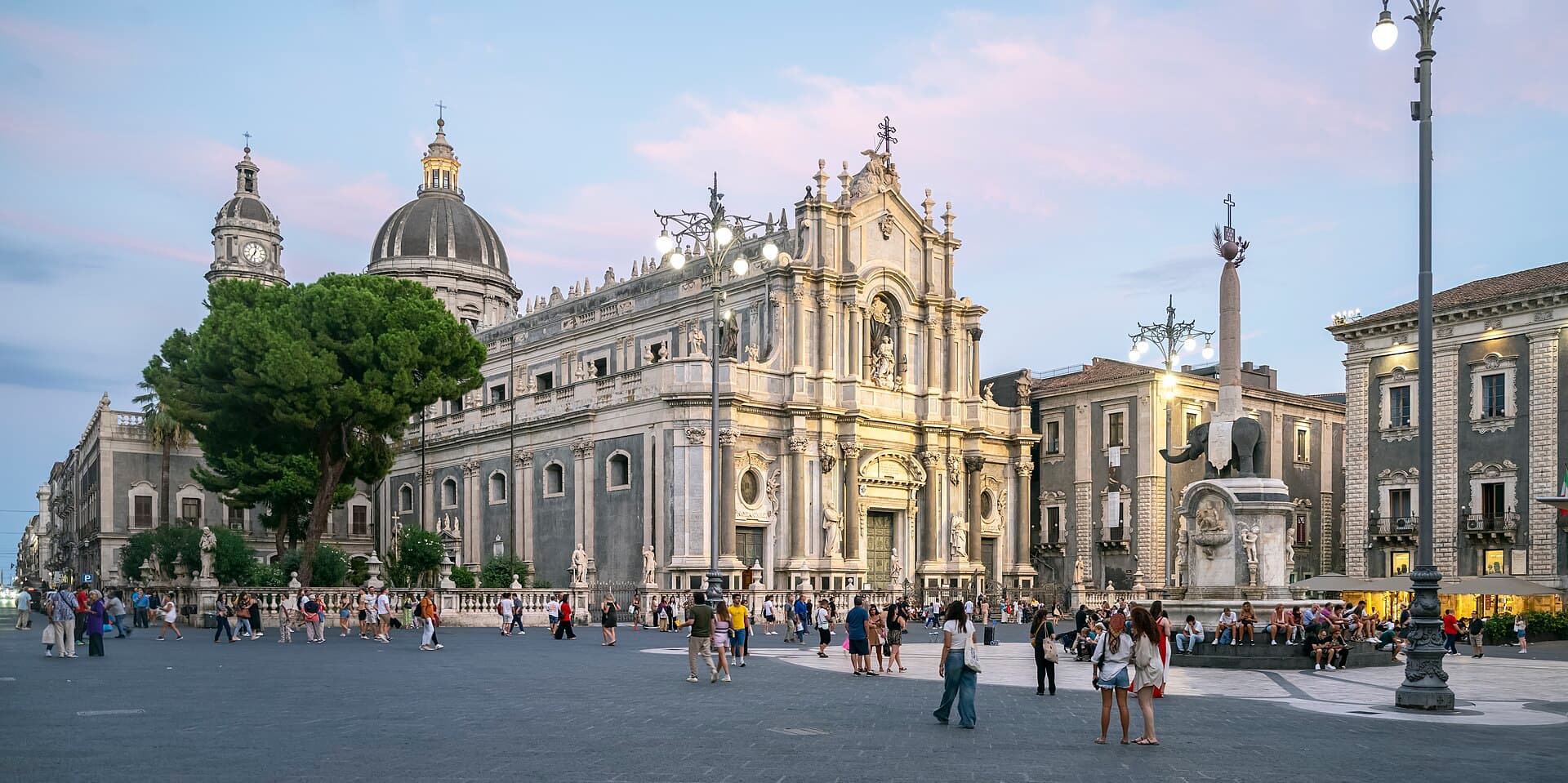
Piazza del Duomo and the Elephant fountain

Ground zero of the city: the cathedral of Sant'Agata, the Palazzo degli Elefanti and the fountain with u Liotru in lava stone. The cathedral is free outside services and Vincenzo Bellini's tomb is in the right aisle, while the saint's reliquary bust stays locked in its chapel and is only shown during the feast days. The square is also where almost every walking tour starts: between 10.00 and 12.00 it is full of groups, before 9 it is empty.

Benedictine Monastery

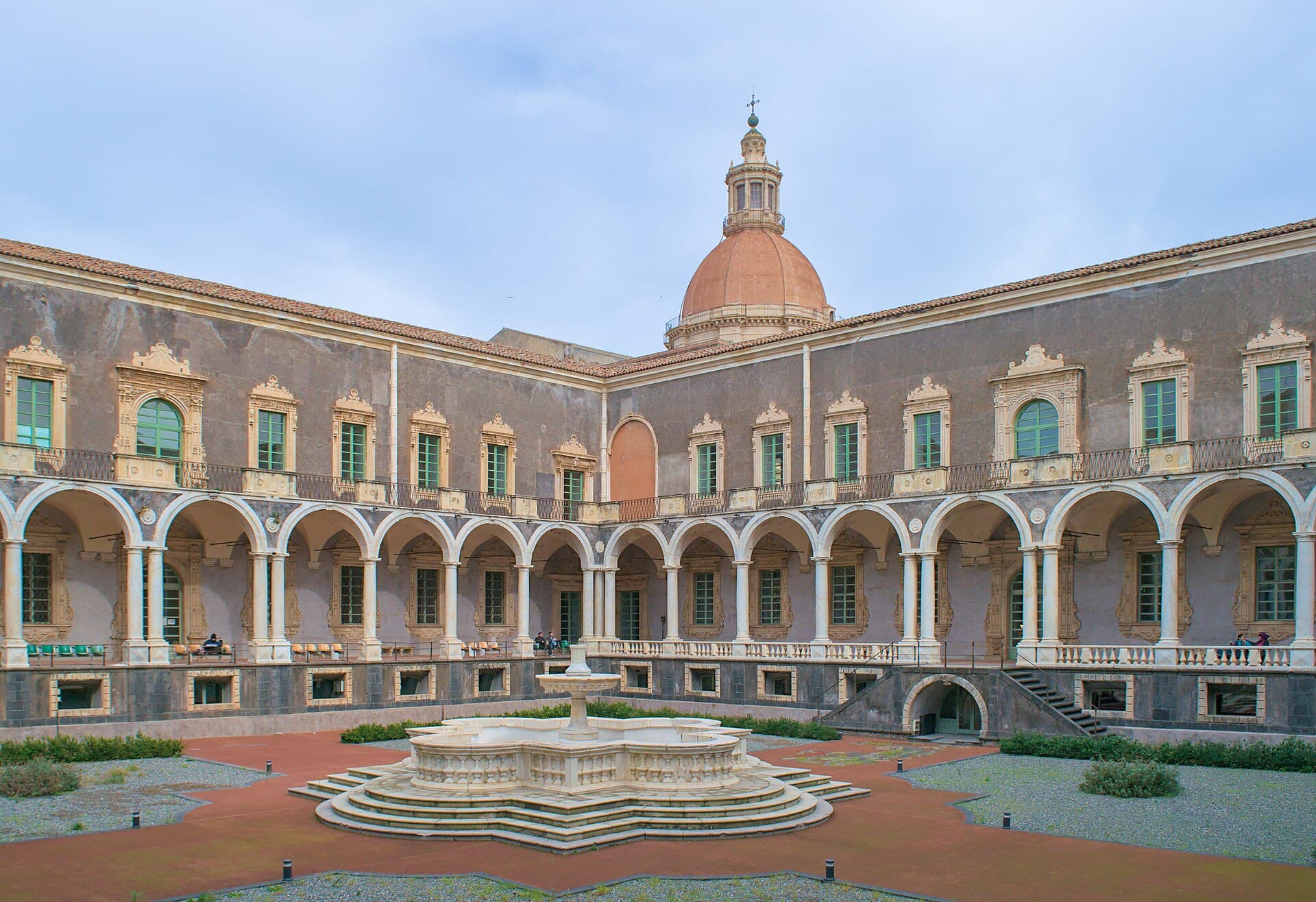
One of the largest monastic complexes in Europe, today the university's humanities department: lecture rooms, students and libraries sit alongside the cloisters and the 18th-century kitchens. You can only go in on the guided tour run by Officine Culturali, 10 euros full and 3 euros for under 19s, with a combined Monastery plus Botanical Garden ticket at 15 euros. Book ahead: slots are capped and sell out at weekends.

Roman Theatre and Odeon

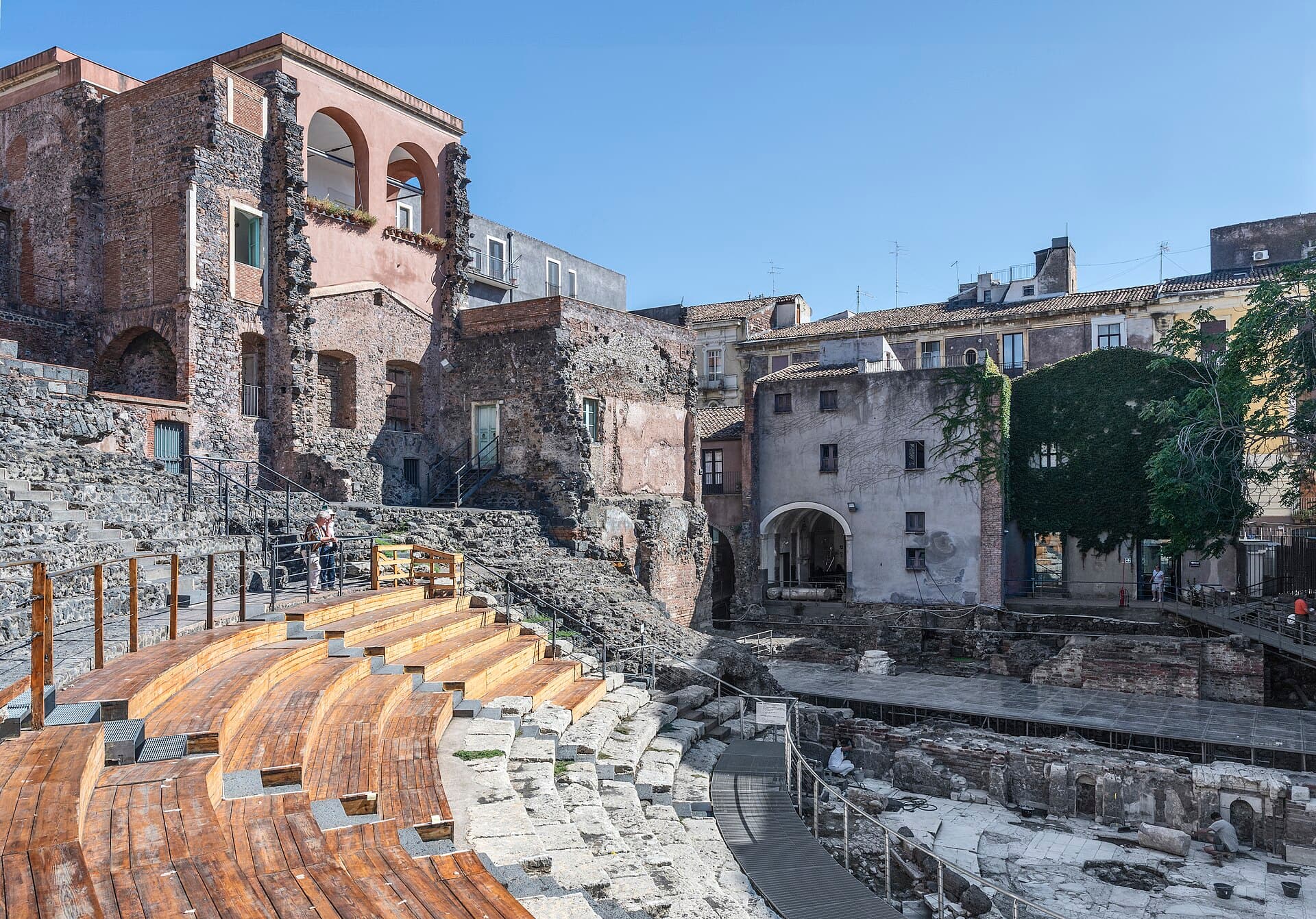
The imperial-era theatre is wedged between the buildings of Via Vittorio Emanuele and invisible from outside: the entrance is a doorway at number 266. Ticket 8 euros, reduced 4, daily 9am-7pm with last entry at 6.30pm. For 10 euros the combined ticket adds the Terme della Rotonda and Terme dell'Indirizzo, which almost nobody visits: if you plan to see even one more site it always pays.

Via Etnea and Villa Bellini

Three kilometres of straight line running from Piazza del Duomo towards the volcano: on clear days Etna closes the perspective at the end of the street, and that is the photograph everyone tries to take. Walking the whole length takes 40 minutes on a gentle climb. Halfway up lies Villa Bellini, the city's historic garden, free to enter, where the gardeners keep a calendar made of flowers and change the date on it every day.

Via Crociferi

Two hundred metres of climb with four churches and two convents in a row, entered under the arch of San Benedetto: it is the densest stretch of baroque in the city and takes 15 minutes to walk. The churches open on irregular hours, often staffed by volunteers and only in the morning, so the right way to take it is early, treating the interiors as a bonus rather than a plan.

Nature2

Aci Castello and Aci Trezza

Ten kilometres north, the Norman castle built on a lava spur and the Cyclops stacks that Verga put into I Malavoglia: a bus from the centre gets you there in about half an hour on the 1.40-euro urban ticket. You swim off rocks and platforms, not sand, so bring water shoes: anyone after a beach should go the other way, to the Playa south of the city.

Etna in a day

Without a car there is a single public departure a day: the AST bus leaves at 8.15am from Piazza Papa Giovanni XXIII in front of the central station, reaches Rifugio Sapienza around 10.15 and heads back at 4.30pm. Miss it and there is no evening alternative. From there the cable car climbs to 2,500 metres, 54 euros return, running 8.30am-4.45pm with the last descent at 5.15pm; the summit craters require an authorised volcanological guide and conditions can close the routes the same day.

Museums1

Castello Ursino and Pinacoteca Santa Chiara

The 13th-century Swabian castle has been closed since 7 February 2025 for a refurbishment estimated at two years, with services, a lift and roofs to redo: turning up at the gate is the most common mistake made with older guidebooks. The civic collections moved 100 metres away, to the Pinacoteca Santa Chiara at Via Castello Ursino 10, while the lava-stone moat stays accessible and takes 10 minutes to walk round.
Food3

Granita and brioche col tuppo

In Catania granita is breakfast, not dessert: you order it in the morning with a warm brioche and dip. The classic flavours are almond, black mulberry, lemon, pistachio and coffee with cream, and in serious bars you recognise them by the grainy texture, which melts fast and is never creamy like ice cream. The bars in the centre make it from before 7.00, and granita plus brioche stays under 5 euros almost everywhere.

Rosticceria and pasta alla Norma

Cipollina, arancino (in Catania the word is masculine and the shape is pointed, not round as in Palermo), cartocciata and bolognese are bought at a rosticceria, eaten standing and cost a couple of euros each: that is how you keep the bill down in a city that is already cheap. Pasta alla Norma, with fried aubergine, tomato, basil and salted ricotta grated over the top, is the house dish: if the salted ricotta never arrives, it is not a Norma.

Fish from the market and Etna wines

The trattorias around the market cook what is sold 20 metres away: marinated masculini (the local anchovies), swordfish, raw fish, sarde a beccafico. Fish is priced by weight and the price per kilo is not always on the menu: asking first and watching the piece go on the scales removes the only unpleasant surprise available. To drink, Etna DOC whites from carricante and reds from nerello mascalese grow on volcanic soil 30 minutes away by car.

Markets1

La Pescheria

The fish market spreads out behind Piazza del Duomo, under the arches below Via Garibaldi: counters of swordfish, tuna, anchovies and sea urchins, shouting vendors and dirty water underfoot. It opens at dawn Monday to Saturday and starts packing up around lunchtime, and there is nothing on Sunday. Arriving at 11.00 means seeing the tail end of the day: the alive part is before 9.00.

✦ Hidden gems · off the standard guides

Terme della Rotonda and Terme dell'Indirizzo

Two Roman bath complexes left inside the urban fabric, one turned into a church and then back into an excavation, the other wedged into a courtyard in the Civita district. They are included in the 10-euro combined archaeological ticket alongside the Roman Theatre and are almost always empty: you pay 2 euros more than for the theatre alone and get two sites to yourself.

Roman amphitheatre on Piazza Stesicoro

Of one of the largest amphitheatres in the Roman empire only a corner surfaces today, at the bottom of a balcony on Piazza Stesicoro: the rest lies under the houses and the square. Looking down at it costs nothing and takes 5 minutes while walking along Via Etnea, whereas going down into the underground depends on opening arrangements and is not guaranteed: the view from the railing already justifies the stop.

University Botanical Garden

Founded in 1858 a short walk from Villa Bellini, it holds one of Italy's largest succulent collections and 19th-century iron-and-glass glasshouses. It is worth taking within the 15-euro combined ticket with the Benedictine Monastery rather than on its own: it is ten minutes away on foot and the same cooperative runs both visits, so it all fits in one morning.

Circumetnea railway

The narrow-gauge train leaves from Catania Borgo and loops around the volcano through lava flows, citrus groves and hillside towns. It is a commuter service, not a tourist train: departures are few, need checking the day before, and there is no direct connection between Catania Borgo and Randazzo. Within Catania the same company runs the metro, 1 euro a single ride and a 2-euro MetroBus ticket valid 120 minutes that also covers the AMTS buses.

Via Santa Filomena and the student nightlife

In the evening the city moves to Via Santa Filomena, Piazza Teatro Massimo and the lanes around Via Gemmellaro: tight tables, cheap beer and kitchens open late, with a crowd that is largely students and locals. Things start after 9.30pm and on summer weekends the street stays full until 2am. It is the part of the city day-trippers never see, because by then they have already left.

Sample itineraries

Three routes for different travel styles, built only from this dossier's verified places. Realistic pace: 2-3 stops a day.

First time

2 days

The landmark sights, at the right pace.

Day 1

  • Piazza del Duomo and the Elephant fountain

    Ground zero of the city: the cathedral of Sant'Agata, the Palazzo degli Elefanti and the fountain with u Liotru in lava stone. The cathedral is free outside services and Vincenzo Bellini's tomb is in the right aisle, while the saint's reliquary bust stays locked in its chapel and is only shown during the feast days. The square is also where almost every walking tour starts: between 10.00 and 12.00 it is full of groups, before 9 it is empty.

  • Benedictine Monastery

    One of the largest monastic complexes in Europe, today the university's humanities department: lecture rooms, students and libraries sit alongside the cloisters and the 18th-century kitchens. You can only go in on the guided tour run by Officine Culturali, 10 euros full and 3 euros for under 19s, with a combined Monastery plus Botanical Garden ticket at 15 euros. Book ahead: slots are capped and sell out at weekends.

  • Roman Theatre and Odeon

    The imperial-era theatre is wedged between the buildings of Via Vittorio Emanuele and invisible from outside: the entrance is a doorway at number 266. Ticket 8 euros, reduced 4, daily 9am-7pm with last entry at 6.30pm. For 10 euros the combined ticket adds the Terme della Rotonda and Terme dell'Indirizzo, which almost nobody visits: if you plan to see even one more site it always pays.

Day 2

  • Via Etnea and Villa Bellini

    Three kilometres of straight line running from Piazza del Duomo towards the volcano: on clear days Etna closes the perspective at the end of the street, and that is the photograph everyone tries to take. Walking the whole length takes 40 minutes on a gentle climb. Halfway up lies Villa Bellini, the city's historic garden, free to enter, where the gardeners keep a calendar made of flowers and change the date on it every day.

  • Via Crociferi

    Two hundred metres of climb with four churches and two convents in a row, entered under the arch of San Benedetto: it is the densest stretch of baroque in the city and takes 15 minutes to walk. The churches open on irregular hours, often staffed by volunteers and only in the morning, so the right way to take it is early, treating the interiors as a bonus rather than a plan.

  • Castello Ursino and Pinacoteca Santa Chiara

    The 13th-century Swabian castle has been closed since 7 February 2025 for a refurbishment estimated at two years, with services, a lift and roofs to redo: turning up at the gate is the most common mistake made with older guidebooks. The civic collections moved 100 metres away, to the Pinacoteca Santa Chiara at Via Castello Ursino 10, while the lava-stone moat stays accessible and takes 10 minutes to walk round.
Off the beaten path

2 days

Hidden gems away from the usual circuits.

Day 1

  • Terme della Rotonda and Terme dell'Indirizzohidden gem

    Two Roman bath complexes left inside the urban fabric, one turned into a church and then back into an excavation, the other wedged into a courtyard in the Civita district. They are included in the 10-euro combined archaeological ticket alongside the Roman Theatre and are almost always empty: you pay 2 euros more than for the theatre alone and get two sites to yourself.

  • Roman amphitheatre on Piazza Stesicorohidden gem

    Of one of the largest amphitheatres in the Roman empire only a corner surfaces today, at the bottom of a balcony on Piazza Stesicoro: the rest lies under the houses and the square. Looking down at it costs nothing and takes 5 minutes while walking along Via Etnea, whereas going down into the underground depends on opening arrangements and is not guaranteed: the view from the railing already justifies the stop.

  • University Botanical Gardenhidden gem

    Founded in 1858 a short walk from Villa Bellini, it holds one of Italy's largest succulent collections and 19th-century iron-and-glass glasshouses. It is worth taking within the 15-euro combined ticket with the Benedictine Monastery rather than on its own: it is ten minutes away on foot and the same cooperative runs both visits, so it all fits in one morning.

Day 2

  • Circumetnea railwayhidden gem

    The narrow-gauge train leaves from Catania Borgo and loops around the volcano through lava flows, citrus groves and hillside towns. It is a commuter service, not a tourist train: departures are few, need checking the day before, and there is no direct connection between Catania Borgo and Randazzo. Within Catania the same company runs the metro, 1 euro a single ride and a 2-euro MetroBus ticket valid 120 minutes that also covers the AMTS buses.

  • Via Santa Filomena and the student nightlifehidden gem

    In the evening the city moves to Via Santa Filomena, Piazza Teatro Massimo and the lanes around Via Gemmellaro: tight tables, cheap beer and kitchens open late, with a crowd that is largely students and locals. Things start after 9.30pm and on summer weekends the street stays full until 2am. It is the part of the city day-trippers never see, because by then they have already left.

Food & markets

2 days

Eat and drink where locals actually go.

Day 1

  • Granita and brioche col tuppo

    In Catania granita is breakfast, not dessert: you order it in the morning with a warm brioche and dip. The classic flavours are almond, black mulberry, lemon, pistachio and coffee with cream, and in serious bars you recognise them by the grainy texture, which melts fast and is never creamy like ice cream. The bars in the centre make it from before 7.00, and granita plus brioche stays under 5 euros almost everywhere.

  • Rosticceria and pasta alla Norma

    Cipollina, arancino (in Catania the word is masculine and the shape is pointed, not round as in Palermo), cartocciata and bolognese are bought at a rosticceria, eaten standing and cost a couple of euros each: that is how you keep the bill down in a city that is already cheap. Pasta alla Norma, with fried aubergine, tomato, basil and salted ricotta grated over the top, is the house dish: if the salted ricotta never arrives, it is not a Norma.

  • Fish from the market and Etna wines

    The trattorias around the market cook what is sold 20 metres away: marinated masculini (the local anchovies), swordfish, raw fish, sarde a beccafico. Fish is priced by weight and the price per kilo is not always on the menu: asking first and watching the piece go on the scales removes the only unpleasant surprise available. To drink, Etna DOC whites from carricante and reds from nerello mascalese grow on volcanic soil 30 minutes away by car.

Day 2

  • La Pescheria

    The fish market spreads out behind Piazza del Duomo, under the arches below Via Garibaldi: counters of swordfish, tuna, anchovies and sea urchins, shouting vendors and dirty water underfoot. It opens at dawn Monday to Saturday and starts packing up around lunchtime, and there is nothing on Sunday. Arriving at 11.00 means seeing the tail end of the day: the alive part is before 9.00.

  • Via Santa Filomena and the student nightlifehidden gem

    In the evening the city moves to Via Santa Filomena, Piazza Teatro Massimo and the lanes around Via Gemmellaro: tight tables, cheap beer and kitchens open late, with a crowd that is largely students and locals. Things start after 9.30pm and on summer weekends the street stays full until 2am. It is the part of the city day-trippers never see, because by then they have already left.

🧭

Build your itinerary

Tell us how many days you're staying and in which month: we'll compose an itinerary from this dossier's verified places, with notes about the period.

Your itinerary

1

Day 1

  • Piazza del Duomo and the Elephant fountain

    Ground zero of the city: the cathedral of Sant'Agata, the Palazzo degli Elefanti and the fountain with u Liotru in lava stone. The cathedral is free outside services and Vincenzo Bellini's tomb is in the right aisle, while the saint's reliquary bust stays locked in its chapel and is only shown during the feast days. The square is also where almost every walking tour starts: between 10.00 and 12.00 it is full of groups, before 9 it is empty.

  • Benedictine Monastery

    One of the largest monastic complexes in Europe, today the university's humanities department: lecture rooms, students and libraries sit alongside the cloisters and the 18th-century kitchens. You can only go in on the guided tour run by Officine Culturali, 10 euros full and 3 euros for under 19s, with a combined Monastery plus Botanical Garden ticket at 15 euros. Book ahead: slots are capped and sell out at weekends.

  • La Pescheria

    The fish market spreads out behind Piazza del Duomo, under the arches below Via Garibaldi: counters of swordfish, tuna, anchovies and sea urchins, shouting vendors and dirty water underfoot. It opens at dawn Monday to Saturday and starts packing up around lunchtime, and there is nothing on Sunday. Arriving at 11.00 means seeing the tail end of the day: the alive part is before 9.00.

2

Day 2

  • Roman Theatre and Odeon

    The imperial-era theatre is wedged between the buildings of Via Vittorio Emanuele and invisible from outside: the entrance is a doorway at number 266. Ticket 8 euros, reduced 4, daily 9am-7pm with last entry at 6.30pm. For 10 euros the combined ticket adds the Terme della Rotonda and Terme dell'Indirizzo, which almost nobody visits: if you plan to see even one more site it always pays.

  • Via Etnea and Villa Bellini

    Three kilometres of straight line running from Piazza del Duomo towards the volcano: on clear days Etna closes the perspective at the end of the street, and that is the photograph everyone tries to take. Walking the whole length takes 40 minutes on a gentle climb. Halfway up lies Villa Bellini, the city's historic garden, free to enter, where the gardeners keep a calendar made of flowers and change the date on it every day.

  • Granita and brioche col tuppo

    In Catania granita is breakfast, not dessert: you order it in the morning with a warm brioche and dip. The classic flavours are almond, black mulberry, lemon, pistachio and coffee with cream, and in serious bars you recognise them by the grainy texture, which melts fast and is never creamy like ice cream. The bars in the centre make it from before 7.00, and granita plus brioche stays under 5 euros almost everywhere.

3

Day 3

  • Via Crociferi

    Two hundred metres of climb with four churches and two convents in a row, entered under the arch of San Benedetto: it is the densest stretch of baroque in the city and takes 15 minutes to walk. The churches open on irregular hours, often staffed by volunteers and only in the morning, so the right way to take it is early, treating the interiors as a bonus rather than a plan.

  • Castello Ursino and Pinacoteca Santa Chiara

    The 13th-century Swabian castle has been closed since 7 February 2025 for a refurbishment estimated at two years, with services, a lift and roofs to redo: turning up at the gate is the most common mistake made with older guidebooks. The civic collections moved 100 metres away, to the Pinacoteca Santa Chiara at Via Castello Ursino 10, while the lava-stone moat stays accessible and takes 10 minutes to walk round.
  • Rosticceria and pasta alla Norma

    Cipollina, arancino (in Catania the word is masculine and the shape is pointed, not round as in Palermo), cartocciata and bolognese are bought at a rosticceria, eaten standing and cost a couple of euros each: that is how you keep the bill down in a city that is already cheap. Pasta alla Norma, with fried aubergine, tomato, basil and salted ricotta grated over the top, is the house dish: if the salted ricotta never arrives, it is not a Norma.

Want an itinerary tailored to your dates in Catania?

Travel dates, where you stay and the kind of trip: we tailor this same verified dossier to your exact needs.

Coming soon
The Marble Cloister of the Benedictine Monastery, today a university department: visits are guided only.
The Marble Cloister of the Benedictine Monastery, today a university department: visits are guided only.Photo: The Cosmonaut, Wikimedia Commons (CC BY-SA 2.5 ca)

Before you go

Recurring scams and local rules worth knowing before you arrive.

⚠ Scams to know

Unlicensed parking attendants in the central squares

medium confidence

The phenomenon is structural and the police counter it with regular checks and fines: the most worked spots are Piazza Manganelli, Piazza Borsellino, Via Dusmet, Piazza Stesicoro and Piazza Carlo Alberto. Anyone asking for money over a public parking space has no standing to do so, and pressing the demand can amount to a criminal offence.

How to avoid it: Leave the car in a paid or attended car park and hand no money to anyone presenting themselves as a keeper: if you feel threatened call 112, the police respond to reports, including through the YouPol app.

Source

Fish sold by weight with no price per kilo stated

medium confidence

Italian law requires the retail price per unit of measure, meaning the price per kilo, precisely so the customer knows what they will pay before ordering. Around the Pescheria the menu often says only 'by weight': the bill arrives as a surprise and arguing afterwards achieves little.

How to avoid it: Ask the price per kilo before ordering, have the piece weighed in front of you, and remember that a neighbourhood trattoria five minutes from the market costs less than one with tables under the arches.

Source

Taxis from the airport with no meter

medium confidence

Rides agreed verbally with the meter switched off routinely end up above the real fare, and the airport is only four kilometres from the centre: the whole margin for inflating sits in the negotiation.

How to avoid it: Ask for the meter before getting in, or sidestep the issue with the Alibus, which leaves from outside arrivals, costs 4 euros and reaches the central station in a quarter of an hour.

Source

Pickpocketing in the markets and on crowded transport

medium confidence

The Pescheria and the 'a Fera o Luni market on Piazza Carlo Alberto are extremely tight and chaotic, and at peak times physical contact is constant: those are exactly the conditions in which pickpocketing works, as in any southern European market.

How to avoid it: Backpack on your front, wallet in an inside pocket, phone off the cafe table. If something is taken, report it to the police: you will need the report for insurance.

Source

Etna excursions sold on the street

verified

Stands and touts in the centre offer cheap trips that often stop well below the craters and include neither the cable car nor a qualified guide: above a certain altitude you cannot climb unaccompanied, so the tour ends in the Rifugio Sapienza car park.

How to avoid it: Always check three things in writing: maximum altitude reached, whether the cable car is included, and whether there is a licensed volcanological guide. Guides are registered with the regional college and the qualification can be verified.

Source

⚖ Laws & penalties

Piazza del Duomo and the surrounding streets are closed to traffic all day

medium riskmedium confidence

Unlike other Italian cities, Catania's limited traffic zone has no open windows: the cameras on Via Sant'Agata and Via Landolina run around the clock, holidays included, and in the pedestrian areas (Piazza Bellini, Via Teatro Massimo, Via Coppola and others) a parking ban with towing applies as well. If you are staying inside, your accommodation must register your number plate, and loading and unloading has fixed time slots.

Source

Travelling without a bus ticket costs sixty times the fare

medium riskverified

The penalty set by AMTS is sixty times the price of the 90-minute ticket, which costs 1.40 euros. All electronic tickets bought and not validated expire three days after purchase, so buying one in advance for tomorrow is fine, buying ten for the week is not.

Source

The summit craters of Etna require an authorised guide

high riskverified

Access to the summit areas is regulated according to eruptive activity and above a certain altitude you may proceed only accompanied by licensed alpine and volcanological guides registered with the regional college. Ordinances can close the routes at a few hours' notice, and climbing alone beyond the limits exposes you to fines as well as real risk.

Source

Volcanic ash on the roads changes the traffic rules

medium riskmedium confidence

When an ashfall covers the tarmac the mayor issues an ordinance banning two-wheeled vehicles, bicycles included, and setting a 30 km/h speed limit across the whole municipality, usually for forty-eight hours. Ash makes the surface as slippery as fine gravel: it happens several times a year in Catania and catches out anyone who has rented a scooter.

Source

Castello Ursino is closed for works and the collections are elsewhere

low riskverified

The civic museum has been shut since 7 February 2025 for a project estimated at two years, and the collections moved to the Pinacoteca Santa Chiara at Via Castello Ursino 10. This is not a rule of conduct but the municipal decision that sends most visitors to the wrong place: printed guides and many websites still list the castle's hours and ticket.

Source
The Roman Theatre wedged between the buildings of Via Vittorio Emanuele: invisible from the street, entered through a doorway.
The Roman Theatre wedged between the buildings of Via Vittorio Emanuele: invisible from the street, entered through a doorway.Photo: Cayambe, Wikimedia Commons (CC BY-SA 4.0)

Recurring events

Hover over a month on the timeline for details.

Budget & timing

Average daily cost

Season low (November-March)50-80€
Season mid (April-May, October)70-110€
Season high (June-September)95-150€

Rough estimate (lodging + meals + local transport), not a precise verified source.

Best time by type of trip

City and baroque · April-May, October

Twenty to twenty-five degrees, days long enough to combine the old town and Etna, prices still low and no serious queues: this is when Catania works best.

Etna and snow above the sea · December-March

Snow-capped Etna seen down Via Etnea is the image that defines the city, and in winter you can ski on the volcano in the morning and walk the centre in shirtsleeves in the afternoon. Some seasonal beach clubs and bars are closed, but the baroque and the museums are not.

Festival and tradition · February

Sant'Agata from 3 to 5 February is the most intense moment of the year, with the whole city out on the street. It needs booking months ahead and is not the time for anyone seeking quiet.

Did you know... Pasta alla Norma is named after the opera by Vincenzo Bellini, who was born here: the composer is buried in the cathedral of Sant'Agata and the city's opera house carries his name.

Getting around

Car recommended: No. In the centre a car is only a problem: Piazza Duomo and the surrounding streets are closed to traffic around the clock, free spaces do not exist and unlicensed attendants work the squares. You only need one for the inland towns, and even for Etna there is a public alternative.

AMTS city buses cost 1.40 euros for 90 minutes and 3.50 euros for a day pass, but on board those rise to 2 and 4.10 euros: buy in advance. From the airport the Alibus costs 4 euros (4.60 on board), is valid 90 minutes on other city lines too and reaches the central station. The Circumetnea metro charges 1 euro a single ride, 1.40 for a 120-minute ticket and 3 euros for a day pass; the 2-euro MetroBus ticket covers metro and bus together for 120 minutes. Trains for Syracuse, Taormina and Messina leave from the central station, coaches for Palermo and Agrigento from the Via Archimede terminal.

  • Buy your ticket before boarding: on board it costs 40 per cent more, and travelling without one carries a fine equal to sixty times the price of the 90-minute ticket.
  • For Etna in a day without a car there is one departure only: AST at 8.15am from Piazza Papa Giovanni XXIII, returning at 4.30pm from Rifugio Sapienza.
  • The 2-euro MetroBus pays off as soon as you make more than one journey: it covers metro and bus for two hours and costs the same as two single tickets.
  • The airport is four kilometres from the centre: a taxi takes minutes, but without the meter running the ride becomes a negotiation. The Alibus leaves from outside arrivals.

Safety

Areas to avoid

  • Catania is safe by day across the whole old town. At night the old San Berillo quarter, some side streets near the station and the poorly lit stretches along Via Plebiscito are best avoided on foot, especially alone.
  • In the markets (the Pescheria and 'a Fera o Luni) and on buses at peak times the only serious concern is pickpocketing: there is no assault problem, there is a pocket problem.
  • Leave the car empty: no bags, sat navs or luggage in sight, not even for ten minutes and not even in a paid car park.
  • In summer the heat is the most concrete risk: in July and August the middle of the day regularly passes thirty-five degrees, and in a centre built of black lava it feels hotter still. Do your sightseeing early and after 5pm.
  • If you are going up Etna, check the INGV Catania bulletin on the day and follow the guides' instructions: activity changes fast and the reachable altitude changes with it.
  • Single emergency number: 112.

Did you know... The river Amenano runs under the city, buried by the 1669 lava flow. It surfaces at a single point, the fountain beside Piazza del Duomo in front of the fish market entrance: what you see is the only open stretch of the river.

Sources

Every source below was opened and checked by hand, not just cited. Entries that didn't hold up were downgraded to "low confidence" or dropped, not presented as certain.

Related destinations

Other dossiers close by country, area or kind of trip.