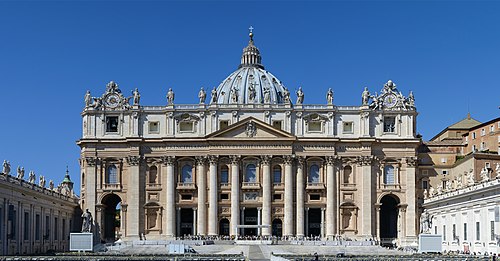
Rome, Italy
Photo: Diliff, Wikimedia Commons (CC BY-SA 2.5)
← All destinations

Rome, Italy

Rome isn't visited, it's walked through: every alley hides two thousand years of layered history, from baroque fountains to imperial ruins, in an elegant chaos that rewards those who look beyond the queues at the most photographed monuments.

✓ Sources verified by hand on 2026-06-298 sources cited

What to see

Colosseum and Roman Forum

The heart of ancient imperial Rome, the city's ultimate symbol

Trevi Fountain

The most spectacular baroque fountain in the world, the set of legendary films

Pantheon

A perfectly preserved Roman temple with a one-of-a-kind oculus dome

Vatican City and St. Peter's Basilica

An independent state in the heart of Rome, a masterpiece of art and faith

Piazza Navona

A baroque square built over an ancient Roman stadium, with Bernini's Fountain of the Four Rivers

Appian Way and Catacombs

The ancient Roman consular road with underground catacombs and rural views minutes from the centre

✦ Hidden gems — off the standard guides

Coppedè District

An eclectic micro-quarter with fairy-tale architecture, unknown to most tourists

Centrale Montemartini

Classical statues displayed among the machinery of a former power plant — a unique setting

Galleria Spada and the Borromini Perspective

A corridor with an optical illusion that makes it look far longer than it really is

Fountain of Books (via degli Staderari)

A small, curious book-shaped fountain between the Pantheon and Piazza Navona, ignored by standard guides

Gelsomino Walk (San Pietro Station)

A panoramic view of St. Peter's dome, free to access from platform 1 of the station

The Jewish Ghetto

A historic quarter with authentic Roman-Jewish cuisine and archaeological remains set into the buildings

Testaccio Market

A local covered market with Roman street food, away from the mass tourist trails

Carciofi alla giudia

Whole artichokes fried until crisp like chips, a specialty of the Ghetto's Roman-Jewish cuisine.

Trapizzino

A triangle of white pizza stuffed with ragù, meatballs or tripe — Roman street food born in the 2010s, now a classic.

Want an itinerary tailored to your dates in Rome?

Travel dates, where you stay and the kind of trip — we tailor this same verified dossier to your exact needs.

Coming soon
The Coppedè District, a fairy-tale micro-world of carved arches and eclectic buildings that few tourists discover.
The Coppedè District, a fairy-tale micro-world of carved arches and eclectic buildings that few tourists discover.Photo: Livioandronico2013, Wikimedia Commons (CC BY-SA 4.0)

Before you go

Recurring scams and local rules worth knowing before you arrive.

⚠ Scams to know

The three-shells game

low confidence

A classic street scam that takes money from passers-by with a fake game of skill

How to avoid it: Don't approach clusters of people around makeshift tables near the Trevi Fountain, Piazza di Spagna, the Pantheon and Piazza di Pietra

Source

Taxis with a 'broken' meter or inflated fares

low confidence

Unauthorized drivers or dishonest cabbies apply arbitrary fares to tourists

How to avoid it: Use only official white taxis with a meter, book through official apps or by calling the city radio-taxi numbers

Source

Ghost holiday rentals on social media

low confidence

An online scam scheme with listings for non-existent holiday homes; the verified source, however, concerns the Anzio/Nettuno area on the Lazio coast, not the city of Rome — the phenomenon is plausible but not specifically confirmed for Rome

How to avoid it: Book only through verified platforms (Booking, Airbnb with real reviews) and avoid direct payments off-platform

Source

Counterfeit QR codes

low confidence

Fake QR codes stuck on parking meters or tourist signs lead to phishing sites that steal payment data

How to avoid it: Always check the URL before entering payment data, and prefer paying directly through official apps

Source

Pickpocketing in crowded places and on public transport

low confidence

Pickpocketing is notoriously common in major Italian tourist cities, especially on tourist buses, the metro and around the main attractions

How to avoid it: Keep bags and backpacks in front of you, avoid flashing phones and wallets, and stay alert on crowded buses and tourist lines

Source

Unauthorized street vendors of roses, bracelets or selfie sticks

low confidence

They insist on giving you an item for free and then demand payment with psychological pressure

How to avoid it: Refuse with a firm 'no thank you' without taking anything in hand, even if it looks like a gift

Source

Fake 'inspectors' or fake charity petitions

low confidence

They distract the tourist to pickpocket them or extort small sums with fake petition signatures

How to avoid it: Don't sign anything in the street, and don't hand documents to anyone not wearing an identifiable uniform

Source

⚖ Laws & penalties

Ban on sitting on the Spanish Steps (Trinità dei Monti, Piazza di Spagna)

medium riskverified

Fines from a minimum of €250 to a maximum of €400 for anyone who sits down or soils/damages the monument with food or drink. Confirmed verbatim by the source.

Source

Ban on loitering and consuming food/drinks in the monumental areas of the historic centre

medium riskverified

Confirmed by Rome's new Urban Police Regulation: it is forbidden to linger in a way that offends decorum or to consume food or drinks on historic, artistic, archaeological and monumental property (fountains, steps, ruins). Fine of €250, up to €400 in the most serious cases; for those who soil or damage monuments the minimum fine is €400. An urban 'Daspo' (48-hour ban) may also apply.

Source

Ban on drinking or rinsing off in monumental fountains and 'nasoni'

low riskverified

Confirmed by the City of Rome's official regulation: it is forbidden to bathe or wash in fountains such as the Trevi, the Fountain of the Lions and the Barcaccia, with a penalty that can include an urban 'Daspo' (48-hour ban from the area). Drinking water from the public 'nasoni' is allowed.

Source

Daytime and nighttime ZTL in the Historic Centre with cameras

high riskverified

Confirmed with precise hours: daytime ZTL active 6:30am-6pm Mon-Fri (excluding holidays), nighttime ZTL Friday and Saturday 11pm-3am (suspended in August); unauthorized access results in automatic fines detected by electronic gates.

Source

30 km/h speed limit across the entire Historic Centre (30 zone)

medium riskverified

Confirmed verbatim with an exact date: from 15 January 2026 all roads within the Historic Centre's ZTL perimeter have a 30 km/h speed limit.

Source

Mandatory online permits for tourist coaches and a 7.5-metre limit in the ZTL

medium riskverified

Confirmed by Rome's Mobility Services: the VAM ZTL is closed to vehicles over 7.5 metres (including tourist coaches); from 1 January 2026, permits for tourist coaches are bought exclusively online, with separate fares for ZTL Bus A and B.

Source
Centrale Montemartini, a former power station now a museum, where the classical statues of the Capitoline Museums sit alongside vintage turbines and diesel engines.
Centrale Montemartini, a former power station now a museum, where the classical statues of the Capitoline Museums sit alongside vintage turbines and diesel engines.Photo: Jean-Pierre Dalbéra from Paris, France, Wikimedia Commons (CC BY 2.0)

Recurring events

Hover over a month on the timeline for details.

Budget & timing

Average daily cost

Season low (January-February, November)60-85€
Season mid (March-May, September-October)85-130€
Season high (June-August, December)130-190€

Rough estimate (lodging + meals + local transport), not a precise verified source.

Best time by type of trip

Culture and monuments March-May, October

Pleasant temperatures and shorter museum queues than in summer.

Family April, September

Mild weather, schools still in session elsewhere so fewer crowds than in August.

Budget January-February

Lower hotel rates right after the holidays, though some days can be rainy.

Did you know... Rome has more fountains than any other city in the world: over 2,000, including the historic public 'nasoni' drinking fountains.

Getting around

Car recommended: No — The historic centre is almost entirely a ZTL (limited-traffic zone) with active cameras (Centro Storico, Tridente, Trastevere, Testaccio, San Lorenzo); from 15 January 2026 it is also a 30 km/h zone.

Integrated Metrebus system with 3 metro lines, buses, trams and FL regional rail; contactless Tap&Go payment available at gates and on board; the 48h/72h Roma Pass is handy for tourists combining transport and museum entry.

  • Use Tap&Go with a contactless card to skip the ticket-office queue
  • The metro is not fully accessible: stations like Spagna, Barberini, Repubblica, Vittorio Emanuele and San Giovanni have no lifts
  • Avoid renting a car if you stay in the historic centre: the daytime ZTL is active 6:30am-6pm Mon-Fri with automatic camera fines
  • Buses tend to be more accessible for people with disabilities or strollers

Safety

  • Pickpocketing is a common risk at the main Italian tourist hubs (Rome, Milan, Florence, Venice)
  • Regularly check your country's embassy alerts in Italy for safety updates during major events or demonstrations
  • The Local Police stepped up anti-scam checks in the historic centre in 2026

Did you know... Beneath the city run around 60 underground catacombs, dug across more than 165 km of tunnels.

Sources

Every source below was opened and checked by hand — not just cited. Entries that didn't hold up were downgraded to "low confidence" or dropped, not presented as certain.