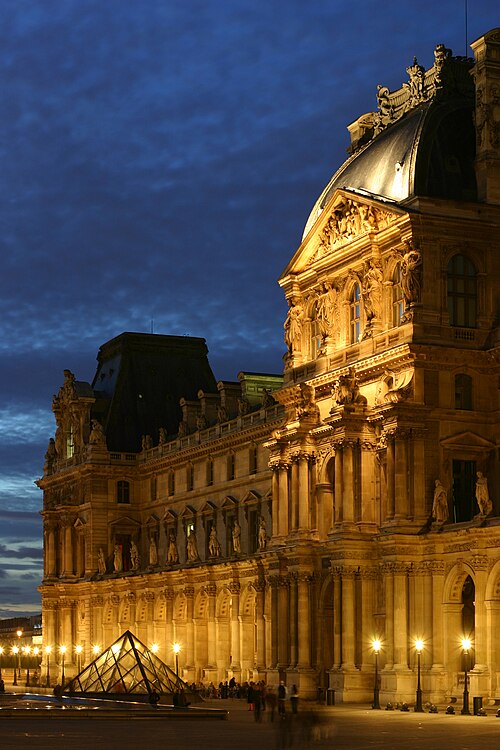
Paris, France
Photo: Benh LIEU SONG, Wikimedia Commons (Public domain)
← All destinations

Paris, France

Paris isn't photographed, it's deciphered: behind the postcards of the Eiffel Tower and the riverside lies a city of hidden courtyards, covered passages and neighbourhoods living at an entirely different pace, where the real discovery begins the moment you step away from the ticket queue.

✓ Sources checked on 15 September 202614 sources cited

What to see in Paris?

12 places checked against the sources. The 5 gems the guidebooks skip come first, then the classics: every card has the hard facts on top and the why below.

On the map: yellow pins are the gems. Tap a pin to jump to its card.

✦ Hidden gems · off the standard guides

Promenade Plantée (Coulée Verte)
Nature✦ gem

Promenade Plantée (Coulée Verte)

Almost five kilometres of linear park on top of a 19th-century railway viaduct, from the Bastille almost to the Bois de Vincennes, opened in 1993: it is the original that inspired New York's High Line, not the other way round. You walk ten metres above the street among roses, bamboo and lime trees, and it is free. It closes in the evening and keeps seasonal hours, so it is not a night-time shortcut. Under the viaduct arches are the craft workshops of the Viaduc des Arts, on shop hours.

Photo: Twice25, Wikimedia Commons (CC BY-SA 3.0)
Other✦ gem

Covered passages (Galerie Vivienne and around)

In the 19th century there were over a hundred, today about twenty remain: arcades roofed in glass and iron, built to let people shop out of the mud of the streets before pavements existed. The Galerie Vivienne dates from 1823 and keeps its original floor mosaics. They are free and walked through like streets, but they are private: they have gates and close in the evening, generally around 8pm. On Sundays many of the shops inside are shut even when the arcade is open.

Musée Carnavalet
Museums✦ gem

Musée Carnavalet

Hours
10:00-18:00
Closed
Monday

The permanent collections are free and need no booking: this is the museum of the history of Paris, in two Marais mansions with courtyards, holding the original shop signs of old trades, Proust's bedroom and models of the city before Haussmann. Open Tuesday to Sunday 10am-6pm, closed Mondays. The temporary exhibitions are ticketed and worth booking. It is the right place when it rains and you do not want to queue anywhere.

Photo: Lionel Allorge, Wikimedia Commons (CC BY-SA 3.0)
Canal Saint-Martin
Other✦ gem

Canal Saint-Martin

The canal was dug to bring drinking water into Paris and for a kilometre and a half it runs covered, beneath boulevard Richard-Lenoir: the boats that work it pass inside the dark vault lit by the air shafts, and that is the part nobody expects. On the surface are nine locks and the iron footbridges, and every few years the canal is drained for cleaning: then you see the bed, bicycles and all. In the evening people sit on the quayside with a bottle and glasses: that is allowed, glass in parks is not.

Photo: JLPC, Wikimedia Commons (CC BY-SA 3.0)
Marché des Enfants Rouges
Markets✦ gem

Marché des Enfants Rouges

It is the oldest covered market in Paris, opened in 1615, and takes its name from the orphanage that stood here, whose children wore red. Today half of it is cheese, fruit and flower stalls and half kitchens (Moroccan, Lebanese, Japanese, Italian), with shared tables where you eat elbow to elbow. It is closed on Mondays like almost every Paris market, and at weekday lunchtimes the tables go early: arrive before 12.30 or after 2pm.

Photo: Popolon, Wikimedia Commons (CC BY-SA 3.0)

The classics

Eiffel Tower
Monuments

Eiffel Tower

Ticket
€23.50

Open every day from 9.30am to 11pm. The price changes a great deal depending on how you go up: €23.50 to the second floor by lift, €36.70 to the summit, but only €14.80 walking up to the second floor and €28 combining stairs and lift for the top. It is 674 steps to the second floor, they are in the open air and there is almost never a queue: you save nine euros and an hour of waiting. Access to the summit can be suspended in high wind or heavy crowds, and the supplement is refunded when it is.

Photo: Benh LIEU SONG, Wikimedia Commons (Public domain)
Notre-Dame de Paris
Monuments

Notre-Dame de Paris

Hours
9:00-23:00

Entry is free and no booking is required, but with around forty thousand visitors a day the queue is the norm. The system almost nobody uses: on the official site and app you can book a free time slot, and it opens only a few hours ahead, not days. The towers are separate, €16 with compulsory booking, open 9am-11pm from April to September and until 5.30pm the rest of the year. No third-party platform is authorised to sell entry: the ones that do are selling air.

Photo: Dietmar Rabich, Wikimedia Commons (CC BY-SA 4.0)
Montmartre and Sacré-Cœur
Monuments

Montmartre and Sacré-Cœur

Entry
free
Hours
10:30-21:30
Steps
280

The basilica is free to enter every day from 6.30am to 10.30pm. Climbing the dome is another matter: 280 steps up a narrow stair, tickets sold only at the desk on site and not online, open 10.30am-9.30pm with last admission at 9pm, and closed in the middle of the day for the attendant's break, the detail that defeats anyone arriving at lunchtime. To skip the hill's staircases there is the RATP funicular: a minute and a half, and it takes an ordinary metro ticket.

Photo: Terragio67, Wikimedia Commons (CC BY-SA 4.0)
Louvre Museum
Museums

Louvre Museum

Ticket
€22
Closed
Tuesday

From this year the price depends on where you live: €22 for residents of the European Economic Area and €32 for everyone else. It is free under 18 and for EU residents up to 26. Closed on Tuesdays; on Wednesdays and Fridays it stays open until 9pm, which is the slot where the Mona Lisa can be seen without three rows of heads in front of it. Entry is free on the first Friday of the month after 6pm, except in July and August, and on 14 July. A time slot has to be booked even by those entering free.

Photo: User:Gloumouth1, Wikimedia Commons (CC BY-SA 3.0)
Le Marais district
Other

Le Marais district

A district to be walked, with no tickets. The practical fact worth more than any description: this is one of the zones of Paris where shops are allowed to open on Sunday, and they do, while most of the city is shut. Sunday is therefore the day the Marais is liveliest and fullest. Rue des Rosiers is the street of the Jewish quarter, with its bakeries and falafel; on Saturdays many Jewish businesses close for shabbat and reopen on Sunday.

Photo: Pierre André, Wikimedia Commons (CC BY-SA 4.0)
Food

Croissant and baguette from an artisan boulangerie

In France 'boulangerie' is a title protected by law: only those who knead and bake on the premises may use it, so the sign is already a guarantee and outlets reselling frozen dough must call themselves something else. The baguette de tradition is made of flour, water, salt and yeast and nothing else, with no additives and no freezing: that is the one to ask for, not the ordinary baguette. Each year the city awards the best one, and the winner supplies the Élysée for a year: winning bakeries put it in the window.

Food

Steak-frites and Parisian bistros

The bistro dish by definition, but the thing to look for is the 'fait maison' logo, the saucepan under a roof: since 2014 French law reserves it for dishes cooked on site from raw ingredients, and places that do not display it are usually reheating. The cooking is ordered in French and the scale does not match ours: bleu is nearly raw, saignant is rare, à point is pink inside, not well done. Asking for 'bien cuit' is legitimate but in a serious brasserie you will get a look.

How to plan your days in Paris?

Three routes for different travel styles, built only from this dossier's verified places. Realistic pace: 2-3 stops a day.

First time

2 days

The landmark sights, at the right pace.

Day 1

  • Eiffel Tower

    Open every day from 9.30am to 11pm. The price changes a great deal depending on how you go up: €23.50 to the second floor by lift, €36.70 to the summit, but only €14.80 walking up to the second floor and €28 combining stairs and lift for the top. It is 674 steps to the second floor, they are in the open air and there is almost never a queue: you save nine euros and an hour of waiting. Access to the summit can be suspended in high wind or heavy crowds, and the supplement is refunded when it is.

  • Notre-Dame de Paris

    Entry is free and no booking is required, but with around forty thousand visitors a day the queue is the norm. The system almost nobody uses: on the official site and app you can book a free time slot, and it opens only a few hours ahead, not days. The towers are separate, €16 with compulsory booking, open 9am-11pm from April to September and until 5.30pm the rest of the year. No third-party platform is authorised to sell entry: the ones that do are selling air.

  • Montmartre and Sacré-Cœur

    The basilica is free to enter every day from 6.30am to 10.30pm. Climbing the dome is another matter: 280 steps up a narrow stair, tickets sold only at the desk on site and not online, open 10.30am-9.30pm with last admission at 9pm, and closed in the middle of the day for the attendant's break, the detail that defeats anyone arriving at lunchtime. To skip the hill's staircases there is the RATP funicular: a minute and a half, and it takes an ordinary metro ticket.

Day 2

  • Louvre Museum

    From this year the price depends on where you live: €22 for residents of the European Economic Area and €32 for everyone else. It is free under 18 and for EU residents up to 26. Closed on Tuesdays; on Wednesdays and Fridays it stays open until 9pm, which is the slot where the Mona Lisa can be seen without three rows of heads in front of it. Entry is free on the first Friday of the month after 6pm, except in July and August, and on 14 July. A time slot has to be booked even by those entering free.

  • Le Marais district

    A district to be walked, with no tickets. The practical fact worth more than any description: this is one of the zones of Paris where shops are allowed to open on Sunday, and they do, while most of the city is shut. Sunday is therefore the day the Marais is liveliest and fullest. Rue des Rosiers is the street of the Jewish quarter, with its bakeries and falafel; on Saturdays many Jewish businesses close for shabbat and reopen on Sunday.

  • Croissant and baguette from an artisan boulangerie

    In France 'boulangerie' is a title protected by law: only those who knead and bake on the premises may use it, so the sign is already a guarantee and outlets reselling frozen dough must call themselves something else. The baguette de tradition is made of flour, water, salt and yeast and nothing else, with no additives and no freezing: that is the one to ask for, not the ordinary baguette. Each year the city awards the best one, and the winner supplies the Élysée for a year: winning bakeries put it in the window.

Off the beaten path

2 days

Hidden gems away from the usual circuits.

Day 1

  • Promenade Plantée (Coulée Verte)✦ hidden gem

    Almost five kilometres of linear park on top of a 19th-century railway viaduct, from the Bastille almost to the Bois de Vincennes, opened in 1993: it is the original that inspired New York's High Line, not the other way round. You walk ten metres above the street among roses, bamboo and lime trees, and it is free. It closes in the evening and keeps seasonal hours, so it is not a night-time shortcut. Under the viaduct arches are the craft workshops of the Viaduc des Arts, on shop hours.

  • Covered passages (Galerie Vivienne and around)✦ hidden gem

    In the 19th century there were over a hundred, today about twenty remain: arcades roofed in glass and iron, built to let people shop out of the mud of the streets before pavements existed. The Galerie Vivienne dates from 1823 and keeps its original floor mosaics. They are free and walked through like streets, but they are private: they have gates and close in the evening, generally around 8pm. On Sundays many of the shops inside are shut even when the arcade is open.

  • Musée Carnavalet✦ hidden gem

    The permanent collections are free and need no booking: this is the museum of the history of Paris, in two Marais mansions with courtyards, holding the original shop signs of old trades, Proust's bedroom and models of the city before Haussmann. Open Tuesday to Sunday 10am-6pm, closed Mondays. The temporary exhibitions are ticketed and worth booking. It is the right place when it rains and you do not want to queue anywhere.

Day 2

  • Canal Saint-Martin✦ hidden gem

    The canal was dug to bring drinking water into Paris and for a kilometre and a half it runs covered, beneath boulevard Richard-Lenoir: the boats that work it pass inside the dark vault lit by the air shafts, and that is the part nobody expects. On the surface are nine locks and the iron footbridges, and every few years the canal is drained for cleaning: then you see the bed, bicycles and all. In the evening people sit on the quayside with a bottle and glasses: that is allowed, glass in parks is not.

  • Marché des Enfants Rouges✦ hidden gem

    It is the oldest covered market in Paris, opened in 1615, and takes its name from the orphanage that stood here, whose children wore red. Today half of it is cheese, fruit and flower stalls and half kitchens (Moroccan, Lebanese, Japanese, Italian), with shared tables where you eat elbow to elbow. It is closed on Mondays like almost every Paris market, and at weekday lunchtimes the tables go early: arrive before 12.30 or after 2pm.

Food & markets

1 days

Eat and drink where locals actually go.

Day 1

  • Croissant and baguette from an artisan boulangerie

    In France 'boulangerie' is a title protected by law: only those who knead and bake on the premises may use it, so the sign is already a guarantee and outlets reselling frozen dough must call themselves something else. The baguette de tradition is made of flour, water, salt and yeast and nothing else, with no additives and no freezing: that is the one to ask for, not the ordinary baguette. Each year the city awards the best one, and the winner supplies the Élysée for a year: winning bakeries put it in the window.

  • Steak-frites and Parisian bistros

    The bistro dish by definition, but the thing to look for is the 'fait maison' logo, the saucepan under a roof: since 2014 French law reserves it for dishes cooked on site from raw ingredients, and places that do not display it are usually reheating. The cooking is ordered in French and the scale does not match ours: bleu is nearly raw, saignant is rare, à point is pink inside, not well done. Asking for 'bien cuit' is legitimate but in a serious brasserie you will get a look.

  • Marché des Enfants Rouges✦ hidden gem

    It is the oldest covered market in Paris, opened in 1615, and takes its name from the orphanage that stood here, whose children wore red. Today half of it is cheese, fruit and flower stalls and half kitchens (Moroccan, Lebanese, Japanese, Italian), with shared tables where you eat elbow to elbow. It is closed on Mondays like almost every Paris market, and at weekday lunchtimes the tables go early: arrive before 12.30 or after 2pm.

🧭

Build your itinerary

Tell us how many days you're staying and in which month: we'll compose an itinerary from this dossier's verified places, with notes about the period.

Your itinerary

1

Day 1

  • Eiffel Tower

    Open every day from 9.30am to 11pm. The price changes a great deal depending on how you go up: €23.50 to the second floor by lift, €36.70 to the summit, but only €14.80 walking up to the second floor and €28 combining stairs and lift for the top. It is 674 steps to the second floor, they are in the open air and there is almost never a queue: you save nine euros and an hour of waiting. Access to the summit can be suspended in high wind or heavy crowds, and the supplement is refunded when it is.

  • Notre-Dame de Paris

    Entry is free and no booking is required, but with around forty thousand visitors a day the queue is the norm. The system almost nobody uses: on the official site and app you can book a free time slot, and it opens only a few hours ahead, not days. The towers are separate, €16 with compulsory booking, open 9am-11pm from April to September and until 5.30pm the rest of the year. No third-party platform is authorised to sell entry: the ones that do are selling air.

  • Croissant and baguette from an artisan boulangerie

    In France 'boulangerie' is a title protected by law: only those who knead and bake on the premises may use it, so the sign is already a guarantee and outlets reselling frozen dough must call themselves something else. The baguette de tradition is made of flour, water, salt and yeast and nothing else, with no additives and no freezing: that is the one to ask for, not the ordinary baguette. Each year the city awards the best one, and the winner supplies the Élysée for a year: winning bakeries put it in the window.

2

Day 2

  • Montmartre and Sacré-Cœur

    The basilica is free to enter every day from 6.30am to 10.30pm. Climbing the dome is another matter: 280 steps up a narrow stair, tickets sold only at the desk on site and not online, open 10.30am-9.30pm with last admission at 9pm, and closed in the middle of the day for the attendant's break, the detail that defeats anyone arriving at lunchtime. To skip the hill's staircases there is the RATP funicular: a minute and a half, and it takes an ordinary metro ticket.

  • Louvre Museum

    From this year the price depends on where you live: €22 for residents of the European Economic Area and €32 for everyone else. It is free under 18 and for EU residents up to 26. Closed on Tuesdays; on Wednesdays and Fridays it stays open until 9pm, which is the slot where the Mona Lisa can be seen without three rows of heads in front of it. Entry is free on the first Friday of the month after 6pm, except in July and August, and on 14 July. A time slot has to be booked even by those entering free.

  • Steak-frites and Parisian bistros

    The bistro dish by definition, but the thing to look for is the 'fait maison' logo, the saucepan under a roof: since 2014 French law reserves it for dishes cooked on site from raw ingredients, and places that do not display it are usually reheating. The cooking is ordered in French and the scale does not match ours: bleu is nearly raw, saignant is rare, à point is pink inside, not well done. Asking for 'bien cuit' is legitimate but in a serious brasserie you will get a look.

3

Day 3

  • Le Marais district

    A district to be walked, with no tickets. The practical fact worth more than any description: this is one of the zones of Paris where shops are allowed to open on Sunday, and they do, while most of the city is shut. Sunday is therefore the day the Marais is liveliest and fullest. Rue des Rosiers is the street of the Jewish quarter, with its bakeries and falafel; on Saturdays many Jewish businesses close for shabbat and reopen on Sunday.

  • Promenade Plantée (Coulée Verte)✦ hidden gem

    Almost five kilometres of linear park on top of a 19th-century railway viaduct, from the Bastille almost to the Bois de Vincennes, opened in 1993: it is the original that inspired New York's High Line, not the other way round. You walk ten metres above the street among roses, bamboo and lime trees, and it is free. It closes in the evening and keeps seasonal hours, so it is not a night-time shortcut. Under the viaduct arches are the craft workshops of the Viaduc des Arts, on shop hours.

  • Marché des Enfants Rouges✦ hidden gem

    It is the oldest covered market in Paris, opened in 1615, and takes its name from the orphanage that stood here, whose children wore red. Today half of it is cheese, fruit and flower stalls and half kitchens (Moroccan, Lebanese, Japanese, Italian), with shared tables where you eat elbow to elbow. It is closed on Mondays like almost every Paris market, and at weekday lunchtimes the tables go early: arrive before 12.30 or after 2pm.

Want an itinerary tailored to your dates in Paris?

Travel dates, where you stay and the kind of trip: we tailor this same verified dossier to your exact needs.

Coming soon
The Catacombs hold the remains of around six million Parisians in over 300 km of tunnels dug into the ancient limestone quarries beneath the city.
The Catacombs hold the remains of around six million Parisians in over 300 km of tunnels dug into the ancient limestone quarries beneath the city.Photo: Diego Delso, Wikimedia Commons (CC BY-SA 4.0)

What to know before going to Paris?

Recurring scams and local rules worth knowing before you arrive.

⚠ Scams to know

Fake charity petition

low confidence

Groups of young people, often women, ask you to sign a petition to distract you while an accomplice picks your backpack or bag

How to avoid it: Don't stop, don't sign anything in the street and always keep your bag closed and in sight

Source

Forced friendship bracelet

low confidence

Vendors, especially in Montmartre, tie a bracelet on your wrist without permission and then insistently demand payment

How to avoid it: Don't let anyone touch your wrist or hands in the street, and walk away firmly

Source

Fake metro inspectors

low confidence

People posing as RATP officers near metro exits pretend to check tickets, make them disappear and impose an on-the-spot fine payable even by card

How to avoid it: Real RATP inspectors always work in a group with an official uniform and electronic reader; if in doubt, ask for ID or refuse to pay cash/card in the street

Source

Three-cups (or three-card) game

low confidence

A classic street scam with cups and a ball that simulates easy wins to take money from passers-by

How to avoid it: Don't approach clusters of people around makeshift tables in tourist areas

Source

Gold ring 'found in the street'

low confidence

Someone pretends to have found a ring and offers it to you, implying it's yours or valuable, then asks for a reward

How to avoid it: Ignore anyone who stops you with objects 'found on the ground' and keep walking

Source

⚖ Laws & penalties

Metropolitan Low Emission Zone (ZFE)

low riskverified

Since 1 January 2025, Crit'Air 3 and older vehicles are theoretically banned across most of the metropolitan area, including the ring road. The planned fine would be €68, but throughout 2026 an extended 'educational phase' with no actual penalties is in force: the real risk of a fine in 2026 is therefore low, but the rule will become enforceable again from 2027.

Source

Ban on swimming in the Seine outside designated areas

low riskverified

Swimming in the Seine has been banned since 1923 outside the three areas officially open from 5 July to 31 August; those who swim outside these zones risk a €15 fine, on top of the health risk from bacteria and pollutants in the river.

Source

Ban on flying drones over almost the entire city

medium risklow confidence

A vast red zone covered by airspace rules bans amateur Open-category drone flights over most of Paris, including the areas of the main monuments; it was not possible to find the exact fine amount for Paris specifically, the general Italian/European rule on unauthorized drones can reach hundreds of euros but the specific French figure is not confirmed by the consulted source.

Source

Valid ticket required on all public transport

medium riskverified

RATP checks are frequent, especially on the RER and metro. Travelling without a valid ticket incurs a flat penalty: €50 if paid immediately to the inspector, €80 if paid within 2 months, up to €180 if the case goes to the Trésor public. Real inspectors work in a group with ID and an electronic reader.

Source

Taxe de séjour 2026: €2.60 to €15.93 per night per adult

low riskverified

From 1 January 2026, departmental and regional surcharges included: palaces €15.93, 5-star €11.70, 4-star €8.45, 3-star €5.53, 2-star €3.25, 1-star, chambres d'hôtes and hostels €2.60; campsites €0.65 to €1.95. For unclassified accommodation (many short lets) it is 5% of the per-person price of the night plus surcharges, capped at €15.93. Rates are per adult; collected by the host.

Source
The mosaic floor of the Galerie Vivienne, one of the 19th-century covered passages few tourists notice in the heart of Paris.
The mosaic floor of the Galerie Vivienne, one of the 19th-century covered passages few tourists notice in the heart of Paris.Photo: GFreihalter, Wikimedia Commons (CC BY-SA 4.0)

What happens in Paris through the year?

Hover over a month on the timeline for details.

How much do you spend in Paris, and when to go?

Jan
Feb
Mar
Apr
May
Jun
Jul
Aug
Sep
Oct
Nov
Dec
  • low70-95€per day
  • mid95-140€per day
  • high140-210€per day

When it works best, by type of trip

Culture and monumentsApril-May, September-October

Mild weather, perfect light for photos and more manageable museum queues than at the height of summer.

Nightlife and eventsJune

The Fête de la Musique on 21 June turns the city into a free stage, with still-pleasant temperatures before the summer heat.

BudgetJanuary-February

Lower hotel rates and winter sales, though the weather is cold and often rainy.

Rough estimate (lodging + meals + local transport), not a precise verified source.

✦

Did you know... The 19th-century covered passages, glass-roofed shopping arcades like the Galerie Vivienne, were Paris's shopping malls before their time and remain almost ignored by passing tourists.

How to get to Paris and around?

No car neededParis is covered by a Low Emission Zone (ZFE) that, in theory, has banned Crit'Air 3 and more polluting vehicles since 2025 across almost the entire metropolitan area including the ring road; in 2026, however, an extended 'educational phase' is in force with no actual fines, so the ban exists on paper but isn't yet enforced. Even aside from the ZFE, traffic and scarce parking make a car inadvisable for visiting the centre.

A dense network of metro (16 lines), RER, buses and trams run by RATP/Île-de-France Mobilités. Single metro/RER ticket €2.55, bus/tram €2.05, airport trip to Orly/CDG €14. Weekly Navigo pass €32.40 (+€5 card), monthly all-zones €90.80. The Paris Visite pass with dedicated fares is available for tourists.

  • Buy tickets only from official machines or the RATP app, never from improvised vendors near stations
  • The Navigo Découverte pass is only worth it for a full-week stay (Monday-Sunday)
  • Keep your backpack in front of you at rush hour on tourist lines such as line 1 and line 4
  • Real RATP inspectors always work in groups of several officers in RATP uniform with an electronic ticket reader

Is Paris safe?

⚠ Areas to avoid

  • Around the Gare du Nord and Gare de l'Est at night
  • Crowded areas around the Eiffel Tower, Sacré-Cœur and Champs-Élysées for the risk of pickpocketing and unlicensed vendors

Good to know

  • Pickpocketing is the main risk for tourists, especially on the RER B (Roissy/CDG line) and in the busiest stations
  • Always keep documents and money split across several pockets or an anti-theft pouch
  • Be wary of anyone who approaches you with insistent offers, even seemingly harmless ones like petitions or bracelets
Source

Frequently asked questions about Paris

Short answers drawn from the verified data of this dossier: details and sources are in the sections above.

How much does a day in Paris cost?

Season low (January-February, November): 70-95€ per day; Season mid (March-May, September-October): 95-140€ per day; Season high (June-August, December): 140-210€ per day.

When to go to Paris?

Culture and monuments: April-May, September-October. Mild weather, perfect light for photos and more manageable museum queues than at the height of summer. Nightlife and events: June. The Fête de la Musique on 21 June turns the city into a free stage, with still-pleasant temperatures before the summer heat. Budget: January-February. Lower hotel rates and winter sales, though the weather is cold and often rainy.

Is Paris safe?

Around the Gare du Nord and Gare de l'Est at night Pickpocketing is the main risk for tourists, especially on the RER B (Roissy/CDG line) and in the busiest stations

Do you need a car in Paris?

No. Paris is covered by a Low Emission Zone (ZFE) that, in theory, has banned Crit'Air 3 and more polluting vehicles since 2025 across almost the entire metropolitan area including the ring road; in 2026, however, an extended 'educational phase' is in force with no actual fines, so the ban exists on paper but isn't yet enforced. Even aside from the ZFE, traffic and scarce parking make a car inadvisable for visiting the centre.

How do you get to Paris?

A dense network of metro (16 lines), RER, buses and trams run by RATP/Île-de-France Mobilités. Single metro/RER ticket €2.55, bus/tram €2.05, airport trip to Orly/CDG €14. Weekly Navigo pass €32.40 (+€5 card), monthly all-zones €90.80.

Which hidden gems to see in Paris, off the guidebooks?

Promenade Plantée (Coulée Verte), Covered passages (Galerie Vivienne and around), Musée Carnavalet, Canal Saint-Martin, Marché des Enfants Rouges.

Which scams to avoid in Paris?

Fake charity petition; Forced friendship bracelet; Fake metro inspectors; Three-cups (or three-card) game.

Sources

Every source below was opened and read, not just cited. Entries that didn't hold up were downgraded to "low confidence" or dropped, not presented as certain.

Related destinations

Other dossiers close by country, area or kind of trip.