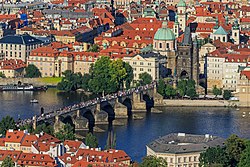
Ljubljana, Slovenia
Photo: Med Cruise Guide, Wikimedia Commons (CC BY 2.0)
← All destinations

Ljubljana, Slovenia

A human-scale capital where the centre is closed to cars, the green river flows between bridges by a single architect and a dragon watches from every coat of arms: Ljubljana is the Slovenia that knows how to be elegant without raising its voice, perfect to cross on foot with your nose in the air.

✓ Sources checked on 12 October 20265 sources cited

What to see in Ljubljana?

14 places checked against the sources. The 5 gems the guidebooks skip come first, then the classics: every card has the hard facts on top and the why below.

On the map: yellow pins are the gems. Tap a pin to jump to its card.

✦ Hidden gems · off the standard guides

Metelkova Mesto
Nightlife✦ gem

Metelkova Mesto

A former Yugoslav army barracks squatted in 1993 and never cleared, today a self-managed centre of galleries, studios and bars, with every surface covered in murals and sculpture made from scrap. It is 10 minutes on foot from the centre, next to the railway station. It is free to walk through by day and deserted; by night it is the heart of the city's alternative scene, with concerts and beer at prices that no longer exist downtown. It is a real place and not a themed quarter: take it as it is.

Photo: Rok, Wikimedia Commons (CC BY-SA 2.0)
Monuments✦ gem

Cobblers' Bridge (Čevljarski most)

Plečnik designed it in the 1930s with columns that hold nothing up and lamps of his own drawing: it was meant to be a bridge-as-square, a place to stop rather than cross. It still manages it, because it is 2 minutes from the Tromostovje and almost nobody goes. It is free to cross, it has benches and in the afternoon it is in shade. The name comes from the cobblers who had their workshops here from the Middle Ages.

National and University Library (NUK)
Monuments✦ gem

National and University Library (NUK)

Plečnik's masterpiece, from 1941: you enter through a dark doorway and climb a narrow staircase of black marble, then the great reading room opens suddenly, full of light. The journey from darkness to knowledge is literal, and it is the design. The hall and staircase are seen freely during library hours; the reading room is for students and can be visited only in defined periods or on guided tours, which have to be looked up in advance.

Photo: Fred Romero from Paris, France, Wikimedia Commons (CC BY 2.0)
Plečnik House (Plečnikova hiša)
Museums✦ gem

Plečnik House (Plečnikova hiša)

Ticket
€12, free under 6
Hours
10:00-18:00
Closed
Monday

The house where Plečnik lived and worked for forty years, kept with his things where he left them: the drawing table, the models, the garden he tended. Entry is by guided tour only, starting on the hour, the first at 10:00 and the last at 17:00, in Slovenian and English, and the groups are small, so it needs booking. The ticket costs 12 € for adults, 9 € for students and over-60s, 25 € for a family, and is free under 6. It opens Tuesday to Sunday 10:00-18:00 and closes on Monday. It is in Trnovo, twenty minutes' walk from the centre along the river: it is the place that explains all the rest of the city, and it is better seen first than last.

Photo: dalbera from Paris, France, Wikimedia Commons (CC BY 2.0)
Food✦ gem

Štruklji

Rolls of dough wrapped around a filling, boiled in a cloth or baked. The savoury ones use skuta, the Slovenian curd cheese, and herbs; the sweet ones walnuts or apple. At the market there are kiosks making them to order in a dozen versions, eaten standing with a wooden fork for a few euros. They are lighter than they look and they are not a side dish: one portion is a meal.

The classics

Ljubljana Castle (Ljubljanski grad)
Monuments

Ljubljana Castle (Ljubljanski grad)

On foot
15 min

You walk up in 15 minutes by the hillside paths, free, or take the funicular from Krekov trg, which carries 28 people and takes a little over a minute. The castle courtyard is free to enter, but watch out for something many guides get wrong: there is no ticket for the viewing tower alone. The castle ticket is a single one, 15 € full and 10.50 € reduced, covering the tower, the Slovenian history exhibition, the Virtual Castle and the Puppetry Museum; with the funicular included it rises to 19 € and 13.50 €, and the family ticket is 36 € or 46 €. Anyone who only wants the view does better to buy the funicular alone, 3.30 € one way and 6 € return, and stay in the courtyard. The last ticket is sold an hour before closing, and the funicular shuts before the castle does: anyone staying for the sunset walks down regardless.

Photo: Unknown authorUnknown author, Wikimedia Commons (Public domain)
Tromostovje (Triple Bridge)
Monuments

Tromostovje (Triple Bridge)

Three pedestrian bridges side by side that Plečnik built in 1932, adding two to the existing one to disperse traffic into the old town. It is not a flourish: it is engineering disguised as stage design. All of Plečnik's Ljubljana (these bridges, the market, the library, the riverbanks) has been UNESCO-listed since 2021, recognised as the unified work of a single architect, which is rare on the list. The main pieces all sit on the same bank and within a few steps: from here to the Dragon Bridge is 5 minutes along the water, and they are seen in one afternoon without transport.

Photo: Sumitsurai, Wikimedia Commons (CC BY-SA 4.0)
Monuments

Dragon Bridge (Zmajski most)

From 1901, and one of the first reinforced-concrete bridges in Europe: it was built for Franz Joseph's jubilee, and the four copper dragons at its corners became the city's emblem. It is crossed free at any hour. The local joke, which serves as a warning about its reliability, says the dragons wag their tails when a virgin crosses: there is no record of it happening.

Prešeren Square and the Franciscan Church
Monuments

Prešeren Square and the Franciscan Church

The pedestrian heart of the city, free and always open, with the pink Franciscan church that everyone uses as a meeting point. The detail almost nobody notices: the statue of France Prešeren, the national poet, looks towards a window on the far side of the square, where there is a relief of Julija Primic, the woman he loved and who did not love him back. It was done deliberately, and it is the most sentimental square there is.

Photo: Leandro Neumann Ciuffo, Wikimedia Commons (CC BY 2.0)
Tivoli Park
Nature

Tivoli Park

The city's big park starts 5 minutes on foot from the centre and is free and always open. Jakopič promenade, the central avenue, is used as an open-air photography gallery: the shows are printed on large panels along both sides and change several times a year, so the walk is never the same twice. Carrying on up you reach the Rožnik woods, where people from Ljubljana go walking on Sundays.

Photo: .snoopy., Wikimedia Commons (CC BY-SA 4.0)
Markets

Central market and Plečnik's colonnade

The open-air market works in the morning from Monday to Saturday, under the colonnade Plečnik designed in the 1940s as a loggia over the river. What to mark in the diary is the Odprta Kuhna: every Friday from March to November, 10am to 9pm, Pogačarjev trg fills with kitchens from all over Slovenia. But only if the sun is out: in rain the event is cancelled, and it genuinely happens. Check the forecast before counting on it.

Food

Kranjska klobasa (Carniolan sausage)

A sausage with protected geographical status, under a specification that even fixes how it is closed: in pairs, with a wooden skewer. It is boiled, not grilled, and served with mustard and grated horseradish, not ketchup. It is eaten at market kiosks and in gostilne for a few euros. Anyone finding it grilled in a city-centre place is eating something the specification would not recognise.

Food

Potica

A roll of leavened dough wrapped around a filling, classically ground walnuts, though dozens of variants exist: the most unusual and most Slovenian is tarragon. It is baked in a ring mould and cut into thin slices, where the spiral shows. It is the festive and Easter cake, but Ljubljana's bakeries keep it all year: it is bought by weight, and a slice at breakfast is normal.

Food

Burek

A rolled pastry of Ottoman descent, filled with meat, cheese, spinach or apple, which reached Slovenia with Yugoslavia and became the food of two in the morning. It is sold by weight in bureko that stay open late, especially near Metelkova. It costs a few euros, it is greasy and extremely heavy, and nobody pretends otherwise: it is after-food, not dinner.

How to plan your days in Ljubljana?

Three routes for different travel styles, built only from this dossier's verified places. Realistic pace: 2-3 stops a day.

First time

2 days

The landmark sights, at the right pace.

Day 1

  • Ljubljana Castle (Ljubljanski grad)

    You walk up in 15 minutes by the hillside paths, free, or take the funicular from Krekov trg, which carries 28 people and takes a little over a minute. The castle courtyard is free to enter, but watch out for something many guides get wrong: there is no ticket for the viewing tower alone. The castle ticket is a single one, 15 € full and 10.50 € reduced, covering the tower, the Slovenian history exhibition, the Virtual Castle and the Puppetry Museum; with the funicular included it rises to 19 € and 13.50 €, and the family ticket is 36 € or 46 €. Anyone who only wants the view does better to buy the funicular alone, 3.30 € one way and 6 € return, and stay in the courtyard. The last ticket is sold an hour before closing, and the funicular shuts before the castle does: anyone staying for the sunset walks down regardless.

  • Tromostovje (Triple Bridge)

    Three pedestrian bridges side by side that Plečnik built in 1932, adding two to the existing one to disperse traffic into the old town. It is not a flourish: it is engineering disguised as stage design. All of Plečnik's Ljubljana (these bridges, the market, the library, the riverbanks) has been UNESCO-listed since 2021, recognised as the unified work of a single architect, which is rare on the list. The main pieces all sit on the same bank and within a few steps: from here to the Dragon Bridge is 5 minutes along the water, and they are seen in one afternoon without transport.

  • Dragon Bridge (Zmajski most)

    From 1901, and one of the first reinforced-concrete bridges in Europe: it was built for Franz Joseph's jubilee, and the four copper dragons at its corners became the city's emblem. It is crossed free at any hour. The local joke, which serves as a warning about its reliability, says the dragons wag their tails when a virgin crosses: there is no record of it happening.

Day 2

  • Prešeren Square and the Franciscan Church

    The pedestrian heart of the city, free and always open, with the pink Franciscan church that everyone uses as a meeting point. The detail almost nobody notices: the statue of France Prešeren, the national poet, looks towards a window on the far side of the square, where there is a relief of Julija Primic, the woman he loved and who did not love him back. It was done deliberately, and it is the most sentimental square there is.

  • Central market and Plečnik's colonnade

    The open-air market works in the morning from Monday to Saturday, under the colonnade Plečnik designed in the 1940s as a loggia over the river. What to mark in the diary is the Odprta Kuhna: every Friday from March to November, 10am to 9pm, Pogačarjev trg fills with kitchens from all over Slovenia. But only if the sun is out: in rain the event is cancelled, and it genuinely happens. Check the forecast before counting on it.

  • Tivoli Park

    The city's big park starts 5 minutes on foot from the centre and is free and always open. Jakopič promenade, the central avenue, is used as an open-air photography gallery: the shows are printed on large panels along both sides and change several times a year, so the walk is never the same twice. Carrying on up you reach the Rožnik woods, where people from Ljubljana go walking on Sundays.

Off the beaten path

2 days

Hidden gems away from the usual circuits.

Day 1

  • Metelkova Mesto✦ hidden gem

    A former Yugoslav army barracks squatted in 1993 and never cleared, today a self-managed centre of galleries, studios and bars, with every surface covered in murals and sculpture made from scrap. It is 10 minutes on foot from the centre, next to the railway station. It is free to walk through by day and deserted; by night it is the heart of the city's alternative scene, with concerts and beer at prices that no longer exist downtown. It is a real place and not a themed quarter: take it as it is.

  • Cobblers' Bridge (Čevljarski most)✦ hidden gem

    Plečnik designed it in the 1930s with columns that hold nothing up and lamps of his own drawing: it was meant to be a bridge-as-square, a place to stop rather than cross. It still manages it, because it is 2 minutes from the Tromostovje and almost nobody goes. It is free to cross, it has benches and in the afternoon it is in shade. The name comes from the cobblers who had their workshops here from the Middle Ages.

  • National and University Library (NUK)✦ hidden gem

    Plečnik's masterpiece, from 1941: you enter through a dark doorway and climb a narrow staircase of black marble, then the great reading room opens suddenly, full of light. The journey from darkness to knowledge is literal, and it is the design. The hall and staircase are seen freely during library hours; the reading room is for students and can be visited only in defined periods or on guided tours, which have to be looked up in advance.

Day 2

  • Plečnik House (Plečnikova hiša)✦ hidden gem

    The house where Plečnik lived and worked for forty years, kept with his things where he left them: the drawing table, the models, the garden he tended. Entry is by guided tour only, starting on the hour, the first at 10:00 and the last at 17:00, in Slovenian and English, and the groups are small, so it needs booking. The ticket costs 12 € for adults, 9 € for students and over-60s, 25 € for a family, and is free under 6. It opens Tuesday to Sunday 10:00-18:00 and closes on Monday. It is in Trnovo, twenty minutes' walk from the centre along the river: it is the place that explains all the rest of the city, and it is better seen first than last.

  • Štruklji✦ hidden gem

    Rolls of dough wrapped around a filling, boiled in a cloth or baked. The savoury ones use skuta, the Slovenian curd cheese, and herbs; the sweet ones walnuts or apple. At the market there are kiosks making them to order in a dozen versions, eaten standing with a wooden fork for a few euros. They are lighter than they look and they are not a side dish: one portion is a meal.

Food & markets

2 days

Eat and drink where locals actually go.

Day 1

  • Kranjska klobasa (Carniolan sausage)

    A sausage with protected geographical status, under a specification that even fixes how it is closed: in pairs, with a wooden skewer. It is boiled, not grilled, and served with mustard and grated horseradish, not ketchup. It is eaten at market kiosks and in gostilne for a few euros. Anyone finding it grilled in a city-centre place is eating something the specification would not recognise.

  • Potica

    A roll of leavened dough wrapped around a filling, classically ground walnuts, though dozens of variants exist: the most unusual and most Slovenian is tarragon. It is baked in a ring mould and cut into thin slices, where the spiral shows. It is the festive and Easter cake, but Ljubljana's bakeries keep it all year: it is bought by weight, and a slice at breakfast is normal.

  • Štruklji✦ hidden gem

    Rolls of dough wrapped around a filling, boiled in a cloth or baked. The savoury ones use skuta, the Slovenian curd cheese, and herbs; the sweet ones walnuts or apple. At the market there are kiosks making them to order in a dozen versions, eaten standing with a wooden fork for a few euros. They are lighter than they look and they are not a side dish: one portion is a meal.

Day 2

  • Burek

    A rolled pastry of Ottoman descent, filled with meat, cheese, spinach or apple, which reached Slovenia with Yugoslavia and became the food of two in the morning. It is sold by weight in bureko that stay open late, especially near Metelkova. It costs a few euros, it is greasy and extremely heavy, and nobody pretends otherwise: it is after-food, not dinner.

  • Central market and Plečnik's colonnade

    The open-air market works in the morning from Monday to Saturday, under the colonnade Plečnik designed in the 1940s as a loggia over the river. What to mark in the diary is the Odprta Kuhna: every Friday from March to November, 10am to 9pm, Pogačarjev trg fills with kitchens from all over Slovenia. But only if the sun is out: in rain the event is cancelled, and it genuinely happens. Check the forecast before counting on it.

  • Metelkova Mesto✦ hidden gem

    A former Yugoslav army barracks squatted in 1993 and never cleared, today a self-managed centre of galleries, studios and bars, with every surface covered in murals and sculpture made from scrap. It is 10 minutes on foot from the centre, next to the railway station. It is free to walk through by day and deserted; by night it is the heart of the city's alternative scene, with concerts and beer at prices that no longer exist downtown. It is a real place and not a themed quarter: take it as it is.

🧭

Build your itinerary

Tell us how many days you're staying and in which month: we'll compose an itinerary from this dossier's verified places, with notes about the period.

Your itinerary

1

Day 1

  • Ljubljana Castle (Ljubljanski grad)

    You walk up in 15 minutes by the hillside paths, free, or take the funicular from Krekov trg, which carries 28 people and takes a little over a minute. The castle courtyard is free to enter, but watch out for something many guides get wrong: there is no ticket for the viewing tower alone. The castle ticket is a single one, 15 € full and 10.50 € reduced, covering the tower, the Slovenian history exhibition, the Virtual Castle and the Puppetry Museum; with the funicular included it rises to 19 € and 13.50 €, and the family ticket is 36 € or 46 €. Anyone who only wants the view does better to buy the funicular alone, 3.30 € one way and 6 € return, and stay in the courtyard. The last ticket is sold an hour before closing, and the funicular shuts before the castle does: anyone staying for the sunset walks down regardless.

  • Tromostovje (Triple Bridge)

    Three pedestrian bridges side by side that Plečnik built in 1932, adding two to the existing one to disperse traffic into the old town. It is not a flourish: it is engineering disguised as stage design. All of Plečnik's Ljubljana (these bridges, the market, the library, the riverbanks) has been UNESCO-listed since 2021, recognised as the unified work of a single architect, which is rare on the list. The main pieces all sit on the same bank and within a few steps: from here to the Dragon Bridge is 5 minutes along the water, and they are seen in one afternoon without transport.

  • Central market and Plečnik's colonnade

    The open-air market works in the morning from Monday to Saturday, under the colonnade Plečnik designed in the 1940s as a loggia over the river. What to mark in the diary is the Odprta Kuhna: every Friday from March to November, 10am to 9pm, Pogačarjev trg fills with kitchens from all over Slovenia. But only if the sun is out: in rain the event is cancelled, and it genuinely happens. Check the forecast before counting on it.

2

Day 2

  • Dragon Bridge (Zmajski most)

    From 1901, and one of the first reinforced-concrete bridges in Europe: it was built for Franz Joseph's jubilee, and the four copper dragons at its corners became the city's emblem. It is crossed free at any hour. The local joke, which serves as a warning about its reliability, says the dragons wag their tails when a virgin crosses: there is no record of it happening.

  • Prešeren Square and the Franciscan Church

    The pedestrian heart of the city, free and always open, with the pink Franciscan church that everyone uses as a meeting point. The detail almost nobody notices: the statue of France Prešeren, the national poet, looks towards a window on the far side of the square, where there is a relief of Julija Primic, the woman he loved and who did not love him back. It was done deliberately, and it is the most sentimental square there is.

  • Kranjska klobasa (Carniolan sausage)

    A sausage with protected geographical status, under a specification that even fixes how it is closed: in pairs, with a wooden skewer. It is boiled, not grilled, and served with mustard and grated horseradish, not ketchup. It is eaten at market kiosks and in gostilne for a few euros. Anyone finding it grilled in a city-centre place is eating something the specification would not recognise.

3

Day 3

  • Tivoli Park

    The city's big park starts 5 minutes on foot from the centre and is free and always open. Jakopič promenade, the central avenue, is used as an open-air photography gallery: the shows are printed on large panels along both sides and change several times a year, so the walk is never the same twice. Carrying on up you reach the Rožnik woods, where people from Ljubljana go walking on Sundays.

  • Cobblers' Bridge (Čevljarski most)✦ hidden gem

    Plečnik designed it in the 1930s with columns that hold nothing up and lamps of his own drawing: it was meant to be a bridge-as-square, a place to stop rather than cross. It still manages it, because it is 2 minutes from the Tromostovje and almost nobody goes. It is free to cross, it has benches and in the afternoon it is in shade. The name comes from the cobblers who had their workshops here from the Middle Ages.

  • Potica

    A roll of leavened dough wrapped around a filling, classically ground walnuts, though dozens of variants exist: the most unusual and most Slovenian is tarragon. It is baked in a ring mould and cut into thin slices, where the spiral shows. It is the festive and Easter cake, but Ljubljana's bakeries keep it all year: it is bought by weight, and a slice at breakfast is normal.

Want an itinerary tailored to your dates in Ljubljana?

Travel dates, where you stay and the kind of trip: we tailor this same verified dossier to your exact needs.

Coming soon
At Metelkova Mesto, the former self-governed barracks where every wall, lamppost and sculpture is a work of street art: Ljubljana's rebellious, creative soul.
At Metelkova Mesto, the former self-governed barracks where every wall, lamppost and sculpture is a work of street art: Ljubljana's rebellious, creative soul.Photo: Marcel Haring from Tirol, Austria, Wikimedia Commons (CC BY-SA 2.0)

What to know before going to Ljubljana?

Recurring scams and local rules worth knowing before you arrive.

⚠ Scams to know

Taxis without an agreed fare

verified

The British advice for Slovenia says nothing about taxis. The tourist board founded by the city publishes the maximum fares allowed in town: €2 flag fall, €1.50 per kilometre and €20 per hour of waiting, and companies may charge less.

How to avoid it: At the airport follow the signs to the official rank in front of the terminal and ask for an estimate or a fixed price before setting off, or book the transfer in advance agreeing the fare.

Source

Inflated bill in tourist bars and restaurants

low confidence

There are no official reports of inflated bills in Slovenia: the general rule of reading the price list before sitting down applies, above all in the places along the river, where the location is what you pay for

How to avoid it: Check the menu and the bill, ask prices before ordering 'daily' specials, prefer venues frequented by residents too.

Source

Pickpocketing in crowded areas

low confidence

The UK advice for Slovenia flags no ordinary crime risks for visitors: Ljubljana is consistently among the safest capitals in Europe, and the precaution to keep is the ordinary one in crowds, not something specific to this city

How to avoid it: Keep your belongings in front of you in crowds and take care coming back from the venues late at night.

Source

⚖ Laws & penalties

Crossing away from the crossings (jaywalking) is penalized

medium riskverified

Crossing outside the permitted points is punished with a fine: the official UK source indicates about €40 and notes that, if you don't pay on the spot, the authorities can hold documents or belongings until settlement.

Source

Drinking alcohol banned in some public spaces

low risklow confidence

Drinking outdoors is partly allowed, but banned where indicated (some central areas and parks) and disorderly drunkenness is penalizable; the same limits apply to residents and tourists.

Source

Near-zero alcohol tolerance for driving for new drivers

medium riskmedium confidence

The blood-alcohol limit is 0.05% for experienced drivers, but zero for those under 21 or who have held their licence for less than two years (and for professional drivers); penalties for exceeding the limit are high.

Source

Ljubljana tourist tax (turistična in promocijska taksa)

low riskverified

€3.13 per person per night in every accommodation: €2.50 of municipal tax, the maximum allowed in Slovenia, plus €0.63 of national promotional tax, since 1 January 2019 and unchanged in 2026. Half rate (€1.57) for children aged 7 to 18 and for 18 to 30 year olds staying in IYHF hostels; children under 7, people with disabilities and those staying over 30 days for work are exempt. The property collects it with the bill.

Source
The Cobblers' Bridge (Čevljarski most), with Plečnik's columns and the hanging shoes recalling the artisans who once crowded it.
The Cobblers' Bridge (Čevljarski most), with Plečnik's columns and the hanging shoes recalling the artisans who once crowded it.Photo: Jorge Láscar from Australia, Wikimedia Commons (CC BY 2.0)

What happens in Ljubljana through the year?

Hover over a month on the timeline for details.

How much do you spend in Ljubljana, and when to go?

Jan
Feb
Mar
Apr
May
Jun
Jul
Aug
Sep
Oct
Nov
Dec
  • low70-100€per day
  • mid100-150€per day
  • high150-200€per day

When it works best, by type of trip

City and cultureMay-June, September

Mild weather, lively riverside terraces and the Open Kitchen running on Fridays, without the midsummer heat and crush.

Festivals and summerJuly-August

The Ljubljana Festival and outdoor life at their peak, but hot days and more tourists.

Budget and atmosphereNovember, January-March

Lower rates and a quiet city; damp cold but markets and historic cafés in the Christmas weeks.

Rough estimate (lodging + meals + local transport), not a precise verified source.

✦

Did you know... The old town has been closed to car traffic since 2007 and is one of the largest pedestrian areas in Europe: you get around on foot, by bike or on the free Kavalir electric cart.

How to get to Ljubljana and around?

No car neededThe old town has been pedestrian since 2007 and is among the largest in Europe: a car is useless and in the way. Everything is reachable on foot or by bike; to arrive from outside it's best to park on the edges and continue on foot.

The LPP urban bus network: since 1 September 2026 a trip costs €1.50 with the rechargeable Urbana card (the card costs €2) and includes unlimited transfers for 90 minutes; with a contactless Visa or Mastercard you pay for the single trip, also €1.50, but with no transfers. The Ljubljana Card (24/48/72h) includes transport and entries.

  • For the Castle use the funicular from the centre: fast and with a fine view, included in some castle tickets
  • The Kavalir electric cart in the pedestrian centre is free and handy for those who find walking difficult
  • To get around like a local take a BicikeLJ bike-share bike: the first half hour is free
  • Pay for the bus with the Urbana card if you need to change: with a bank card you pay each trip separately

Is Ljubljana safe?

Good to know

  • Ljubljana is consistently among the safest European capitals: violent crime against tourists is rare
  • The real risks are petty pickpocketing in crowds and some nighttime nuisance near the venues: common-sense precautions are enough
  • The river and canals don't have continuous railings: take care in the evening along the embankments
Source
✦

Did you know... In 2016 Ljubljana was European Green Capital, an award won partly thanks to the pedestrianization of the centre and one of the highest recycling rates on the continent.

Frequently asked questions about Ljubljana

Short answers drawn from the verified data of this dossier: details and sources are in the sections above.

How much does a day in Ljubljana cost?

Season low (November, January-March): 70-100€ per day; Season mid (April-May, September-October): 100-150€ per day; Season high (June-August, December): 150-200€ per day.

When to go to Ljubljana?

City and culture: May-June, September. Mild weather, lively riverside terraces and the Open Kitchen running on Fridays, without the midsummer heat and crush. Festivals and summer: July-August. The Ljubljana Festival and outdoor life at their peak, but hot days and more tourists. Budget and atmosphere: November, January-March. Lower rates and a quiet city; damp cold but markets and historic cafés in the Christmas weeks.

Is Ljubljana safe?

Ljubljana is consistently among the safest European capitals: violent crime against tourists is rare

Do you need a car in Ljubljana?

No. The old town has been pedestrian since 2007 and is among the largest in Europe: a car is useless and in the way. Everything is reachable on foot or by bike; to arrive from outside it's best to park on the edges and continue on foot.

How do you get to Ljubljana?

The LPP urban bus network: since 1 September 2026 a trip costs €1.50 with the rechargeable Urbana card (the card costs €2) and includes unlimited transfers for 90 minutes; with a contactless Visa or Mastercard you pay for the single trip, also €1.50, but with no transfers. The Ljubljana Card (24/48/72h) includes transport and entries.

Which hidden gems to see in Ljubljana, off the guidebooks?

Metelkova Mesto, Cobblers' Bridge (Čevljarski most), National and University Library (NUK), Plečnik House (Plečnikova hiša), Štruklji.

Which scams to avoid in Ljubljana?

Taxis without an agreed fare; Inflated bill in tourist bars and restaurants; Pickpocketing in crowded areas.

Sources

Every source below was opened and read, not just cited. Entries that didn't hold up were downgraded to "low confidence" or dropped, not presented as certain.

Related destinations

Other dossiers close by country, area or kind of trip.