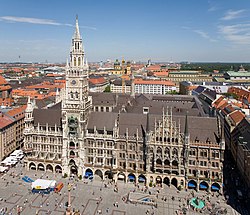
Berlin, Germany
Photo: Heinzi, Wikimedia Commons (CC BY-SA 3.0)
← All destinations

Berlin, Germany

Berlin never stops revealing itself: a city that has rebuilt itself over and over, where every district, from bunkers turned into clubs to remnants of the Wall turned into open-air galleries, still carries the scars and the energy of that permanent reconstruction.

✓ Sources checked on 18 September 202615 sources cited

What to see in Berlin?

10 places checked against the sources. The 4 gems the guidebooks skip come first, then the classics: every card has the hard facts on top and the why below.

On the map: yellow pins are the gems. Tap a pin to jump to its card.

✦ Hidden gems · off the standard guides

Teufelsberg
Other✦ gem

Teufelsberg

Twelve euros full, five for under-18s and students, open every day from 11am until sunset with last admission an hour before; in January and February it closes on Mondays and Tuesdays. It is not an abandoned ruin you sneak into: it is a private site with a ticket desk, and the geodesic domes of the American listening station now hold one of the largest street-art galleries in Europe. The hill beneath is artificial, made of wartime rubble piled over a Nazi military college that was never finished.

Photo: Leonhard Lenz, Wikimedia Commons (CC0)
Clärchens Ballhaus
Nightlife✦ gem

Clärchens Ballhaus

Opened on 13 September 1913 on Auguststraße, it came through two wars and the GDR with the mirrored hall on the first floor intact. Note that it has changed, though: after the 2024 refurbishment the ground-floor hall became a restaurant and the dancing moved upstairs to the Spiegelsaal, where tango, swing and salsa classes run several times a week followed by dance evenings. The themed nights sell out well in advance: without a booking you do not get in.

Photo: Clärchens Ballhaus, Wikimedia Commons (CC BY-SA 4.0)
Viktoriapark and its waterfall
Nature✦ gem

Viktoriapark and its waterfall

The twenty-four-metre artificial waterfall was built in 1893 and drops from the Kreuzberg, the highest natural rise in central Berlin, with Schinkel's national monument on top. The park is free and always open, but the water is not: the waterfall is switched off for the winter break and turned on again in spring, so from December to March you climb for the view and find only stones. The neighbourhood around it, Kreuzberg 61, is the quiet one: the other Kreuzberg is on the far side.

Photo: OTFW, Berlin, Wikimedia Commons (CC BY-SA 3.0)
Markthalle Neun market (Street Food Thursday)
Markets✦ gem

Markthalle Neun market (Street Food Thursday)

Hours
10:00-18:00

An 1891 covered market on Eisenbahnstraße in Kreuzberg, with the U1 at Görlitzer Bahnhof a couple of minutes away; going in costs nothing. The hours change from day to day and that is where people go wrong: big market on Saturday 10am-6pm and Friday noon-6pm, small market Monday to Wednesday noon-6pm, and on Thursday Street Food Thursday from 5pm to 10pm, which is the event people travel in for. On Sundays it is closed.

Photo: Fridolin freudenfett, Wikimedia Commons (CC BY-SA 4.0)

The classics

Brandenburg Gate
Monuments

Brandenburg Gate

You walk through it, free and at any hour: it is a city gate, not a monument with a ticket desk. It was built in 1791 and is the only survivor of the city's eighteen gates; the quadriga on top is a post-war copy, because Napoleon carried the original off to Paris in 1806 and the Prussians took it back in 1814. On Pariser Platz in front of it, the costumed figures in uniform who offer to pose for photos want money: they are not a city service.

Photo: Lamberto Zannotti, Wikimedia Commons (CC BY-SA 3.0)
Reichstag and glass dome
Monuments

Reichstag and glass dome

The dome is free to visit, but only with a booking: the form is online, there is no booking by phone, and the name, surname and date of birth of every visitor are required. From the age of 16 you show photo ID at the entrance. It is open every day from 8am to midnight, with last admission at 10pm: the evening slots are the ones most often still free. Turn up without a booking and you can try the service point beside the building: if places are left they are issued up to two hours before, or for the following two days.

Photo: BriYYZ from Toronto, Canada, Wikimedia Commons (CC BY-SA 2.0)
Museum Island (Museumsinsel)
Museums

Museum Island (Museumsinsel)

Ticket
€24

The Museumsinsel ticket costs €24, is valid for one day and covers every museum on the island; the museums are closed on Mondays. The thing to know before planning: the Pergamonmuseum is closed for refurbishment, and group tours can only be booked from June 2027 onwards. In its place the pavilion with the masterpieces and Yadegar Asisi's 360° panorama is open, included in the same ticket. Nefertiti is in the Neues Museum, which is open.

Photo: Superchilum, Wikimedia Commons (CC BY-SA 3.0)
Jewish Museum Berlin
Museums

Jewish Museum Berlin

Entry
free
Closed
Monday

Admission to the permanent exhibition is free for everyone, which almost no guide writes. Open Tuesday to Sunday from 10am to 6pm, last entry at 5pm, closed on Mondays and on the major Jewish holidays. Libeskind's building is part of the route rather than its frame: the vertical voids that cut through it and the Garden of Exile, with its tilted columns on a sloping floor, are seen without a ticket and are the part that stays with you.

Photo: Francesco Adami, Wikimedia Commons (CC BY-SA 4.0)
Food

Currywurst and Berlin-style Döner

The Currywurst was born in 1949 in Charlottenburg from the sauce Herta Heuwer worked out with ketchup and curry powder obtained from British soldiers, and patented ten years later: it is eaten standing at a kiosk, sliced into rounds, with chips and a little wooden fork. The döner in bread, by contrast, has a contested paternity: the most quoted version has it created in Berlin in 1972 by a Turkish vendor near the zoo, though others claim it. It costs more than the Currywurst and fills you twice as much.

How to plan your days in Berlin?

Three routes for different travel styles, built only from this dossier's verified places. Realistic pace: 2-3 stops a day.

First time

2 days

The landmark sights, at the right pace.

Day 1

  • Brandenburg Gate

    You walk through it, free and at any hour: it is a city gate, not a monument with a ticket desk. It was built in 1791 and is the only survivor of the city's eighteen gates; the quadriga on top is a post-war copy, because Napoleon carried the original off to Paris in 1806 and the Prussians took it back in 1814. On Pariser Platz in front of it, the costumed figures in uniform who offer to pose for photos want money: they are not a city service.

  • Reichstag and glass dome

    The dome is free to visit, but only with a booking: the form is online, there is no booking by phone, and the name, surname and date of birth of every visitor are required. From the age of 16 you show photo ID at the entrance. It is open every day from 8am to midnight, with last admission at 10pm: the evening slots are the ones most often still free. Turn up without a booking and you can try the service point beside the building: if places are left they are issued up to two hours before, or for the following two days.

  • East Side Gallery

    One thousand three hundred metres of Wall still standing along Mühlenstraße, between Ostbahnhof and Warschauer Straße: the longest surviving stretch, walked or cycled free at any hour. The murals were painted in 1990 by over a hundred artists from twenty countries and repainted in 2009 after weather and graffiti had ruined them: what you photograph is not 1990 artwork but its authorised reproduction. The painted side is the one that faced East, not West.

Day 2

  • Museum Island (Museumsinsel)

    The Museumsinsel ticket costs €24, is valid for one day and covers every museum on the island; the museums are closed on Mondays. The thing to know before planning: the Pergamonmuseum is closed for refurbishment, and group tours can only be booked from June 2027 onwards. In its place the pavilion with the masterpieces and Yadegar Asisi's 360° panorama is open, included in the same ticket. Nefertiti is in the Neues Museum, which is open.

  • Jewish Museum Berlin

    Admission to the permanent exhibition is free for everyone, which almost no guide writes. Open Tuesday to Sunday from 10am to 6pm, last entry at 5pm, closed on Mondays and on the major Jewish holidays. Libeskind's building is part of the route rather than its frame: the vertical voids that cut through it and the Garden of Exile, with its tilted columns on a sloping floor, are seen without a ticket and are the part that stays with you.

  • Currywurst and Berlin-style Döner

    The Currywurst was born in 1949 in Charlottenburg from the sauce Herta Heuwer worked out with ketchup and curry powder obtained from British soldiers, and patented ten years later: it is eaten standing at a kiosk, sliced into rounds, with chips and a little wooden fork. The döner in bread, by contrast, has a contested paternity: the most quoted version has it created in Berlin in 1972 by a Turkish vendor near the zoo, though others claim it. It costs more than the Currywurst and fills you twice as much.

Off the beaten path

2 days

Hidden gems away from the usual circuits.

Day 1

  • Teufelsberg✦ hidden gem

    Twelve euros full, five for under-18s and students, open every day from 11am until sunset with last admission an hour before; in January and February it closes on Mondays and Tuesdays. It is not an abandoned ruin you sneak into: it is a private site with a ticket desk, and the geodesic domes of the American listening station now hold one of the largest street-art galleries in Europe. The hill beneath is artificial, made of wartime rubble piled over a Nazi military college that was never finished.

  • Clärchens Ballhaus✦ hidden gem

    Opened on 13 September 1913 on Auguststraße, it came through two wars and the GDR with the mirrored hall on the first floor intact. Note that it has changed, though: after the 2024 refurbishment the ground-floor hall became a restaurant and the dancing moved upstairs to the Spiegelsaal, where tango, swing and salsa classes run several times a week followed by dance evenings. The themed nights sell out well in advance: without a booking you do not get in.

Day 2

  • Viktoriapark and its waterfall✦ hidden gem

    The twenty-four-metre artificial waterfall was built in 1893 and drops from the Kreuzberg, the highest natural rise in central Berlin, with Schinkel's national monument on top. The park is free and always open, but the water is not: the waterfall is switched off for the winter break and turned on again in spring, so from December to March you climb for the view and find only stones. The neighbourhood around it, Kreuzberg 61, is the quiet one: the other Kreuzberg is on the far side.

  • Markthalle Neun market (Street Food Thursday)✦ hidden gem

    An 1891 covered market on Eisenbahnstraße in Kreuzberg, with the U1 at Görlitzer Bahnhof a couple of minutes away; going in costs nothing. The hours change from day to day and that is where people go wrong: big market on Saturday 10am-6pm and Friday noon-6pm, small market Monday to Wednesday noon-6pm, and on Thursday Street Food Thursday from 5pm to 10pm, which is the event people travel in for. On Sundays it is closed.

Food & markets

1 days

Eat and drink where locals actually go.

Day 1

  • Currywurst and Berlin-style Döner

    The Currywurst was born in 1949 in Charlottenburg from the sauce Herta Heuwer worked out with ketchup and curry powder obtained from British soldiers, and patented ten years later: it is eaten standing at a kiosk, sliced into rounds, with chips and a little wooden fork. The döner in bread, by contrast, has a contested paternity: the most quoted version has it created in Berlin in 1972 by a Turkish vendor near the zoo, though others claim it. It costs more than the Currywurst and fills you twice as much.

  • Markthalle Neun market (Street Food Thursday)✦ hidden gem

    An 1891 covered market on Eisenbahnstraße in Kreuzberg, with the U1 at Görlitzer Bahnhof a couple of minutes away; going in costs nothing. The hours change from day to day and that is where people go wrong: big market on Saturday 10am-6pm and Friday noon-6pm, small market Monday to Wednesday noon-6pm, and on Thursday Street Food Thursday from 5pm to 10pm, which is the event people travel in for. On Sundays it is closed.

  • Clärchens Ballhaus✦ hidden gem

    Opened on 13 September 1913 on Auguststraße, it came through two wars and the GDR with the mirrored hall on the first floor intact. Note that it has changed, though: after the 2024 refurbishment the ground-floor hall became a restaurant and the dancing moved upstairs to the Spiegelsaal, where tango, swing and salsa classes run several times a week followed by dance evenings. The themed nights sell out well in advance: without a booking you do not get in.

🧭

Build your itinerary

Tell us how many days you're staying and in which month: we'll compose an itinerary from this dossier's verified places, with notes about the period.

Your itinerary

1

Day 1

  • Brandenburg Gate

    You walk through it, free and at any hour: it is a city gate, not a monument with a ticket desk. It was built in 1791 and is the only survivor of the city's eighteen gates; the quadriga on top is a post-war copy, because Napoleon carried the original off to Paris in 1806 and the Prussians took it back in 1814. On Pariser Platz in front of it, the costumed figures in uniform who offer to pose for photos want money: they are not a city service.

  • Reichstag and glass dome

    The dome is free to visit, but only with a booking: the form is online, there is no booking by phone, and the name, surname and date of birth of every visitor are required. From the age of 16 you show photo ID at the entrance. It is open every day from 8am to midnight, with last admission at 10pm: the evening slots are the ones most often still free. Turn up without a booking and you can try the service point beside the building: if places are left they are issued up to two hours before, or for the following two days.

  • Currywurst and Berlin-style Döner

    The Currywurst was born in 1949 in Charlottenburg from the sauce Herta Heuwer worked out with ketchup and curry powder obtained from British soldiers, and patented ten years later: it is eaten standing at a kiosk, sliced into rounds, with chips and a little wooden fork. The döner in bread, by contrast, has a contested paternity: the most quoted version has it created in Berlin in 1972 by a Turkish vendor near the zoo, though others claim it. It costs more than the Currywurst and fills you twice as much.

2

Day 2

  • East Side Gallery

    One thousand three hundred metres of Wall still standing along Mühlenstraße, between Ostbahnhof and Warschauer Straße: the longest surviving stretch, walked or cycled free at any hour. The murals were painted in 1990 by over a hundred artists from twenty countries and repainted in 2009 after weather and graffiti had ruined them: what you photograph is not 1990 artwork but its authorised reproduction. The painted side is the one that faced East, not West.

  • Museum Island (Museumsinsel)

    The Museumsinsel ticket costs €24, is valid for one day and covers every museum on the island; the museums are closed on Mondays. The thing to know before planning: the Pergamonmuseum is closed for refurbishment, and group tours can only be booked from June 2027 onwards. In its place the pavilion with the masterpieces and Yadegar Asisi's 360° panorama is open, included in the same ticket. Nefertiti is in the Neues Museum, which is open.

  • Clärchens Ballhaus✦ hidden gem

    Opened on 13 September 1913 on Auguststraße, it came through two wars and the GDR with the mirrored hall on the first floor intact. Note that it has changed, though: after the 2024 refurbishment the ground-floor hall became a restaurant and the dancing moved upstairs to the Spiegelsaal, where tango, swing and salsa classes run several times a week followed by dance evenings. The themed nights sell out well in advance: without a booking you do not get in.

3

Day 3

  • Jewish Museum Berlin

    Admission to the permanent exhibition is free for everyone, which almost no guide writes. Open Tuesday to Sunday from 10am to 6pm, last entry at 5pm, closed on Mondays and on the major Jewish holidays. Libeskind's building is part of the route rather than its frame: the vertical voids that cut through it and the Garden of Exile, with its tilted columns on a sloping floor, are seen without a ticket and are the part that stays with you.

  • Teufelsberg✦ hidden gem

    Twelve euros full, five for under-18s and students, open every day from 11am until sunset with last admission an hour before; in January and February it closes on Mondays and Tuesdays. It is not an abandoned ruin you sneak into: it is a private site with a ticket desk, and the geodesic domes of the American listening station now hold one of the largest street-art galleries in Europe. The hill beneath is artificial, made of wartime rubble piled over a Nazi military college that was never finished.

  • Markthalle Neun market (Street Food Thursday)✦ hidden gem

    An 1891 covered market on Eisenbahnstraße in Kreuzberg, with the U1 at Görlitzer Bahnhof a couple of minutes away; going in costs nothing. The hours change from day to day and that is where people go wrong: big market on Saturday 10am-6pm and Friday noon-6pm, small market Monday to Wednesday noon-6pm, and on Thursday Street Food Thursday from 5pm to 10pm, which is the event people travel in for. On Sundays it is closed.

Want an itinerary tailored to your dates in Berlin?

Travel dates, where you stay and the kind of trip: we tailor this same verified dossier to your exact needs.

Coming soon
The radar domes of the Teufelsberg, a former NSA listening station, today covered in open-air street art.
The radar domes of the Teufelsberg, a former NSA listening station, today covered in open-air street art.Photo: Jochen Teufel, Wikimedia Commons (CC BY-SA 3.0)

What to know before going to Berlin?

Recurring scams and local rules worth knowing before you arrive.

⚠ Scams to know

Fake police officers

verified

Groups of three: the first distracts the tourist, the other two pose as police officers searching bags for 'drugs or fake banknotes' to steal cash and cards

How to avoid it: Always ask to see the original police ID or call the emergency number 110 to verify; carry only the cash you need

Source

Fake public-transport inspectors

low confidence

People with fake IDs demanding immediate cash payment of the fine; real inspectors never ask for cash on the spot and always issue a notice to be paid later

How to avoid it: Always ask for the official ID and refuse immediate cash payments; if in doubt, ask for the officer's name and ID number

Source

Fake charity petitions

low confidence

People with a signature pad ask you to sign for a charity (e.g. deaf children) while an accomplice opens the bag of the tourist distracted by signing; one documented case happened right at the Brandenburg Gate

How to avoid it: Don't stop to sign street petitions, always keep your bag closed and in front of you

Source

Distraction thefts in crowded places

low confidence

Groups create a distraction (asking for directions, a fake accident) while an accomplice picks pockets

How to avoid it: Stay alert to your belongings in metro stations and crowded tourist spots like Alexanderplatz and the East Side Gallery

Source

⚖ Laws & penalties

Green sticker (Umweltplakette) required to drive in the Umweltzone

high riskverified

The whole area within the S-Bahn ring is a low emission zone: since 2010 a green sticker (grüne Plakette) is required to drive. Driving or parking in the Umweltzone without a valid sticker is an administrative offence punished with €100, applied to foreign vehicles too (it carries no points or driving ban).

Source

Ban on flying drones near the Reichstag and the Brandenburg Gate

high risklow confidence

An absolute restriction zone ED-R 146 around the government quarter (about 5.5 km radius); an American tourist received a €3,200 fine and confiscation of the drone for flying near the Brandenburg Gate without permission

Source

Penalty for travelling without a valid ticket on public transport (erhöhtes Beförderungsentgelt)

medium riskverified

Confirmed verbatim: an increased fare of €60.00 for those checked without a valid ticket; reduced to €7 if you prove within a week that you held a valid ticket at the time of the check

Source

Alcohol limits for riding e-scooters

medium riskmedium confidence

The same blood-alcohol limits as for cars apply: between 0.5 and 1.09 g/l incurs a €500 fine, a one-month driving ban and licence points; for under-21s and new drivers, zero tolerance applies

Source

Ban on riding e-scooters on pavements and in pedestrian areas

low riskmedium confidence

E-scooters must use cycle lanes or, where there are none, the road; carrying a passenger and riding on pavements and in pedestrian areas is prohibited

Source

City Tax: 7.5% of the net room price, with no night limit

low riskverified

Since 1 January 2025 Berlin's Übernachtungsteuer is 7.5% of the net room price (breakfast excluded), on every paid overnight stay, business trips included. The exemption for stays over 21 days is gone: every night is charged. From 2026 only the hosts' obligations change (quarterly, electronic returns).

Source
The interior of Clärchens Ballhaus, a historic Berlin ballroom that survived two world wars.
The interior of Clärchens Ballhaus, a historic Berlin ballroom that survived two world wars.Photo: Nicor, Wikimedia Commons (CC BY-SA 3.0)

What happens in Berlin through the year?

Hover over a month on the timeline for details.

How much do you spend in Berlin, and when to go?

Jan
Feb
Mar
Apr
May
Jun
Jul
Aug
Sep
Oct
Nov
Dec
  • low55-80€per day
  • mid80-120€per day
  • high120-170€per day

When it works best, by type of trip

Culture and museumsMarch-May, September-October

Mild weather and fewer queues at the Museum Island museums than in summer.

Nightlife and eventsMay (Karneval der Kulturen), October (Festival of Lights)

The city's two most distinctive big events, with Berlin particularly lively and lit up.

Christmas atmosphereLate November-December

Christmas markets across the city, though with low temperatures and bigger crowds.

Rough estimate (lodging + meals + local transport), not a precise verified source.

✦

Did you know... Berlin has more bridges than Venice: around 950, the result of the many canals and rivers (the Spree and Havel) that cross the city.

How to get to Berlin and around?

No car neededThe whole area within the S-Bahn ring is an Umweltzone (low emission zone): a green sticker (Umweltplakette) is required to drive, on pain of a fine; parking is scarce and expensive in the centre.

An integrated network of U-Bahn, S-Bahn, tram and bus run by BVG/S-Bahn Berlin with zonal fares A/B/C: the AB combination covers the city centre up to the S-Bahn ring, ABC is needed for BER airport and Potsdam. Since 1 January 2026 an AB single ticket costs €4 (ABC €5), the short-hop ticket €2.80, the AB 4-trip card €12.40, the AB 24-hour ticket €11.20.

  • Buy the AB ticket for travel within the city, ABC only if you need to go to BER airport or Potsdam
  • Always validate your ticket at the yellow/red stamping machines before travelling: plain-clothes inspectors make no exceptions for tourists
  • Use the BVG app to buy tickets without queuing at the machines
  • E-scooters can't be ridden on pavements or taken on public transport in many areas of the city

Is Berlin safe?

⚠ Areas to avoid

  • Alexanderplatz and around the central station at night (an area of dealing and petty crime)
  • Görlitzer Park in Kreuzberg after dark

Good to know

  • The main risk for tourists is pickpocketing and distraction scams, not violence
  • Always keep your bag closed and in front of you in crowded places and on public transport
  • If checked, always ask for the official ID of anyone presenting themselves as an officer or inspector
Source

Frequently asked questions about Berlin

Short answers drawn from the verified data of this dossier: details and sources are in the sections above.

How much does a day in Berlin cost?

Season low (January-February, November): 55-80€ per day; Season mid (March-May, September-October): 80-120€ per day; Season high (June-August, December (Christmas markets)): 120-170€ per day.

When to go to Berlin?

Culture and museums: March-May, September-October. Mild weather and fewer queues at the Museum Island museums than in summer. Nightlife and events: May (Karneval der Kulturen), October (Festival of Lights). The city's two most distinctive big events, with Berlin particularly lively and lit up. Christmas atmosphere: Late November-December. Christmas markets across the city, though with low temperatures and bigger crowds.

Is Berlin safe?

Alexanderplatz and around the central station at night (an area of dealing and petty crime) The main risk for tourists is pickpocketing and distraction scams, not violence

Do you need a car in Berlin?

No. The whole area within the S-Bahn ring is an Umweltzone (low emission zone): a green sticker (Umweltplakette) is required to drive, on pain of a fine; parking is scarce and expensive in the centre.

How do you get to Berlin?

An integrated network of U-Bahn, S-Bahn, tram and bus run by BVG/S-Bahn Berlin with zonal fares A/B/C: the AB combination covers the city centre up to the S-Bahn ring, ABC is needed for BER airport and Potsdam. Since 1 January 2026 an AB single ticket costs €4 (ABC €5), the short-hop ticket €2.80, the AB 4-trip card €12.40, the AB 24-hour ticket €11.20.

Which hidden gems to see in Berlin, off the guidebooks?

Teufelsberg, Clärchens Ballhaus, Viktoriapark and its waterfall, Markthalle Neun market (Street Food Thursday).

Which scams to avoid in Berlin?

Fake police officers; Fake public-transport inspectors; Fake charity petitions; Distraction thefts in crowded places.

Sources

Every source below was opened and read, not just cited. Entries that didn't hold up were downgraded to "low confidence" or dropped, not presented as certain.

Related destinations

Other dossiers close by country, area or kind of trip.