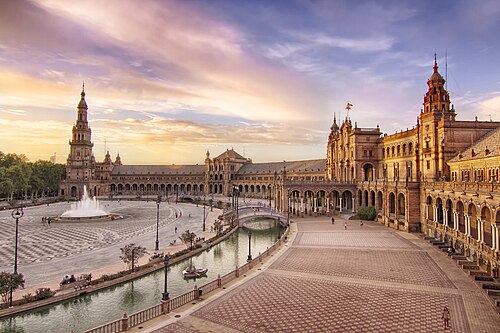
Seville, Spain
Photo: Dmitry Dzhus from London, Wikimedia Commons (CC BY 2.0)
← All destinations

Seville, Spain

Seville is the beating heart of Andalusia: Moorish palaces, baroque alleys and the scent of orange blossom mixing with the sizzle of the fryers. A city that lives on flamenco music, processions and blinding light almost all year round.

✓ Sources checked on 28 September 202613 sources cited

What to see in Seville?

12 places checked against the sources. The 6 gems the guidebooks skip come first, then the classics: every card has the hard facts on top and the why below.

On the map: yellow pins are the gems. Tap a pin to jump to its card.

✦ Hidden gems · off the standard guides

Barrio de Triana
Other✦ gem

Barrio de Triana

Entry
free

It lies across the Guadalquivir and is a fifteen-minute walk from the centre over the Isabel II bridge. This is the ceramics quarter: the old workshops still paint azulejos by hand, and the Ceramics Museum tells the story of the kilns that stood here. Entry is on the Alcázar ticket, so you do not pay twice. Flamenco here is heard in neighbourhood peñas, which open late and do not put on shows for tourists.

Photo: Gzzz, Wikimedia Commons (CC BY-SA 4.0)
Basílica de la Macarena
Monuments✦ gem

Basílica de la Macarena

The basilica is open every day from 9am to 9pm without a break and entry is free: the Virgen de la Macarena stands on the high altar and can be seen at any hour of the day. The museum with the embroidered mantles, the crowns and the processional floats keeps the same hours but is ticketed, and the last visit goes in half an hour before closing. In July and August two of the daily masses are suspended until September.

Photo: Stefano Vigorelli, Wikimedia Commons (CC BY-SA 4.0)
Plaza del Cabildo
Other✦ gem

Plaza del Cabildo

A small arcaded semicircular square hidden behind an arch between the Avenida de la Constitución and the Arenal, two minutes from the Cathedral and missed by everyone who walks past without looking. It is free and always open; inside the arch a stretch of the Almohad wall survives. On Sunday mornings the arcades host the collectors' market of stamps and coins, which is when the square fills up.

Photo: Daniel VILLAFRUELA, Wikimedia Commons (CC BY-SA 3.0)
Mercado de Triana
Markets✦ gem

Mercado de Triana

The covered market is built on the foundations of the castle of San Jorge, and the Inquisition cells still lie beneath it, visitable separately. The fish, meat and vegetable stalls work Monday to Saturday from 9am to 3pm; the tapas counters and restaurants from 10am until midnight, and on Sundays and holidays only from noon to 5pm. Turn up on a Sunday evening and everything is shut.

Photo: Anual, Wikimedia Commons (CC BY-SA 4.0)
Hospital de los Venerables
Museums✦ gem

Hospital de los Venerables

It is currently closed to the public and the website of the Focus Foundation that runs it is offline: the art collection with its Velázquez paintings is being moved to another site in the city. Of the 17th-century baroque building, the exterior and the small square in front of it, in the heart of Santa Cruz, are all that can still be seen. Before planning it in (plenty of guides still list it as open) it is worth checking whether it has reopened.

Photo: Jl FilpoC, Wikimedia Commons (CC BY-SA 4.0)
Food✦ gem

Espinacas con garbanzos

Spinach and chickpeas spiced with cumin and paprika over a base of fried bread and vinegar: it is a Lenten dish, born when meat was forbidden, and in Seville it is ordered as a tapa all year round in the oldest taverns. Its heritage is Moorish and it is one of the few Andalusian dishes that comes out entirely plant-based: as long as the stock is not meat, which is worth asking.

The classics

Real Alcázar
Monuments

Real Alcázar

Ticket
€15.50, reduced €8
Hours
9:30-19:00

General entry €15.50, reduced €8 for over-65s and students aged 14 to 30, no longer EU citizens only, and €5.50 extra for the Cuarto Real Alto, the part the royal family still uses. The detail almost nobody knows: that ticket also covers the Antiquarium, the Triana Ceramics Museum and the city's other municipal museums. Open 9.30am-7pm from April to September and 9.30am-5pm from October to March, with clearing of the grounds starting 45 minutes after closing. Anyone born or resident in Seville goes in free.

Photo: Alvesgaspar, Wikimedia Commons (CC BY-SA 4.0)
Monuments

Cathedral and Giralda

Ticket
€13, reduced €7
Hours
11:00-18:00
Duration
75 min

The ticket costs less online than at the desk: €13 against €14, reduced €7 against €8, and it also covers entry to the Iglesia de El Salvador. Open Monday to Saturday 11am-6pm (from 9.30am in July and August) and Sundays from early afternoon, with the entrances and the Giralda closing an hour before the end. The visit starts from the tower and is reckoned at 75 minutes. The Giralda has no stairs but 35 ramps, built so it could be ridden up on horseback. On Sunday afternoons, 4.30-6pm, entry is free with an online booking: the places go early.

Plaza de España
Monuments

Plaza de España

Free and always open, with no ticket and no hours: it is a public square, not a paid monument, and the proposals to charge for it have never come to anything. It was built for the 1929 Ibero-American Exposition to a design by Aníbal González, and the 48 tiled benches each stand for a Spanish province: finding your own is the game every Spaniard plays. Rowing boats are hired on the canal by the half hour for a few euros. George Lucas shot the Naboo exteriors here.

Photo: Francisco Colinet, Wikimedia Commons (CC BY-SA 3.0 es)
Metropol Parasol (Las Setas)
Other

Metropol Parasol (Las Setas)

Ticket
€16

The rooftop viewpoint starts at €16 and the ticket covers, besides the walkway, the immersive film and the Aurora light show, which in summer runs from 9.30pm to 1am. It stays open until 1am with last entry at a quarter past midnight: the one viewpoint in Seville you can do after dinner, when the city stops being unbearable with heat. Below the structure, in the Antiquarium, are the Roman remains found during the works, and that is entered on the Alcázar ticket.

Photo: Benjamin Smith, Wikimedia Commons (CC BY-SA 4.0)
Food

Jamón ibérico e tapas

At the bar you order in three sizes and the price follows: the tapa is the taste, the media ración a plate to share between two, the ración a full plate. Many bars also charge differently depending on where you eat (standing at the counter, at a table, or on the terrace) and list them in separate columns on the menu: reading the right one is the difference between a normal bill and a surprising one.

Food

Salmorejo e gazpacho

They are two different cold soups, not two names for the same thing. Gazpacho is liquid, drunk from a glass, and takes pepper, cucumber and vinegar as well. Salmorejo is thick as a cream, has only tomato, bread, oil and garlic, and was born in Córdoba: it arrives with hard-boiled egg and jamón on top, so it is not vegetarian unless you ask for it without. From June to September they are on every menu; in winter they all but disappear.

How to plan your days in Seville?

Three routes for different travel styles, built only from this dossier's verified places. Realistic pace: 2-3 stops a day.

First time

2 days

The landmark sights, at the right pace.

Day 1

  • Real Alcázar

    General entry €15.50, reduced €8 for over-65s and students aged 14 to 30, no longer EU citizens only, and €5.50 extra for the Cuarto Real Alto, the part the royal family still uses. The detail almost nobody knows: that ticket also covers the Antiquarium, the Triana Ceramics Museum and the city's other municipal museums. Open 9.30am-7pm from April to September and 9.30am-5pm from October to March, with clearing of the grounds starting 45 minutes after closing. Anyone born or resident in Seville goes in free.

  • Cathedral and Giralda

    The ticket costs less online than at the desk: €13 against €14, reduced €7 against €8, and it also covers entry to the Iglesia de El Salvador. Open Monday to Saturday 11am-6pm (from 9.30am in July and August) and Sundays from early afternoon, with the entrances and the Giralda closing an hour before the end. The visit starts from the tower and is reckoned at 75 minutes. The Giralda has no stairs but 35 ramps, built so it could be ridden up on horseback. On Sunday afternoons, 4.30-6pm, entry is free with an online booking: the places go early.

  • Plaza de España

    Free and always open, with no ticket and no hours: it is a public square, not a paid monument, and the proposals to charge for it have never come to anything. It was built for the 1929 Ibero-American Exposition to a design by Aníbal González, and the 48 tiled benches each stand for a Spanish province: finding your own is the game every Spaniard plays. Rowing boats are hired on the canal by the half hour for a few euros. George Lucas shot the Naboo exteriors here.

Day 2

  • Metropol Parasol (Las Setas)

    The rooftop viewpoint starts at €16 and the ticket covers, besides the walkway, the immersive film and the Aurora light show, which in summer runs from 9.30pm to 1am. It stays open until 1am with last entry at a quarter past midnight: the one viewpoint in Seville you can do after dinner, when the city stops being unbearable with heat. Below the structure, in the Antiquarium, are the Roman remains found during the works, and that is entered on the Alcázar ticket.

  • Jamón ibérico e tapas

    At the bar you order in three sizes and the price follows: the tapa is the taste, the media ración a plate to share between two, the ración a full plate. Many bars also charge differently depending on where you eat (standing at the counter, at a table, or on the terrace) and list them in separate columns on the menu: reading the right one is the difference between a normal bill and a surprising one.

  • Salmorejo e gazpacho

    They are two different cold soups, not two names for the same thing. Gazpacho is liquid, drunk from a glass, and takes pepper, cucumber and vinegar as well. Salmorejo is thick as a cream, has only tomato, bread, oil and garlic, and was born in Córdoba: it arrives with hard-boiled egg and jamón on top, so it is not vegetarian unless you ask for it without. From June to September they are on every menu; in winter they all but disappear.

Off the beaten path

2 days

Hidden gems away from the usual circuits.

Day 1

  • Barrio de Triana✦ hidden gem

    It lies across the Guadalquivir and is a fifteen-minute walk from the centre over the Isabel II bridge. This is the ceramics quarter: the old workshops still paint azulejos by hand, and the Ceramics Museum tells the story of the kilns that stood here. Entry is on the Alcázar ticket, so you do not pay twice. Flamenco here is heard in neighbourhood peñas, which open late and do not put on shows for tourists.

  • Basílica de la Macarena✦ hidden gem

    The basilica is open every day from 9am to 9pm without a break and entry is free: the Virgen de la Macarena stands on the high altar and can be seen at any hour of the day. The museum with the embroidered mantles, the crowns and the processional floats keeps the same hours but is ticketed, and the last visit goes in half an hour before closing. In July and August two of the daily masses are suspended until September.

  • Plaza del Cabildo✦ hidden gem

    A small arcaded semicircular square hidden behind an arch between the Avenida de la Constitución and the Arenal, two minutes from the Cathedral and missed by everyone who walks past without looking. It is free and always open; inside the arch a stretch of the Almohad wall survives. On Sunday mornings the arcades host the collectors' market of stamps and coins, which is when the square fills up.

Day 2

  • Mercado de Triana✦ hidden gem

    The covered market is built on the foundations of the castle of San Jorge, and the Inquisition cells still lie beneath it, visitable separately. The fish, meat and vegetable stalls work Monday to Saturday from 9am to 3pm; the tapas counters and restaurants from 10am until midnight, and on Sundays and holidays only from noon to 5pm. Turn up on a Sunday evening and everything is shut.

  • Hospital de los Venerables✦ hidden gem

    It is currently closed to the public and the website of the Focus Foundation that runs it is offline: the art collection with its Velázquez paintings is being moved to another site in the city. Of the 17th-century baroque building, the exterior and the small square in front of it, in the heart of Santa Cruz, are all that can still be seen. Before planning it in (plenty of guides still list it as open) it is worth checking whether it has reopened.

Food & markets

2 days

Eat and drink where locals actually go.

Day 1

  • Jamón ibérico e tapas

    At the bar you order in three sizes and the price follows: the tapa is the taste, the media ración a plate to share between two, the ración a full plate. Many bars also charge differently depending on where you eat (standing at the counter, at a table, or on the terrace) and list them in separate columns on the menu: reading the right one is the difference between a normal bill and a surprising one.

  • Salmorejo e gazpacho

    They are two different cold soups, not two names for the same thing. Gazpacho is liquid, drunk from a glass, and takes pepper, cucumber and vinegar as well. Salmorejo is thick as a cream, has only tomato, bread, oil and garlic, and was born in Córdoba: it arrives with hard-boiled egg and jamón on top, so it is not vegetarian unless you ask for it without. From June to September they are on every menu; in winter they all but disappear.

Day 2

  • Espinacas con garbanzos✦ hidden gem

    Spinach and chickpeas spiced with cumin and paprika over a base of fried bread and vinegar: it is a Lenten dish, born when meat was forbidden, and in Seville it is ordered as a tapa all year round in the oldest taverns. Its heritage is Moorish and it is one of the few Andalusian dishes that comes out entirely plant-based: as long as the stock is not meat, which is worth asking.

  • Mercado de Triana✦ hidden gem

    The covered market is built on the foundations of the castle of San Jorge, and the Inquisition cells still lie beneath it, visitable separately. The fish, meat and vegetable stalls work Monday to Saturday from 9am to 3pm; the tapas counters and restaurants from 10am until midnight, and on Sundays and holidays only from noon to 5pm. Turn up on a Sunday evening and everything is shut.

🧭

Build your itinerary

Tell us how many days you're staying and in which month: we'll compose an itinerary from this dossier's verified places, with notes about the period.

Your itinerary

1

Day 1

  • Real Alcázar

    General entry €15.50, reduced €8 for over-65s and students aged 14 to 30, no longer EU citizens only, and €5.50 extra for the Cuarto Real Alto, the part the royal family still uses. The detail almost nobody knows: that ticket also covers the Antiquarium, the Triana Ceramics Museum and the city's other municipal museums. Open 9.30am-7pm from April to September and 9.30am-5pm from October to March, with clearing of the grounds starting 45 minutes after closing. Anyone born or resident in Seville goes in free.

  • Cathedral and Giralda

    The ticket costs less online than at the desk: €13 against €14, reduced €7 against €8, and it also covers entry to the Iglesia de El Salvador. Open Monday to Saturday 11am-6pm (from 9.30am in July and August) and Sundays from early afternoon, with the entrances and the Giralda closing an hour before the end. The visit starts from the tower and is reckoned at 75 minutes. The Giralda has no stairs but 35 ramps, built so it could be ridden up on horseback. On Sunday afternoons, 4.30-6pm, entry is free with an online booking: the places go early.

  • Jamón ibérico e tapas

    At the bar you order in three sizes and the price follows: the tapa is the taste, the media ración a plate to share between two, the ración a full plate. Many bars also charge differently depending on where you eat (standing at the counter, at a table, or on the terrace) and list them in separate columns on the menu: reading the right one is the difference between a normal bill and a surprising one.

2

Day 2

  • Plaza de España

    Free and always open, with no ticket and no hours: it is a public square, not a paid monument, and the proposals to charge for it have never come to anything. It was built for the 1929 Ibero-American Exposition to a design by Aníbal González, and the 48 tiled benches each stand for a Spanish province: finding your own is the game every Spaniard plays. Rowing boats are hired on the canal by the half hour for a few euros. George Lucas shot the Naboo exteriors here.

  • Metropol Parasol (Las Setas)

    The rooftop viewpoint starts at €16 and the ticket covers, besides the walkway, the immersive film and the Aurora light show, which in summer runs from 9.30pm to 1am. It stays open until 1am with last entry at a quarter past midnight: the one viewpoint in Seville you can do after dinner, when the city stops being unbearable with heat. Below the structure, in the Antiquarium, are the Roman remains found during the works, and that is entered on the Alcázar ticket.

  • Salmorejo e gazpacho

    They are two different cold soups, not two names for the same thing. Gazpacho is liquid, drunk from a glass, and takes pepper, cucumber and vinegar as well. Salmorejo is thick as a cream, has only tomato, bread, oil and garlic, and was born in Córdoba: it arrives with hard-boiled egg and jamón on top, so it is not vegetarian unless you ask for it without. From June to September they are on every menu; in winter they all but disappear.

3

Day 3

  • Barrio de Triana✦ hidden gem

    It lies across the Guadalquivir and is a fifteen-minute walk from the centre over the Isabel II bridge. This is the ceramics quarter: the old workshops still paint azulejos by hand, and the Ceramics Museum tells the story of the kilns that stood here. Entry is on the Alcázar ticket, so you do not pay twice. Flamenco here is heard in neighbourhood peñas, which open late and do not put on shows for tourists.

  • Basílica de la Macarena✦ hidden gem

    The basilica is open every day from 9am to 9pm without a break and entry is free: the Virgen de la Macarena stands on the high altar and can be seen at any hour of the day. The museum with the embroidered mantles, the crowns and the processional floats keeps the same hours but is ticketed, and the last visit goes in half an hour before closing. In July and August two of the daily masses are suspended until September.

  • Mercado de Triana✦ hidden gem

    The covered market is built on the foundations of the castle of San Jorge, and the Inquisition cells still lie beneath it, visitable separately. The fish, meat and vegetable stalls work Monday to Saturday from 9am to 3pm; the tapas counters and restaurants from 10am until midnight, and on Sundays and holidays only from noon to 5pm. Turn up on a Sunday evening and everything is shut.

Want an itinerary tailored to your dates in Seville?

Travel dates, where you stay and the kind of trip: we tailor this same verified dossier to your exact needs.

Coming soon
The Patio de las Doncellas in the Real Alcázar, a masterpiece of Mudéjar art with its reflecting pool and citrus gardens.
The Patio de las Doncellas in the Real Alcázar, a masterpiece of Mudéjar art with its reflecting pool and citrus gardens.Photo: Jl FilpoC, Wikimedia Commons (CC BY-SA 4.0)

What to know before going to Seville?

Recurring scams and local rules worth knowing before you arrive.

⚠ Scams to know

'Broken' taxi meter or inflated fare

low confidence

Some drivers claim the meter is broken to charge more than due, especially on airport-centre routes

How to avoid it: Check the meter is running from the start or use official booking apps

Source

Altered amount when paying by card reader

low confidence

In some tourist venues a higher amount than due may be entered

How to avoid it: Always check the card-reader screen before confirming and keep the receipt

Source

Pickpocketing in the queues at the Alcázar and the Cathedral

low confidence

Pickpockets strike mainly in crowded public places, particularly in line for the main monuments

How to avoid it: Bag in front of you, watch backpacks and back pockets in queues and crowds

Source

Ghost accommodation bookings online

low confidence

Listings for non-existent apartments or cloned sites mimicking legitimate booking platforms

How to avoid it: Book only on verified platforms, check real reviews and be wary of prices that are too low

Source

⚖ Laws & penalties

Restrictions on Airbnb-style short-term rentals

low risklow confidence

Seville has adopted regulations similar to Barcelona and Malaga against unauthorized tourist rentals; the authorities estimate around 5,000 illegal apartments against 10,000 authorized. It concerns owners more than tourists.

Source

Ban on disturbing noise and nighttime rowdiness

medium risklow confidence

Loud music and rowdiness between 11pm and 7am can be punished with fines up to €600 in Seville and Granada.

Source

Ban on drinking alcohol in the street (botellón)

medium riskmedium confidence

Andalusia's Law 7/2006 bans drinking alcohol in open public spaces, except authorized terraces and outdoor seating, to protect residents' peace. Penalties vary by severity: for minor breaches (the classic botellón), fines from around €100 are reported, up to much higher amounts in serious cases.

Source

Tourist tax: NOT in force in Seville (only proposed)

low riskverified

Unlike Catalonia or the Balearics, Seville and Andalusia do NOT apply any tourist tax in 2026. The City of Seville has proposed introducing one (estimated ~€7 million a year), but the Junta de Andalucía has not authorized it so far. Be wary of articles that present it as already in force.

Source
The Guadalquivir and the Triana district seen from the riverside, one of Seville's best-loved views.
The Guadalquivir and the Triana district seen from the riverside, one of Seville's best-loved views.Photo: José Luiz, Wikimedia Commons (CC BY-SA 3.0)

What happens in Seville through the year?

Hover over a month on the timeline for details.

How much do you spend in Seville, and when to go?

Jan
Feb
Mar
Apr
May
Jun
Jul
Aug
Sep
Oct
Nov
Dec
  • low45-65€per day
  • mid65-95€per day
  • high95-140€per day

When it works best, by type of trip

Ideal weather and festivalsMarch-May

Mild temperatures, orange blossom and a packed calendar with Semana Santa and the Feria de Abril, but prices and crowds at their peak.

Sightseeing and photographySeptember-October

The summer heat easing, golden light and fewer queues than in spring, a good value-for-money compromise.

BudgetDecember-February

Lower prices on flights and hotels; cooler and sometimes rainy days, but perfect for the monuments without the crush.

Rough estimate (lodging + meals + local transport), not a precise verified source.

✦

Did you know... Plaza de España is crossed by a navigable canal over 500 metres long, rowable by boat, with four bridges symbolizing the ancient kingdoms of Spain.

How to get to Seville and around?

No car neededAn old town with narrow streets and a restricted-traffic zone (ZBE), scarce and pricey parking: a car is a burden more than a benefit

Tussam buses, a single metro line and a short MetroCentro tram cover the city; the old town is easily walkable. A Tussam single ticket costs €1.40, frozen for 2026; with the multi-trip card a ride drops to €0.46 with transfer or €0.41 without, thanks to the 2026 state and municipal discounts; the tourist card costs €5 for one day and €10 for three.

  • From the airport use the EA bus (the Especial Aeropuerto line), about 35 minutes to the centre
  • The MetroCentro tram links Plaza Nueva with San Bernardo in a few minutes
  • Single bus ticket €1.40, with 1- or 3-day tourist cards available
  • The old town (Santa Cruz, the Cathedral, the Alcázar) is best seen on foot or by bike

Is Seville safe?

⚠ Areas to avoid

  • Las 3000 Viviendas, Los Pajaritos and Torreblanca (poorer outskirts, off the tourist circuit)
  • isolated alleys of the Barrio Santa Cruz at night
  • Parque de María Luisa at night, especially for women alone

Good to know

  • The old town is generally very safe: the main threat is pickpocketing, not violence
  • Maximum care with bags and backpacks in the crowded queues at the Alcázar and Cathedral
  • Use official taxis or recognized transport apps, especially at night
  • Seville is overall safer than many comparable large European cities
Source

Frequently asked questions about Seville

Short answers drawn from the verified data of this dossier: details and sources are in the sections above.

How much does a day in Seville cost?

Season low (December-February): 45-65€ per day; Season mid (March, November): 65-95€ per day; Season high (April-May, September-October): 95-140€ per day.

When to go to Seville?

Ideal weather and festivals: March-May. Mild temperatures, orange blossom and a packed calendar with Semana Santa and the Feria de Abril, but prices and crowds at their peak. Sightseeing and photography: September-October. The summer heat easing, golden light and fewer queues than in spring, a good value-for-money compromise. Budget: December-February. Lower prices on flights and hotels; cooler and sometimes rainy days, but perfect for the monuments without the crush.

Is Seville safe?

Las 3000 Viviendas, Los Pajaritos and Torreblanca (poorer outskirts, off the tourist circuit) The old town is generally very safe: the main threat is pickpocketing, not violence

Do you need a car in Seville?

No. An old town with narrow streets and a restricted-traffic zone (ZBE), scarce and pricey parking: a car is a burden more than a benefit

How do you get to Seville?

Tussam buses, a single metro line and a short MetroCentro tram cover the city; the old town is easily walkable. A Tussam single ticket costs €1.40, frozen for 2026; with the multi-trip card a ride drops to €0.46 with transfer or €0.41 without, thanks to the 2026 state and municipal discounts; the tourist card costs €5 for one day and €10 for three.

Which hidden gems to see in Seville, off the guidebooks?

Barrio de Triana, Basílica de la Macarena, Plaza del Cabildo, Mercado de Triana, Hospital de los Venerables, Espinacas con garbanzos.

Which scams to avoid in Seville?

'Broken' taxi meter or inflated fare; Altered amount when paying by card reader; Pickpocketing in the queues at the Alcázar and the Cathedral; Ghost accommodation bookings online.

Sources

Every source below was opened and read, not just cited. Entries that didn't hold up were downgraded to "low confidence" or dropped, not presented as certain.

Related destinations

Other dossiers close by country, area or kind of trip.