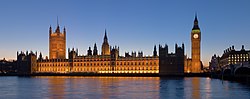
Edinburgh, Scotland/United Kingdom
Photo: dun_deagh, Wikimedia Commons (CC BY-SA 2.0)
← All destinations

Edinburgh, Scotland/United Kingdom

Edinburgh is a city built on volcanic rock, where the medieval closes of the Old Town look out on the neoclassical elegance of the New Town, and where every August the Fringe turns theatres, cellars and pavements into the world's biggest stage.

✓ Sources checked on 10 September 202616 sources cited

What to see in Edinburgh?

12 places checked against the sources. The 4 gems the guidebooks skip come first, then the classics: every card has the hard facts on top and the why below.

On the map: yellow pins are the gems. Tap a pin to jump to its card.

✦ Hidden gems · off the standard guides

Gilmerton Cove
Other✦ gem

Gilmerton Cove

A network of passages and chambers cut into the sandstone beneath a house in Gilmerton, south of the centre: visited only on a guided tour and only by booking, because the way in is through a private home. Nobody knows for certain what it was. An 18th-century blacksmith's workshop, a smugglers' hideout, a place for clandestine meetings: the theories have contradicted each other for three hundred years and the guide lays them all out without picking one. It is not central: you need a bus.

Photo: John Dale from Aberdeen (for now), Scotland, Wikimedia Commons (CC BY-SA 2.0)
Dean Village
Other✦ gem

Dean Village

Duration
20 min

A former millers' village on the Water of Leith, 15 minutes on foot from Princes Street and a hundred metres below street level, which explains why it is quiet. It is not a tourist site but a lived-in neighbourhood, and the signs explicitly ask visitors not to make noise and not to photograph through the windows. From there the riverside path starts, free, reaching the Dean Bridge and the Scottish Gallery of Modern Art in 20 minutes.

Photo: Nuriamarinn, Wikimedia Commons (CC BY-SA 4.0)
Dunbar's Close Garden
Nature✦ gem

Dunbar's Close Garden

A formal garden hidden behind a gate on the Royal Mile at Canongate, free and almost always empty even when the street above is packed. It is not old: it was laid out in the 1970s reconstructing how 17th-century courtyard gardens looked, divided into green rooms by box hedges. It closes at dusk. It sits metres from the tour-bus stop and nobody notices it, because from outside it looks like the service entrance of a building.

Photo: Sir Gawain, Wikimedia Commons (CC BY-SA 3.0)
The Shore, Leith
Nightlife✦ gem

The Shore, Leith

The port district on the Water of Leith (a river, not a canal), north of the centre, connected since 2023 by the tram running out to Newhaven. This is where you eat fish in Edinburgh: there are starred restaurants on the quay and old pubs beside them, on the same street. At the terminal next door lies the Royal Yacht Britannia, the Queen's ship, visitable on a ticket. Leith was an independent burgh until 1920 and its residents still remember it.

Photo: Alan Murray-Rust, Wikimedia Commons (CC BY-SA 2.0)

The classics

Edinburgh Castle
Monuments

Edinburgh Castle

One o'clock gun
13:00, not on Sundays

The rule that ruins the most days: tickets sell out online weeks ahead in summer, and once they are gone no more are sold at the castle's own desk. Turn up without a booking and you stay outside. Online is cheaper too. The flexi ticket allows one entry on any day within seven days of the date you pick, so it does not tie you to a time. The 1pm gun fires every day except Sundays, Good Friday and Christmas Day: it is free and half the city hears it.

Photo: George Washington Wilson / Adam Cuerden, Wikimedia Commons (Public domain)
Royal Mile
Monuments

Royal Mile

It is exactly one Scots mile long, a little over 1,800 metres, and runs down from the castle to Holyrood at a steady gradient: do it downhill, not up. What is worth your time is not the street but the closes, the narrow lanes opening in the walls left and right into hidden courtyards: they are public and free, and no tour group goes in. In August, during the Fringe, the street is impassable and crossing it takes twenty minutes.

Photo: Daniel Kraft, Wikimedia Commons (CC BY-SA 3.0)
Holyroodhouse Palace
Monuments

Holyroodhouse Palace

Closed
Tuesday

The constraint to check before going: from 15 September to 20 May the palace is closed on Tuesday and Wednesday, and it opens every day only from 21 May to 14 September. On top of that it shuts completely for Royal Week, between the end of June and early July, when the King is in residence: on those days they offer entry to the King's Gallery instead. The ticket costs 11 pounds for adults, 7 for ages 18 to 24 and 5.50 for ages 5 to 17, free under 5; bought together with the King's Gallery ticket it gives 10% off both. The ruined abbey alongside is included and is the finest part: roofless since the 18th century.

Photo: Daniel Lu (User:dllu) (with special thanks to Bastian Kratzke for help with cloning out the lights), Wikimedia Commons (CC BY-SA 4.0)
Arthur's Seat
Nature

Arthur's Seat

Two hundred and fifty-one metres, the highest point of Holyrood Park, which is free and open around the clock. The climb from the Holyrood car park takes about 40 minutes and the last stretch is exposed rock: in a strong wind, which here is normal, it gets awkward. There are two routes, the steep one from the Salisbury Crags and the long gentle one from the Dunsapie Loch side, and nothing signs which is which: anyone wanting less climbing starts from the second.

Photo: Ermell, Wikimedia Commons (CC BY-SA 4.0)
Calton Hill
Nature

Calton Hill

The hill is public, free and always open, and you climb it in 10 minutes of steps from Waterloo Place. At the top are the unfinished national monument (twelve columns and no more, the money ran out in 1829) and the Nelson Monument, shaped like an upturned telescope, which is visited for 6 pounds for the tower plus a suggested 3 pound donation for the museum. Above it is a time ball installed in 1853: it is dropped every day at the exact instant the castle gun fires one o'clock, and together they let the ships at Leith set their chronometers.

Photo: Carlos Delgado, Wikimedia Commons (CC BY-SA 3.0)
National Museum of Scotland
Museums

National Museum of Scotland

Free entry, open every day from 10am to 5pm, with charges only for special exhibitions. The bit almost nobody finds is the roof terrace on level 7, with the view over the rooftops and the castle: you reach it by the spiral stairs at the end of the Industry and Empire gallery on level 5, or by the dedicated lift. Dolly the sheep is inside too, stuffed. When it rains half the city ends up here, so early morning is better.

Photo: Unknown, Wikimedia Commons (CC BY-SA 3.0)
Food

Scotch whisky

By law a Scotch whisky must mature at least three years in oak casks and in Scotland: anything sold as 'scotch' without meeting that cannot use the name. Single malt means one distillery and malted barley; blended means a mix, and is not a fault. In serious bars whisky comes without ice and with a jug of water alongside: a few drops open the aromas, ice closes them. On the Royal Mile the shops with bottles in the window and three-figure prices are aiming at visitors: the city's distilleries cost less.

Food

Haggis, neeps and tatties

Minced sheep offal with oats, onion and spices, cooked inside a stomach, or, these days, more often a synthetic casing. Neeps means swede, not beetroot, and it is mashed separately from the potato: the three arrive as three distinct mounds, not mixed. The dish is eaten all year but its day is 25 January, Burns Night, when it is piped to the table and Burns's poem is recited. The vegetarian version is everywhere, and here it is not a fallback.

How to plan your days in Edinburgh?

Three routes for different travel styles, built only from this dossier's verified places. Realistic pace: 2-3 stops a day.

First time

2 days

The landmark sights, at the right pace.

Day 1

  • Edinburgh Castle

    The rule that ruins the most days: tickets sell out online weeks ahead in summer, and once they are gone no more are sold at the castle's own desk. Turn up without a booking and you stay outside. Online is cheaper too. The flexi ticket allows one entry on any day within seven days of the date you pick, so it does not tie you to a time. The 1pm gun fires every day except Sundays, Good Friday and Christmas Day: it is free and half the city hears it.

  • Royal Mile

    It is exactly one Scots mile long, a little over 1,800 metres, and runs down from the castle to Holyrood at a steady gradient: do it downhill, not up. What is worth your time is not the street but the closes, the narrow lanes opening in the walls left and right into hidden courtyards: they are public and free, and no tour group goes in. In August, during the Fringe, the street is impassable and crossing it takes twenty minutes.

  • Holyroodhouse Palace

    The constraint to check before going: from 15 September to 20 May the palace is closed on Tuesday and Wednesday, and it opens every day only from 21 May to 14 September. On top of that it shuts completely for Royal Week, between the end of June and early July, when the King is in residence: on those days they offer entry to the King's Gallery instead. The ticket costs 11 pounds for adults, 7 for ages 18 to 24 and 5.50 for ages 5 to 17, free under 5; bought together with the King's Gallery ticket it gives 10% off both. The ruined abbey alongside is included and is the finest part: roofless since the 18th century.

Day 2

  • National Museum of Scotland

    Free entry, open every day from 10am to 5pm, with charges only for special exhibitions. The bit almost nobody finds is the roof terrace on level 7, with the view over the rooftops and the castle: you reach it by the spiral stairs at the end of the Industry and Empire gallery on level 5, or by the dedicated lift. Dolly the sheep is inside too, stuffed. When it rains half the city ends up here, so early morning is better.

  • Arthur's Seat

    Two hundred and fifty-one metres, the highest point of Holyrood Park, which is free and open around the clock. The climb from the Holyrood car park takes about 40 minutes and the last stretch is exposed rock: in a strong wind, which here is normal, it gets awkward. There are two routes, the steep one from the Salisbury Crags and the long gentle one from the Dunsapie Loch side, and nothing signs which is which: anyone wanting less climbing starts from the second.

  • Calton Hill

    The hill is public, free and always open, and you climb it in 10 minutes of steps from Waterloo Place. At the top are the unfinished national monument (twelve columns and no more, the money ran out in 1829) and the Nelson Monument, shaped like an upturned telescope, which is visited for 6 pounds for the tower plus a suggested 3 pound donation for the museum. Above it is a time ball installed in 1853: it is dropped every day at the exact instant the castle gun fires one o'clock, and together they let the ships at Leith set their chronometers.

Off the beaten path

2 days

Hidden gems away from the usual circuits.

Day 1

  • Gilmerton Cove✦ hidden gem

    A network of passages and chambers cut into the sandstone beneath a house in Gilmerton, south of the centre: visited only on a guided tour and only by booking, because the way in is through a private home. Nobody knows for certain what it was. An 18th-century blacksmith's workshop, a smugglers' hideout, a place for clandestine meetings: the theories have contradicted each other for three hundred years and the guide lays them all out without picking one. It is not central: you need a bus.

  • Dean Village✦ hidden gem

    A former millers' village on the Water of Leith, 15 minutes on foot from Princes Street and a hundred metres below street level, which explains why it is quiet. It is not a tourist site but a lived-in neighbourhood, and the signs explicitly ask visitors not to make noise and not to photograph through the windows. From there the riverside path starts, free, reaching the Dean Bridge and the Scottish Gallery of Modern Art in 20 minutes.

  • Dunbar's Close Garden✦ hidden gem

    A formal garden hidden behind a gate on the Royal Mile at Canongate, free and almost always empty even when the street above is packed. It is not old: it was laid out in the 1970s reconstructing how 17th-century courtyard gardens looked, divided into green rooms by box hedges. It closes at dusk. It sits metres from the tour-bus stop and nobody notices it, because from outside it looks like the service entrance of a building.

Day 2

  • The Shore, Leith✦ hidden gem

    The port district on the Water of Leith (a river, not a canal), north of the centre, connected since 2023 by the tram running out to Newhaven. This is where you eat fish in Edinburgh: there are starred restaurants on the quay and old pubs beside them, on the same street. At the terminal next door lies the Royal Yacht Britannia, the Queen's ship, visitable on a ticket. Leith was an independent burgh until 1920 and its residents still remember it.

  • Scotch whisky

    By law a Scotch whisky must mature at least three years in oak casks and in Scotland: anything sold as 'scotch' without meeting that cannot use the name. Single malt means one distillery and malted barley; blended means a mix, and is not a fault. In serious bars whisky comes without ice and with a jug of water alongside: a few drops open the aromas, ice closes them. On the Royal Mile the shops with bottles in the window and three-figure prices are aiming at visitors: the city's distilleries cost less.

Food & markets

1 days

Eat and drink where locals actually go.

Day 1

  • Scotch whisky

    By law a Scotch whisky must mature at least three years in oak casks and in Scotland: anything sold as 'scotch' without meeting that cannot use the name. Single malt means one distillery and malted barley; blended means a mix, and is not a fault. In serious bars whisky comes without ice and with a jug of water alongside: a few drops open the aromas, ice closes them. On the Royal Mile the shops with bottles in the window and three-figure prices are aiming at visitors: the city's distilleries cost less.

  • Haggis, neeps and tatties

    Minced sheep offal with oats, onion and spices, cooked inside a stomach, or, these days, more often a synthetic casing. Neeps means swede, not beetroot, and it is mashed separately from the potato: the three arrive as three distinct mounds, not mixed. The dish is eaten all year but its day is 25 January, Burns Night, when it is piped to the table and Burns's poem is recited. The vegetarian version is everywhere, and here it is not a fallback.

  • The Shore, Leith✦ hidden gem

    The port district on the Water of Leith (a river, not a canal), north of the centre, connected since 2023 by the tram running out to Newhaven. This is where you eat fish in Edinburgh: there are starred restaurants on the quay and old pubs beside them, on the same street. At the terminal next door lies the Royal Yacht Britannia, the Queen's ship, visitable on a ticket. Leith was an independent burgh until 1920 and its residents still remember it.

🧭

Build your itinerary

Tell us how many days you're staying and in which month: we'll compose an itinerary from this dossier's verified places, with notes about the period.

Your itinerary

1

Day 1

  • Edinburgh Castle

    The rule that ruins the most days: tickets sell out online weeks ahead in summer, and once they are gone no more are sold at the castle's own desk. Turn up without a booking and you stay outside. Online is cheaper too. The flexi ticket allows one entry on any day within seven days of the date you pick, so it does not tie you to a time. The 1pm gun fires every day except Sundays, Good Friday and Christmas Day: it is free and half the city hears it.

  • Royal Mile

    It is exactly one Scots mile long, a little over 1,800 metres, and runs down from the castle to Holyrood at a steady gradient: do it downhill, not up. What is worth your time is not the street but the closes, the narrow lanes opening in the walls left and right into hidden courtyards: they are public and free, and no tour group goes in. In August, during the Fringe, the street is impassable and crossing it takes twenty minutes.

  • Scotch whisky

    By law a Scotch whisky must mature at least three years in oak casks and in Scotland: anything sold as 'scotch' without meeting that cannot use the name. Single malt means one distillery and malted barley; blended means a mix, and is not a fault. In serious bars whisky comes without ice and with a jug of water alongside: a few drops open the aromas, ice closes them. On the Royal Mile the shops with bottles in the window and three-figure prices are aiming at visitors: the city's distilleries cost less.

2

Day 2

  • Holyroodhouse Palace

    The constraint to check before going: from 15 September to 20 May the palace is closed on Tuesday and Wednesday, and it opens every day only from 21 May to 14 September. On top of that it shuts completely for Royal Week, between the end of June and early July, when the King is in residence: on those days they offer entry to the King's Gallery instead. The ticket costs 11 pounds for adults, 7 for ages 18 to 24 and 5.50 for ages 5 to 17, free under 5; bought together with the King's Gallery ticket it gives 10% off both. The ruined abbey alongside is included and is the finest part: roofless since the 18th century.

  • National Museum of Scotland

    Free entry, open every day from 10am to 5pm, with charges only for special exhibitions. The bit almost nobody finds is the roof terrace on level 7, with the view over the rooftops and the castle: you reach it by the spiral stairs at the end of the Industry and Empire gallery on level 5, or by the dedicated lift. Dolly the sheep is inside too, stuffed. When it rains half the city ends up here, so early morning is better.

  • Haggis, neeps and tatties

    Minced sheep offal with oats, onion and spices, cooked inside a stomach, or, these days, more often a synthetic casing. Neeps means swede, not beetroot, and it is mashed separately from the potato: the three arrive as three distinct mounds, not mixed. The dish is eaten all year but its day is 25 January, Burns Night, when it is piped to the table and Burns's poem is recited. The vegetarian version is everywhere, and here it is not a fallback.

3

Day 3

  • Arthur's Seat

    Two hundred and fifty-one metres, the highest point of Holyrood Park, which is free and open around the clock. The climb from the Holyrood car park takes about 40 minutes and the last stretch is exposed rock: in a strong wind, which here is normal, it gets awkward. There are two routes, the steep one from the Salisbury Crags and the long gentle one from the Dunsapie Loch side, and nothing signs which is which: anyone wanting less climbing starts from the second.

  • Calton Hill

    The hill is public, free and always open, and you climb it in 10 minutes of steps from Waterloo Place. At the top are the unfinished national monument (twelve columns and no more, the money ran out in 1829) and the Nelson Monument, shaped like an upturned telescope, which is visited for 6 pounds for the tower plus a suggested 3 pound donation for the museum. Above it is a time ball installed in 1853: it is dropped every day at the exact instant the castle gun fires one o'clock, and together they let the ships at Leith set their chronometers.

  • The Shore, Leith✦ hidden gem

    The port district on the Water of Leith (a river, not a canal), north of the centre, connected since 2023 by the tram running out to Newhaven. This is where you eat fish in Edinburgh: there are starred restaurants on the quay and old pubs beside them, on the same street. At the terminal next door lies the Royal Yacht Britannia, the Queen's ship, visitable on a ticket. Leith was an independent burgh until 1920 and its residents still remember it.

Want an itinerary tailored to your dates in Edinburgh?

Travel dates, where you stay and the kind of trip: we tailor this same verified dossier to your exact needs.

Coming soon
Circus Lane, in Stockbridge: a cobbled lane flanked by old mews houses and flowering gardens, one of Edinburgh's most charming and hidden streets.
Circus Lane, in Stockbridge: a cobbled lane flanked by old mews houses and flowering gardens, one of Edinburgh's most charming and hidden streets.Photo: Ralf Steinberger from Milan, Berlin + Munich, Italy + German, Wikimedia Commons (CC BY 2.0)

What to know before going to Edinburgh?

Recurring scams and local rules worth knowing before you arrive.

⚠ Scams to know

Tartan and cashmere shops on the Royal Mile with supposed tourist tax discounts

medium confidence

Some large Royal Mile shops (a known case: the 'Gold Brothers') have been accused of selling items made elsewhere labelled 'Made in Scotland' and of misleading trade practices, with legal proceedings ongoing

How to avoid it: Buy cashmere or tartan from specialist shops with an established reputation, check origin labels and don't trust discounts or tax refunds promised on the spot

Source

Whisky shops on the Royal Mile with unposted prices and inflated markups

medium confidence

Some whisky shops on the busiest tourist streets don't display shelf prices and apply mark-ups well above specialist retailers, relying on visitors not knowing what a bottle should cost. It isn't a scam in the strict sense, but the gap is wide.

How to avoid it: Check the bottle's price on your phone before buying: the most common labels have an easily comparable market price. Specialist shops away from the Royal Mile generally have a better range at lower prices.

Source

Fake or undelivered tickets for Fringe Festival shows

medium confidence

During the Fringe there are fraudulent online sales of tickets for shows and events, with the risk of paying for tickets never delivered or invalid

How to avoid it: Buy tickets only from the official site edfringe.com or the box offices of individual theatres/venues, avoiding unverified third-party resellers on social media

Source

Unlicensed taxis outside late-night venues

medium confidence

Edinburgh's black cabs are licensed by the Council and must run a meter, while private hire cars have to be booked and cannot be hailed in the street. Anyone offering themselves as a taxi outside a venue without a displayed licence is operating illegally: the real risk is less the price than travelling in a vehicle with no passenger-carrying insurance.

How to avoid it: Take black cabs from official ranks or book through an app. Check the plate and the displayed licence, and insist the meter is running.

Source

⚖ Laws & penalties

Low Emission Zone (LEZ) in the city centre

high riskverified

A zone active 24 hours a day, 365 days a year with ANPR cameras; vehicles not meeting Euro 4 (petrol) or Euro 6 (diesel) standards risk a £60 fine, halved if paid within 14 days, rising to £480 or £960 for repeat breaches within 90 days.

Source

Visitor Levy: a 5% overnight accommodation tax

low riskverified

From 24 July 2026 Edinburgh charges the UK's first statutory visitor levy: 5% of the cost of your stay, calculated on the accommodation price before VAT and capped at the first five consecutive nights. It applies to every kind of accommodation, hotels, B&Bs and short-term lets included, and is also due on bookings made or paid for from 1 October 2025 onwards, so it can surface on trips booked long in advance. It covers accommodation only: meals, parking and transport are excluded. Check whether your booking already includes it or whether you'll be asked at check-in, because providers handle it differently.

Source

Drinking alcohol in public places

medium riskverified

In Scotland drinking alcohol in public is generally banned, but in Edinburgh the rules are applied with tourism in mind; those drinking unproblematically are rarely approached by police, but anyone who refuses to stop when asked by officers can be fined.

Source

Smoking ban in enclosed public places

medium riskverified

Smoking in enclosed public venues (pubs, restaurants, public transport, public buildings) has been banned across Scotland since 2006; the fixed penalty for an individual smoker is £50, while the venue operator risks up to £200.

Source

Alcohol sale hours in shops

low riskmedium confidence

Alcohol may only be sold in shops between 10am and 10pm, a rule applied across Scotland regardless of the type of outlet.

Source

Access and tickets for the Hogmanay Street Party

low riskmedium confidence

Access to the New Year Street Party area on Princes Street requires a paid ticket and is banned for under-12s; anyone trying to enter without a ticket is turned away at the checks.

Source
The parish church of Dean Village, the former mill village along the Water of Leith that keeps a timeless feel just steps from the New Town.
The parish church of Dean Village, the former mill village along the Water of Leith that keeps a timeless feel just steps from the New Town.Photo: Enric, Wikimedia Commons (CC BY-SA 4.0)

What happens in Edinburgh through the year?

Hover over a month on the timeline for details.

How much do you spend in Edinburgh, and when to go?

Jan
Feb
Mar
Apr
May
Jun
Jul
Aug
Sep
Oct
Nov
Dec
  • low60-90£per day
  • mid90-140£per day
  • high150-250£per day

When it works best, by type of trip

Culture and monumentsApril-May, September-October

Milder weather and manageable queues at the Castle and main museums, before or after the peak of the summer Fringe.

Events and atmosphereAugust, late December

Coincides with the Fringe Festival and Hogmanay, the city's two strongest defining moments, though with much higher prices and crowds.

BudgetJanuary-February, November

Lower accommodation rates, though the weather is cold, windy and often rainy, typical of the Scottish winter.

Rough estimate (lodging + meals + local transport), not a precise verified source.

✦

Did you know... The Edinburgh Festival Fringe, born in 1947 when eight theatre companies not invited to the official festival turned up to perform anyway, is today the largest performing-arts festival in the world.

How to get to Edinburgh and around?

No car neededThe centre is covered by a Low Emission Zone active 24 hours a day, 365 days a year, with automatic camera fines for non-compliant vehicles; the old town also has narrow, cobbled streets and scarce, expensive parking.

A dense Lothian bus network, one tram line linking the airport to the centre, and a city largely walkable thanks to the compactness of the Old and New Towns. Fares rose in February 2026: a single city journey costs £2.40 on buses and trams, a City Zone day ticket £6, but paying contactless triggers an automatic daily cap of around £5, which effectively makes buying the day ticket pointless. The airport tram sits outside the city zone and is priced separately: £8 one way, £10 return.

  • Pay with a contactless card or the Lothian app: the daily cap applies automatically, so there's no need to work out which ticket is best value
  • The tram links the airport to the centre (York Place/Princes Street) in about 35 minutes, but at £8 each way: for two people a shared taxi can cost almost the same
  • Avoid renting a car if you stay in the centre: the combination of LEZ, narrow streets and scarce parking makes a car inconvenient and costly
  • Walk when you can: Old Town, New Town and Calton Hill are linked by pedestrian routes often quicker than public transport over short distances

Is Edinburgh safe?

⚠ Areas to avoid

  • Edinburgh has no tourist districts to avoid. At night, pay attention to the busiest nightlife streets (Lothian Road, the Grassmarket, the Cowgate) at weekends, and to unlit parks such as Holyrood Park and Calton Hill after dark.

Good to know

  • The main risk for visitors is pickpocketing along the crowded stretches of the Royal Mile, above all during the Fringe: keep bags closed and your phone secure.
  • For getting home after a night out, Police Scotland advises using a taxi company you know or arranging for someone to pick you up, and staying with your group.
  • Emergencies: 999. For non-urgent police reports: 101.
Source

Frequently asked questions about Edinburgh

Short answers drawn from the verified data of this dossier: details and sources are in the sections above.

How much does a day in Edinburgh cost?

Season low (January-February, November): 60-90£ per day; Season mid (March-May, September-October): 90-140£ per day; Season high (August (Fringe), late December (Hogmanay)): 150-250£ per day.

When to go to Edinburgh?

Culture and monuments: April-May, September-October. Milder weather and manageable queues at the Castle and main museums, before or after the peak of the summer Fringe. Events and atmosphere: August, late December. Coincides with the Fringe Festival and Hogmanay, the city's two strongest defining moments, though with much higher prices and crowds. Budget: January-February, November. Lower accommodation rates, though the weather is cold, windy and often rainy, typical of the Scottish winter.

Is Edinburgh safe?

Edinburgh has no tourist districts to avoid. At night, pay attention to the busiest nightlife streets (Lothian Road, the Grassmarket, the Cowgate) at weekends, and to unlit parks such as Holyrood Park and Calton Hill after dark. The main risk for visitors is pickpocketing along the crowded stretches of the Royal Mile, above all during the Fringe: keep bags closed and your phone secure.

Do you need a car in Edinburgh?

No. The centre is covered by a Low Emission Zone active 24 hours a day, 365 days a year, with automatic camera fines for non-compliant vehicles; the old town also has narrow, cobbled streets and scarce, expensive parking.

How do you get to Edinburgh?

A dense Lothian bus network, one tram line linking the airport to the centre, and a city largely walkable thanks to the compactness of the Old and New Towns. Fares rose in February 2026: a single city journey costs £2.40 on buses and trams, a City Zone day ticket £6, but paying contactless triggers an automatic daily cap of around £5, which effectively makes buying the day ticket pointless. The airport tram sits outside the city zone and is priced separately: £8 one way, £10 return.

Which hidden gems to see in Edinburgh, off the guidebooks?

Gilmerton Cove, Dean Village, Dunbar's Close Garden, The Shore, Leith.

Which scams to avoid in Edinburgh?

Tartan and cashmere shops on the Royal Mile with supposed tourist tax discounts; Whisky shops on the Royal Mile with unposted prices and inflated markups; Fake or undelivered tickets for Fringe Festival shows; Unlicensed taxis outside late-night venues.

Sources

Every source below was opened and read, not just cited. Entries that didn't hold up were downgraded to "low confidence" or dropped, not presented as certain.

Related destinations

Other dossiers close by country, area or kind of trip.