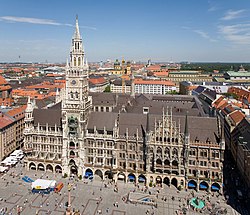
Budapest, Hungary
Photo: Dirk Beyer, Wikimedia Commons (CC BY-SA 3.0)
← All destinations

Budapest, Hungary

Budapest is a city of contrasts: steaming imperial baths next to bars carved out of industrial ruins, neo-Gothic palaces on the Danube and an undergrowth of traps designed for distracted tourists. A few unwritten rules are all you need to enjoy it without surprises on the bill.

✓ Sources checked on 28 September 202611 sources cited

What to see in Budapest?

13 places checked against the sources. The 4 gems the guidebooks skip come first, then the classics: every card has the hard facts on top and the why below.

On the map: yellow pins are the gems. Tap a pin to jump to its card.

✦ Hidden gems · off the standard guides

Szemlőhegy Cave
Nature✦ gem

Szemlőhegy Cave

It is an underground cave visited on guided tours at fixed times: you do not go in when you like and you do not wander on your own. Inside the temperature stays low and constant all year, so even at the height of summer you need a sweatshirt and closed shoes. It sits on the Buda hills, outside the centre, reached on city transport: that is why there is almost nobody there, and it is the reason to go.

Photo: Globetrotter19, Wikimedia Commons (CC BY-SA 3.0)
Museum of Fine Arts
Museums✦ gem

Museum of Fine Arts

This is the museum where the rainy hours go, and its European collection has few equals in this part of the continent: Spanish, Dutch and early Italian works, plus the reconstructed Renaissance hall. It stands on Heroes' Square, the terminus of the yellow M1 metro, the oldest in continental Europe, boarded on an ordinary city ticket. The Széchenyi baths are at the same stop: two utterly different things a hundred metres apart.

Photo: Paolo Villa, Wikimedia Commons (CC BY-SA 4.0)
Food✦ gem

Paprikás csirke

This is Hungarian home cooking more than gulyás is: chicken cooked slowly in sweet paprika with onion and soured cream, served with nokedli, egg-dough dumplings grated by hand into boiling water. It turns up in neighbourhood places and canteens more than on the tourist menus downtown. The paprika used is the finely ground sweet kind, not hot: the dish does not burn, it is creamy.

Nature✦ gem

Margaret Island

It is the park island between the two bridges, closed to cars: you reach it on foot from the Margaret Bridge or on trams 4 and 6, which stop halfway across. Inside there is the rubber running track that loops the whole perimeter, the Japanese garden, the ruins of the Dominican convent and the musical fountain at the southern end, which plays at set times. It is where the people of Budapest run and picnic, and in a city that gets hot in summer it is the one large stretch of continuous shade.

The classics

Hungarian Parliament
Monuments

Hungarian Parliament

Hours
8:00-18:00

You can only go in on the 45-minute guided tour, and you do not choose the time but the language: each slot runs in one language only, and Italian, Spanish or English fall at different points of the day. The real constraint is that it sells out: on the official ticket office most of the next day's slots already show as sold, so booking once you arrive in the city is almost always too late. It opens 8am-6pm from April to October and 8am-4pm the rest of the year.

Photo: K93, Wikimedia Commons (CC BY-SA 3.0)
Monuments

Fisherman's Bastion and Buda Castle

The lower terraces of the Bastion are walked freely and are open at any hour, including at night: the ticket is only for the upper towers. Anyone arriving at dawn or after sunset gets the same view of Parliament without paying and without the crowd, and it is the only moment when the turrets photograph empty. You climb the castle hill on foot, by funicular or by bus: taking the funicular means paying for a stretch that walks in a few minutes.

St Stephen's Basilica
Monuments

St Stephen's Basilica

Entry
free
Hours
9:00-19:00

Entry is not free: every visitor has to buy a ticket, which is checked at the door. The nave is visited Monday to Saturday 9am-6pm and on Sunday only from 1pm, after the masses. The panorama terrace and the treasury keep longer hours, 9am-7pm every day: on Sunday morning they are open while the church is not. At weekends weddings can restrict access to the nave. Student and over-65 discounts are only issued at the ticket office on production of ID, not online.

Photo: K93, Wikimedia Commons (CC BY-SA 3.0)
Monuments

Dohány Street Great Synagogue

Hours
10:00-16:00

It is visited as a museum rather than a church, and the timetable is the constraint: Sunday to Thursday 10am-4pm and Friday 10am-2pm, with last entry an hour before closing. On Saturdays and Jewish holidays it is closed: the commonest planning mistake in this quarter. The ticket does not cover the synagogue alone: it takes in the Hungarian Jewish Museum, the Heroes' Temple, the Wallenberg memorial park with its cemetery and the ghetto exhibition, audio guide included. Heads must be covered and kippahs are handed out at the entrance.

Monuments

Gellért Hill, Citadella and Chain Bridge

You climb Gellért Hill on the paths that start from Liberty Bridge: a continuous climb of some twenty minutes, and no ticket of any kind is needed for the view, which is the widest over the city. At the top the Liberty Statue is visible from all of Pest. The Chain Bridge, the first permanent link between Buda and Pest, is crossed on foot in a few minutes and is the right way to pass from one city to the other: it is lit at night, and the stone lions at either end are where everybody stops.

Széchenyi Baths
Other

Széchenyi Baths

Hours
7:00-20:00

The price shifts with the day and the hour: the ticket with a locker costs 13,200 forint Monday to Thursday, 14,800 on Friday and at weekends, 15,800 in peak periods. Anyone entering before 9am pays the 'good morning' rate of 10,500 forint on weekdays, nearly three thousand less for the same pools. Fast Track exists but is sold online only. Hours: 7am-8pm Monday to Thursday, until 10pm on Friday, 8am-8pm at weekends. It is not open late every evening, as many people expect.

Photo: Marc Ryckaert (MJJR), Wikimedia Commons (CC BY 3.0)
Food

Gulyás (goulash)

It is not a stew but a soup: in Hungary gulyás is eaten with a spoon, it is brothy, and the thick stew that half of Europe calls goulash is called pörkölt here and ordered under a different name. The paprika goes in off the heat, because burning it turns it bitter. In central places it often arrives in a small hanging cauldron: that is staging for tourists, but in a serious place what is inside is what it always was.

Food

Lángos

It is potato dough fried to order, as wide as a plate, and it has to be eaten hot within minutes: it cools badly and turns rubbery. The classic version is tejfölös-sajtos, soured cream and grated cheese, with garlic rubbed over the surface before serving. You buy it at the counters of the covered markets and at street stalls, not in restaurants, and it costs a fraction of a main course: it is Budapest's cheap lunch, full stop.

Szimpla Kert
Nightlife

Szimpla Kert

It is the original ruin bar and not only an evening bar: it opens in the afternoon, when the courtyard and the rooms can be walked the way you would walk an abandoned building, with bathtubs used as sofas and a Trabant in the middle of the room. After 9pm it becomes something else, with a queue at the door and a noise level that rules out conversation. It sits in the VII district, the old Jewish quarter, and the surrounding buildings are lived in: after midnight the street noise is a serious problem for the people who live there.

Photo: Yelkrokoyade, Wikimedia Commons (CC BY-SA 3.0)

How to plan your days in Budapest?

Three routes for different travel styles, built only from this dossier's verified places. Realistic pace: 2-3 stops a day.

First time

2 days

The landmark sights, at the right pace.

Day 1

  • Hungarian Parliament

    You can only go in on the 45-minute guided tour, and you do not choose the time but the language: each slot runs in one language only, and Italian, Spanish or English fall at different points of the day. The real constraint is that it sells out: on the official ticket office most of the next day's slots already show as sold, so booking once you arrive in the city is almost always too late. It opens 8am-6pm from April to October and 8am-4pm the rest of the year.

  • Fisherman's Bastion and Buda Castle

    The lower terraces of the Bastion are walked freely and are open at any hour, including at night: the ticket is only for the upper towers. Anyone arriving at dawn or after sunset gets the same view of Parliament without paying and without the crowd, and it is the only moment when the turrets photograph empty. You climb the castle hill on foot, by funicular or by bus: taking the funicular means paying for a stretch that walks in a few minutes.

  • St Stephen's Basilica

    Entry is not free: every visitor has to buy a ticket, which is checked at the door. The nave is visited Monday to Saturday 9am-6pm and on Sunday only from 1pm, after the masses. The panorama terrace and the treasury keep longer hours, 9am-7pm every day: on Sunday morning they are open while the church is not. At weekends weddings can restrict access to the nave. Student and over-65 discounts are only issued at the ticket office on production of ID, not online.

Day 2

  • Dohány Street Great Synagogue

    It is visited as a museum rather than a church, and the timetable is the constraint: Sunday to Thursday 10am-4pm and Friday 10am-2pm, with last entry an hour before closing. On Saturdays and Jewish holidays it is closed: the commonest planning mistake in this quarter. The ticket does not cover the synagogue alone: it takes in the Hungarian Jewish Museum, the Heroes' Temple, the Wallenberg memorial park with its cemetery and the ghetto exhibition, audio guide included. Heads must be covered and kippahs are handed out at the entrance.

  • Gellért Hill, Citadella and Chain Bridge

    You climb Gellért Hill on the paths that start from Liberty Bridge: a continuous climb of some twenty minutes, and no ticket of any kind is needed for the view, which is the widest over the city. At the top the Liberty Statue is visible from all of Pest. The Chain Bridge, the first permanent link between Buda and Pest, is crossed on foot in a few minutes and is the right way to pass from one city to the other: it is lit at night, and the stone lions at either end are where everybody stops.

  • Széchenyi Baths

    The price shifts with the day and the hour: the ticket with a locker costs 13,200 forint Monday to Thursday, 14,800 on Friday and at weekends, 15,800 in peak periods. Anyone entering before 9am pays the 'good morning' rate of 10,500 forint on weekdays, nearly three thousand less for the same pools. Fast Track exists but is sold online only. Hours: 7am-8pm Monday to Thursday, until 10pm on Friday, 8am-8pm at weekends. It is not open late every evening, as many people expect.

Off the beaten path

2 days

Hidden gems away from the usual circuits.

Day 1

  • Szemlőhegy Cave✦ hidden gem

    It is an underground cave visited on guided tours at fixed times: you do not go in when you like and you do not wander on your own. Inside the temperature stays low and constant all year, so even at the height of summer you need a sweatshirt and closed shoes. It sits on the Buda hills, outside the centre, reached on city transport: that is why there is almost nobody there, and it is the reason to go.

  • Museum of Fine Arts✦ hidden gem

    This is the museum where the rainy hours go, and its European collection has few equals in this part of the continent: Spanish, Dutch and early Italian works, plus the reconstructed Renaissance hall. It stands on Heroes' Square, the terminus of the yellow M1 metro, the oldest in continental Europe, boarded on an ordinary city ticket. The Széchenyi baths are at the same stop: two utterly different things a hundred metres apart.

  • Paprikás csirke✦ hidden gem

    This is Hungarian home cooking more than gulyás is: chicken cooked slowly in sweet paprika with onion and soured cream, served with nokedli, egg-dough dumplings grated by hand into boiling water. It turns up in neighbourhood places and canteens more than on the tourist menus downtown. The paprika used is the finely ground sweet kind, not hot: the dish does not burn, it is creamy.

Day 2

  • Margaret Island✦ hidden gem

    It is the park island between the two bridges, closed to cars: you reach it on foot from the Margaret Bridge or on trams 4 and 6, which stop halfway across. Inside there is the rubber running track that loops the whole perimeter, the Japanese garden, the ruins of the Dominican convent and the musical fountain at the southern end, which plays at set times. It is where the people of Budapest run and picnic, and in a city that gets hot in summer it is the one large stretch of continuous shade.

  • Gulyás (goulash)

    It is not a stew but a soup: in Hungary gulyás is eaten with a spoon, it is brothy, and the thick stew that half of Europe calls goulash is called pörkölt here and ordered under a different name. The paprika goes in off the heat, because burning it turns it bitter. In central places it often arrives in a small hanging cauldron: that is staging for tourists, but in a serious place what is inside is what it always was.

Food & markets

2 days

Eat and drink where locals actually go.

Day 1

  • Gulyás (goulash)

    It is not a stew but a soup: in Hungary gulyás is eaten with a spoon, it is brothy, and the thick stew that half of Europe calls goulash is called pörkölt here and ordered under a different name. The paprika goes in off the heat, because burning it turns it bitter. In central places it often arrives in a small hanging cauldron: that is staging for tourists, but in a serious place what is inside is what it always was.

  • Lángos

    It is potato dough fried to order, as wide as a plate, and it has to be eaten hot within minutes: it cools badly and turns rubbery. The classic version is tejfölös-sajtos, soured cream and grated cheese, with garlic rubbed over the surface before serving. You buy it at the counters of the covered markets and at street stalls, not in restaurants, and it costs a fraction of a main course: it is Budapest's cheap lunch, full stop.

Day 2

  • Paprikás csirke✦ hidden gem

    This is Hungarian home cooking more than gulyás is: chicken cooked slowly in sweet paprika with onion and soured cream, served with nokedli, egg-dough dumplings grated by hand into boiling water. It turns up in neighbourhood places and canteens more than on the tourist menus downtown. The paprika used is the finely ground sweet kind, not hot: the dish does not burn, it is creamy.

  • Szimpla Kert

    It is the original ruin bar and not only an evening bar: it opens in the afternoon, when the courtyard and the rooms can be walked the way you would walk an abandoned building, with bathtubs used as sofas and a Trabant in the middle of the room. After 9pm it becomes something else, with a queue at the door and a noise level that rules out conversation. It sits in the VII district, the old Jewish quarter, and the surrounding buildings are lived in: after midnight the street noise is a serious problem for the people who live there.

🧭

Build your itinerary

Tell us how many days you're staying and in which month: we'll compose an itinerary from this dossier's verified places, with notes about the period.

Your itinerary

1

Day 1

  • Hungarian Parliament

    You can only go in on the 45-minute guided tour, and you do not choose the time but the language: each slot runs in one language only, and Italian, Spanish or English fall at different points of the day. The real constraint is that it sells out: on the official ticket office most of the next day's slots already show as sold, so booking once you arrive in the city is almost always too late. It opens 8am-6pm from April to October and 8am-4pm the rest of the year.

  • Fisherman's Bastion and Buda Castle

    The lower terraces of the Bastion are walked freely and are open at any hour, including at night: the ticket is only for the upper towers. Anyone arriving at dawn or after sunset gets the same view of Parliament without paying and without the crowd, and it is the only moment when the turrets photograph empty. You climb the castle hill on foot, by funicular or by bus: taking the funicular means paying for a stretch that walks in a few minutes.

  • Szimpla Kert

    It is the original ruin bar and not only an evening bar: it opens in the afternoon, when the courtyard and the rooms can be walked the way you would walk an abandoned building, with bathtubs used as sofas and a Trabant in the middle of the room. After 9pm it becomes something else, with a queue at the door and a noise level that rules out conversation. It sits in the VII district, the old Jewish quarter, and the surrounding buildings are lived in: after midnight the street noise is a serious problem for the people who live there.

2

Day 2

  • St Stephen's Basilica

    Entry is not free: every visitor has to buy a ticket, which is checked at the door. The nave is visited Monday to Saturday 9am-6pm and on Sunday only from 1pm, after the masses. The panorama terrace and the treasury keep longer hours, 9am-7pm every day: on Sunday morning they are open while the church is not. At weekends weddings can restrict access to the nave. Student and over-65 discounts are only issued at the ticket office on production of ID, not online.

  • Dohány Street Great Synagogue

    It is visited as a museum rather than a church, and the timetable is the constraint: Sunday to Thursday 10am-4pm and Friday 10am-2pm, with last entry an hour before closing. On Saturdays and Jewish holidays it is closed: the commonest planning mistake in this quarter. The ticket does not cover the synagogue alone: it takes in the Hungarian Jewish Museum, the Heroes' Temple, the Wallenberg memorial park with its cemetery and the ghetto exhibition, audio guide included. Heads must be covered and kippahs are handed out at the entrance.

  • Gulyás (goulash)

    It is not a stew but a soup: in Hungary gulyás is eaten with a spoon, it is brothy, and the thick stew that half of Europe calls goulash is called pörkölt here and ordered under a different name. The paprika goes in off the heat, because burning it turns it bitter. In central places it often arrives in a small hanging cauldron: that is staging for tourists, but in a serious place what is inside is what it always was.

3

Day 3

  • Gellért Hill, Citadella and Chain Bridge

    You climb Gellért Hill on the paths that start from Liberty Bridge: a continuous climb of some twenty minutes, and no ticket of any kind is needed for the view, which is the widest over the city. At the top the Liberty Statue is visible from all of Pest. The Chain Bridge, the first permanent link between Buda and Pest, is crossed on foot in a few minutes and is the right way to pass from one city to the other: it is lit at night, and the stone lions at either end are where everybody stops.

  • Széchenyi Baths

    The price shifts with the day and the hour: the ticket with a locker costs 13,200 forint Monday to Thursday, 14,800 on Friday and at weekends, 15,800 in peak periods. Anyone entering before 9am pays the 'good morning' rate of 10,500 forint on weekdays, nearly three thousand less for the same pools. Fast Track exists but is sold online only. Hours: 7am-8pm Monday to Thursday, until 10pm on Friday, 8am-8pm at weekends. It is not open late every evening, as many people expect.

  • Lángos

    It is potato dough fried to order, as wide as a plate, and it has to be eaten hot within minutes: it cools badly and turns rubbery. The classic version is tejfölös-sajtos, soured cream and grated cheese, with garlic rubbed over the surface before serving. You buy it at the counters of the covered markets and at street stalls, not in restaurants, and it costs a fraction of a main course: it is Budapest's cheap lunch, full stop.

Want an itinerary tailored to your dates in Budapest?

Travel dates, where you stay and the kind of trip: we tailor this same verified dossier to your exact needs.

Coming soon
The entrance to the Szemlőhegy Cave, an underground maze of mineral formations that most visitors overlook entirely.
The entrance to the Szemlőhegy Cave, an underground maze of mineral formations that most visitors overlook entirely.Photo: Elelicht, Wikimedia Commons (CC BY-SA 3.0)

What to know before going to Budapest?

Recurring scams and local rules worth knowing before you arrive.

⚠ Scams to know

Inflated bills in central bars/venues (e.g. District V, Váci Street)

verified

Staff, often inviting young women, have you sign bills for hundreds or thousands of euros for a few drinks, then force payment at the ATM with threats.

How to avoid it: Avoid venues with no visible price menu, don't follow strangers inviting you to drink at a specific bar, always check the bill before paying.

Source

Taxi 'hyenas' who alter the final payment

verified

The meter shows a correct amount but the final payment terminal adds extra figures, charging 5-10 times the real price.

How to avoid it: Always book via an app (Bolt, Uber) or use official fixed-fare taxis at the airport; check the amount on the terminal before confirming payment.

Source

Fake 'friends' offering to change money or unsolicited guiding

low confidence

Informal approaches in the street often end in an unfavourable exchange rate or exaggerated tip demands for unrequested services.

How to avoid it: Change money only at authorized offices or official ATMs, ignore anyone offering themselves as a guide or money changer in the street.

Source

Restaurants on Váci utca with undeclared service or unclear 'by weight' portions

low confidence

Some menus don't show the service charge included or the per-kg price of fish/meat, generating bills far higher than expected.

How to avoid it: Always check the menu for service items and per-kg prices before ordering; read the venue's recent reviews.

Source

⚖ Laws & penalties

Ban on drinking alcohol in public spaces in some districts

medium risklow confidence

Drinking alcohol in the open is generally regulated; tourists, especially in the 'party district' (District VII), risk penalties. The detail isn't confirmed with full certainty by the source.

Source

Requirement to validate your ticket on every public-transport vehicle

medium riskmedium confidence

On the BKK network checks are very frequent and travelling with an unvalidated ticket gets you an on-the-spot fine. Validate the paper ticket in the orange machines at the metro entrance or on board trams and buses.

Source

Ban on crossing away from pedestrian crossings

medium riskmedium confidence

In Hungary, crossing away from pedestrian crossings (jaywalking) is banned and can be fined: always use the crossings and wait for the green. On crossings, pedestrians have priority.

Source

Single taxi fare regulated by law

medium riskverified

In Budapest a uniform taxi fare set by municipal decree applies, the same for all companies and non-negotiable: base fare 1,100 HUF, 440 HUF/km and 110 HUF/minute of waiting. An official taxi displays the driver's photo ID and the fares on the dashboard and rear windows; the meter must be on and you're entitled to a receipt.

Source

4% tourist tax (idegenforgalmi adó) in Budapest

low riskverified

Across Budapest the tax is 4% of the accommodation price per person per night, collected by the property on behalf of the district; on booking portals it often appears as a separate item payable on site. Exempt are under-18s, hospital patients and those staying for work or study with a recognised title (national local taxes act, district decrees such as 26/2024 of District III).

Source
A freshly fried lángos, loaded with cheese and sour cream: the street food whose smell fills the city's markets.
A freshly fried lángos, loaded with cheese and sour cream: the street food whose smell fills the city's markets.Photo: Andrewszabo, Wikimedia Commons (CC BY-SA 4.0)

What happens in Budapest through the year?

Hover over a month on the timeline for details.

How much do you spend in Budapest, and when to go?

Jan
Feb
Mar
Apr
May
Jun
Jul
Aug
Sep
Oct
Nov
Dec
  • low35-55€per day
  • mid55-85€per day
  • high85-125€per day

When it works best, by type of trip

Baths and relaxationYear-round

The Széchenyi Baths are enjoyable in any season, particularly striking in the snow in winter.

Nightlife in the ruin barsJune-August

Long evenings and a lively Jewish Quarter, but more tourists and care needed with bill scams.

BudgetJanuary-March

Budapest remains one of Europe's cheapest capitals, even more so in low season.

Rough estimate (lodging + meals + local transport), not a precise verified source.

✦

Did you know... Budapest was originally two separate cities, Buda and Pest, officially united only in 1873 along with Óbuda.

How to get to Budapest and around?

No car neededThe old town has limited-traffic zones, scarce and pricey parking; public transport covers practically the whole city efficiently.

Metro (4 lines), trams, buses and Danube boats run by BKK. Since 1 June 2025 a single ticket costs 500 forints (about €1.25) bought in advance or in the BudapestGO app and 700 forints from the driver; the 24-hour ticket costs 2,750 forints, the 72-hour one 5,750, the 100E airport bus 2,500. Tickets must be validated and checks are frequent.

  • Use the Bolt or Uber app for taxis, never hail a taxi in the street or accept verbally offered 'fixed' fares.
  • For an official taxi from the airport use the Főtaxi kiosks at arrivals, not the drivers who approach you in the terminal.
  • Always validate your ticket; plain-clothes inspectors frequently fine tourists on public transport.
  • On foot or by bike (BUBI bike sharing) the centre is easily explored, avoiding the Chain Bridge traffic.

Is Budapest safe?

⚠ Areas to avoid

  • Váci utca and surroundings at night (venues with inflated bills)
  • District V and District VII (Party District) late at night, especially alone

Good to know

  • Always keep a copy of your passport separate from the original.
  • Be wary of anyone spontaneously inviting you to drink at a specific venue.
  • Use only ATMs inside banks, not isolated ones in the street.
  • In case of an outright scam, contact the tourist police or the Consumer Protection Office (Fogyasztóvédelem).
Source

Frequently asked questions about Budapest

Short answers drawn from the verified data of this dossier: details and sources are in the sections above.

How much does a day in Budapest cost?

Season low (January-March): 35-55€ per day; Season mid (April-May, September-October): 55-85€ per day; Season high (June-August, December): 85-125€ per day.

When to go to Budapest?

Baths and relaxation: Year-round. The Széchenyi Baths are enjoyable in any season, particularly striking in the snow in winter. Nightlife in the ruin bars: June-August. Long evenings and a lively Jewish Quarter, but more tourists and care needed with bill scams. Budget: January-March. Budapest remains one of Europe's cheapest capitals, even more so in low season.

Is Budapest safe?

Váci utca and surroundings at night (venues with inflated bills) Always keep a copy of your passport separate from the original.

Do you need a car in Budapest?

No. The old town has limited-traffic zones, scarce and pricey parking; public transport covers practically the whole city efficiently.

How do you get to Budapest?

Metro (4 lines), trams, buses and Danube boats run by BKK. Since 1 June 2025 a single ticket costs 500 forints (about €1.25) bought in advance or in the BudapestGO app and 700 forints from the driver; the 24-hour ticket costs 2,750 forints, the 72-hour one 5,750, the 100E airport bus 2,500. Tickets must be validated and checks are frequent.

Which hidden gems to see in Budapest, off the guidebooks?

Szemlőhegy Cave, Museum of Fine Arts, Paprikás csirke, Margaret Island.

Which scams to avoid in Budapest?

Inflated bills in central bars/venues (e.g. District V, Váci Street); Taxi 'hyenas' who alter the final payment; Fake 'friends' offering to change money or unsolicited guiding; Restaurants on Váci utca with undeclared service or unclear 'by weight' portions.

Sources

Every source below was opened and read, not just cited. Entries that didn't hold up were downgraded to "low confidence" or dropped, not presented as certain.

Related destinations

Other dossiers close by country, area or kind of trip.