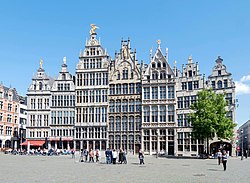
Bruges, Belgium
Photo: Ank Kumar, Wikimedia Commons (CC BY-SA 4.0)
← All destinations

Bruges, Belgium

The 'Venice of the North' is a fairy-tale medieval centre left almost intact: quiet canals, a belfry towering over the market square, beguinages and hidden courtyards. Small and all walkable, Bruges is chocolate, beer and fries among the bricks of Flanders.

✓ Sources checked on 28 September 20266 sources cited

What to see in Bruges?

12 places checked against the sources. The 3 gems the guidebooks skip come first, then the classics: every card has the hard facts on top and the why below.

On the map: yellow pins are the gems. Tap a pin to jump to its card.

✦ Hidden gems · off the standard guides

Nature✦ gem

Windmills on the ramparts

On the eastern ramparts, along the Kruisvest, four windmills remain in a line on a grassy bank, 15 minutes on foot from the centre and without a single shop in between. They are the last of twenty-five that once ringed the city. The Sint-Janshuismolen still works and really does grind: it is visited on a ticket and only in the good season, while walking the bank, watching them turn and sitting on the grass costs nothing and can be done all year.

Sint-Janshospitaal
Museums✦ gem

Sint-Janshospitaal

It is one of the oldest surviving medieval hospital buildings in Europe: the sick were treated here from the 12th century, and the great hall with its timber roof is the original ward. Inside are six works by Memling, among them the St Ursula shrine painted as a miniature Gothic building, and the old pharmacy with its jars still in place. It faces the Church of Our Lady, steps from the Groeningemuseum, and is consistently less crowded than either.

Photo: CEphoto, Uwe Aranas, Wikimedia Commons (CC BY-SA 3.0)
Nightlife✦ gem

De Halve Maan brewery

Price
€10
Duration
45 min

The standard tour lasts about 45 minutes, costs 10 € and ends with an unfiltered beer included in the price; the XL runs 90 minutes and costs 26 €, that is well over double, and adds the historic cellars with a guided tasting of three speciality beers. The part worth telling is under your feet: since 2016 an underground pipeline of about 3 km has carried the beer from the brewery in the centre to the bottling plant on the outskirts, to keep tanker lorries off the medieval streets. The route includes a steep staircase and a rooftop terrace.

The classics

Markt and Belfort
Monuments

Markt and Belfort

Steps
366

The square is crossed for free; the belfry is not, and above all you cannot go up when you feel like it. It is 366 steps in a narrow spiral stair, with no lift and no shortcuts, and access runs in time slots: every 20 minutes roughly fifteen to twenty-five people start the climb, so without booking online you risk finding the first free slot two hours later. It closes for a few days now and then for maintenance, and the dates are announced on the municipal museums site. At the top is the carillon, which rings while you are up there. The horse-drawn carriages on the square work to a tariff set by the city: ask for it before getting in.

Photo: Валерий Дед, Wikimedia Commons (CC BY 3.0)
Burg and Basilica of the Holy Blood
Monuments

Burg and Basilica of the Holy Blood

Ticket
€5

The Basilica of the Holy Blood is free to enter; the museum with the treasury, where the great 1614 reliquary is kept, costs €5 and is free for under-12s. The relic is venerated in the upper basilica every afternoon from 2pm to 4pm and on Friday mornings from 10.15 to 11am: outside those windows the reliquary is not on show and you see only the chapel. On the same square stands the Gothic town hall of 1376, with its Gothic Hall visitable on a ticket.

Photo: Rainer Halama, Wikimedia Commons (CC BY-SA 4.0)
Monuments

Beguinage and Minnewater

The beguinage was founded in 1245 and a community of Benedictine sisters lives there now: the lawn with its white houses is open and free, but on set hours and with silence explicitly requested. It is a monastery, not a park. The daffodils flower for two or three weeks between March and April, the only stretch when the lawn is yellow; the rest of the year it is grass. The house museum, furnished as a beguine lived, is ticketed separately. The Minnewater beside it is an artificial basin dug for the port, not a romantic lake.

Rozenhoedkaai
Nature

Rozenhoedkaai

It is not a monument but a stretch of quayside where the Dijver meets the Groenerei, always accessible and free: from there the canal, the gabled houses and the belfry line up in one frame. It is also the most crowded point in the city between 11am and 4pm, when the day groups arrive from Brussels and Ghent. At dawn or after dinner it is empty and the light is better: Bruges genuinely empties in the evening, because most of its visitors do not sleep here.

Photo: Ank Kumar, Wikimedia Commons (CC BY-SA 4.0)
Nature

Canal boat trip

Price
€12
Duration
30 min

The trip lasts exactly 30 minutes, makes no stops and cannot be booked: individuals cannot reserve ahead and simply board at one of the five jetties in the centre, leaving when the boat is full. The fare is set by the city and is the same everywhere, 12 € a head and 9 € for children aged 4 to 11, so comparing jetties on price achieves nothing. The boats pass under low bridges and in places you really do have to duck. There is no recorded commentary: the boatman talks, usually in several languages one after another, so you hear the same thing three times. In the cold months the service thins out or stops for maintenance: check on the day.

Groeningemuseum
Museums

Groeningemuseum

Small and walkable in an hour and a half, but with a rare density: this is where Jan van Eyck's Madonna with Canon van der Paele hangs, painted in Bruges in 1436, alongside Bosch's Last Judgement. It is worth knowing that the Flemish primitives were working in oil on panel while Italy was still painting in tempera: the difference in how light sits in the detail is the reason to come. Single tickets are bought on site or online; the €49 Musea Brugge Card covers 72 hours at every site and pays off from the third visit.

Photo: Ricardalovesmonuments, Wikimedia Commons (CC BY-SA 4.0)
Food

Mussels and fries (moules-frites)

Mussels in Belgium are seasonal and the traditional rule is the months with an R in them, September to April: in high summer what reaches the table is often from elsewhere or frozen. They arrive in the pot, with the lid used as a dish for the shells, and the chips come separately and are almost always charged separately. Real frites are fried twice, in beef fat, and the standard sauce is mayonnaise: ketchup has to be asked for, it does not turn up.

Food

Artisan chocolate

The centre has dozens of chocolate shops and they are not the same thing: some make their pralines in the workshop behind the counter, others resell industrial product boxed elsewhere. The first kind say so and keep a chilled display with few varieties; the second have stacked gift boxes and enormous assortments. Pralines are bought by weight and eaten within a few days, because a fresh filling is not built to last: the sealed boxes that keep for months are a different product.

Food

Belgian beers and stoofvlees

Stoofvlees is beef cooked for hours in dark beer, and the technical secret is a slice of bread spread with mustard dropped into the pot: it dissolves and thickens the sauce without flour. It is served with frites and drunk with the same beer it was cooked in. Genuine Trappist beers in Belgium are very few and are made inside the abbeys; the 'abbey beers' found everywhere are another category, brewed industrially under licence: the difference is written on the label and is worth a look.

How to plan your days in Bruges?

Three routes for different travel styles, built only from this dossier's verified places. Realistic pace: 2-3 stops a day.

First time

2 days

The landmark sights, at the right pace.

Day 1

  • Markt and Belfort

    The square is crossed for free; the belfry is not, and above all you cannot go up when you feel like it. It is 366 steps in a narrow spiral stair, with no lift and no shortcuts, and access runs in time slots: every 20 minutes roughly fifteen to twenty-five people start the climb, so without booking online you risk finding the first free slot two hours later. It closes for a few days now and then for maintenance, and the dates are announced on the municipal museums site. At the top is the carillon, which rings while you are up there. The horse-drawn carriages on the square work to a tariff set by the city: ask for it before getting in.

  • Burg and Basilica of the Holy Blood

    The Basilica of the Holy Blood is free to enter; the museum with the treasury, where the great 1614 reliquary is kept, costs €5 and is free for under-12s. The relic is venerated in the upper basilica every afternoon from 2pm to 4pm and on Friday mornings from 10.15 to 11am: outside those windows the reliquary is not on show and you see only the chapel. On the same square stands the Gothic town hall of 1376, with its Gothic Hall visitable on a ticket.

  • Beguinage and Minnewater

    The beguinage was founded in 1245 and a community of Benedictine sisters lives there now: the lawn with its white houses is open and free, but on set hours and with silence explicitly requested. It is a monastery, not a park. The daffodils flower for two or three weeks between March and April, the only stretch when the lawn is yellow; the rest of the year it is grass. The house museum, furnished as a beguine lived, is ticketed separately. The Minnewater beside it is an artificial basin dug for the port, not a romantic lake.

Day 2

  • Groeningemuseum

    Small and walkable in an hour and a half, but with a rare density: this is where Jan van Eyck's Madonna with Canon van der Paele hangs, painted in Bruges in 1436, alongside Bosch's Last Judgement. It is worth knowing that the Flemish primitives were working in oil on panel while Italy was still painting in tempera: the difference in how light sits in the detail is the reason to come. Single tickets are bought on site or online; the €49 Musea Brugge Card covers 72 hours at every site and pays off from the third visit.

  • Rozenhoedkaai

    It is not a monument but a stretch of quayside where the Dijver meets the Groenerei, always accessible and free: from there the canal, the gabled houses and the belfry line up in one frame. It is also the most crowded point in the city between 11am and 4pm, when the day groups arrive from Brussels and Ghent. At dawn or after dinner it is empty and the light is better: Bruges genuinely empties in the evening, because most of its visitors do not sleep here.

  • Canal boat trip

    The trip lasts exactly 30 minutes, makes no stops and cannot be booked: individuals cannot reserve ahead and simply board at one of the five jetties in the centre, leaving when the boat is full. The fare is set by the city and is the same everywhere, 12 € a head and 9 € for children aged 4 to 11, so comparing jetties on price achieves nothing. The boats pass under low bridges and in places you really do have to duck. There is no recorded commentary: the boatman talks, usually in several languages one after another, so you hear the same thing three times. In the cold months the service thins out or stops for maintenance: check on the day.

Off the beaten path

2 days

Hidden gems away from the usual circuits.

Day 1

  • Windmills on the ramparts✦ hidden gem

    On the eastern ramparts, along the Kruisvest, four windmills remain in a line on a grassy bank, 15 minutes on foot from the centre and without a single shop in between. They are the last of twenty-five that once ringed the city. The Sint-Janshuismolen still works and really does grind: it is visited on a ticket and only in the good season, while walking the bank, watching them turn and sitting on the grass costs nothing and can be done all year.

  • Sint-Janshospitaal✦ hidden gem

    It is one of the oldest surviving medieval hospital buildings in Europe: the sick were treated here from the 12th century, and the great hall with its timber roof is the original ward. Inside are six works by Memling, among them the St Ursula shrine painted as a miniature Gothic building, and the old pharmacy with its jars still in place. It faces the Church of Our Lady, steps from the Groeningemuseum, and is consistently less crowded than either.

  • De Halve Maan brewery✦ hidden gem

    The standard tour lasts about 45 minutes, costs 10 € and ends with an unfiltered beer included in the price; the XL runs 90 minutes and costs 26 €, that is well over double, and adds the historic cellars with a guided tasting of three speciality beers. The part worth telling is under your feet: since 2016 an underground pipeline of about 3 km has carried the beer from the brewery in the centre to the bottling plant on the outskirts, to keep tanker lorries off the medieval streets. The route includes a steep staircase and a rooftop terrace.

Day 2

  • Mussels and fries (moules-frites)

    Mussels in Belgium are seasonal and the traditional rule is the months with an R in them, September to April: in high summer what reaches the table is often from elsewhere or frozen. They arrive in the pot, with the lid used as a dish for the shells, and the chips come separately and are almost always charged separately. Real frites are fried twice, in beef fat, and the standard sauce is mayonnaise: ketchup has to be asked for, it does not turn up.

  • Artisan chocolate

    The centre has dozens of chocolate shops and they are not the same thing: some make their pralines in the workshop behind the counter, others resell industrial product boxed elsewhere. The first kind say so and keep a chilled display with few varieties; the second have stacked gift boxes and enormous assortments. Pralines are bought by weight and eaten within a few days, because a fresh filling is not built to last: the sealed boxes that keep for months are a different product.

Food & markets

2 days

Eat and drink where locals actually go.

Day 1

  • Mussels and fries (moules-frites)

    Mussels in Belgium are seasonal and the traditional rule is the months with an R in them, September to April: in high summer what reaches the table is often from elsewhere or frozen. They arrive in the pot, with the lid used as a dish for the shells, and the chips come separately and are almost always charged separately. Real frites are fried twice, in beef fat, and the standard sauce is mayonnaise: ketchup has to be asked for, it does not turn up.

  • Artisan chocolate

    The centre has dozens of chocolate shops and they are not the same thing: some make their pralines in the workshop behind the counter, others resell industrial product boxed elsewhere. The first kind say so and keep a chilled display with few varieties; the second have stacked gift boxes and enormous assortments. Pralines are bought by weight and eaten within a few days, because a fresh filling is not built to last: the sealed boxes that keep for months are a different product.

Day 2

  • Belgian beers and stoofvlees

    Stoofvlees is beef cooked for hours in dark beer, and the technical secret is a slice of bread spread with mustard dropped into the pot: it dissolves and thickens the sauce without flour. It is served with frites and drunk with the same beer it was cooked in. Genuine Trappist beers in Belgium are very few and are made inside the abbeys; the 'abbey beers' found everywhere are another category, brewed industrially under licence: the difference is written on the label and is worth a look.

  • De Halve Maan brewery✦ hidden gem

    The standard tour lasts about 45 minutes, costs 10 € and ends with an unfiltered beer included in the price; the XL runs 90 minutes and costs 26 €, that is well over double, and adds the historic cellars with a guided tasting of three speciality beers. The part worth telling is under your feet: since 2016 an underground pipeline of about 3 km has carried the beer from the brewery in the centre to the bottling plant on the outskirts, to keep tanker lorries off the medieval streets. The route includes a steep staircase and a rooftop terrace.

🧭

Build your itinerary

Tell us how many days you're staying and in which month: we'll compose an itinerary from this dossier's verified places, with notes about the period.

Your itinerary

1

Day 1

  • Markt and Belfort

    The square is crossed for free; the belfry is not, and above all you cannot go up when you feel like it. It is 366 steps in a narrow spiral stair, with no lift and no shortcuts, and access runs in time slots: every 20 minutes roughly fifteen to twenty-five people start the climb, so without booking online you risk finding the first free slot two hours later. It closes for a few days now and then for maintenance, and the dates are announced on the municipal museums site. At the top is the carillon, which rings while you are up there. The horse-drawn carriages on the square work to a tariff set by the city: ask for it before getting in.

  • Burg and Basilica of the Holy Blood

    The Basilica of the Holy Blood is free to enter; the museum with the treasury, where the great 1614 reliquary is kept, costs €5 and is free for under-12s. The relic is venerated in the upper basilica every afternoon from 2pm to 4pm and on Friday mornings from 10.15 to 11am: outside those windows the reliquary is not on show and you see only the chapel. On the same square stands the Gothic town hall of 1376, with its Gothic Hall visitable on a ticket.

  • Mussels and fries (moules-frites)

    Mussels in Belgium are seasonal and the traditional rule is the months with an R in them, September to April: in high summer what reaches the table is often from elsewhere or frozen. They arrive in the pot, with the lid used as a dish for the shells, and the chips come separately and are almost always charged separately. Real frites are fried twice, in beef fat, and the standard sauce is mayonnaise: ketchup has to be asked for, it does not turn up.

2

Day 2

  • Beguinage and Minnewater

    The beguinage was founded in 1245 and a community of Benedictine sisters lives there now: the lawn with its white houses is open and free, but on set hours and with silence explicitly requested. It is a monastery, not a park. The daffodils flower for two or three weeks between March and April, the only stretch when the lawn is yellow; the rest of the year it is grass. The house museum, furnished as a beguine lived, is ticketed separately. The Minnewater beside it is an artificial basin dug for the port, not a romantic lake.

  • Groeningemuseum

    Small and walkable in an hour and a half, but with a rare density: this is where Jan van Eyck's Madonna with Canon van der Paele hangs, painted in Bruges in 1436, alongside Bosch's Last Judgement. It is worth knowing that the Flemish primitives were working in oil on panel while Italy was still painting in tempera: the difference in how light sits in the detail is the reason to come. Single tickets are bought on site or online; the €49 Musea Brugge Card covers 72 hours at every site and pays off from the third visit.

  • Artisan chocolate

    The centre has dozens of chocolate shops and they are not the same thing: some make their pralines in the workshop behind the counter, others resell industrial product boxed elsewhere. The first kind say so and keep a chilled display with few varieties; the second have stacked gift boxes and enormous assortments. Pralines are bought by weight and eaten within a few days, because a fresh filling is not built to last: the sealed boxes that keep for months are a different product.

3

Day 3

  • Rozenhoedkaai

    It is not a monument but a stretch of quayside where the Dijver meets the Groenerei, always accessible and free: from there the canal, the gabled houses and the belfry line up in one frame. It is also the most crowded point in the city between 11am and 4pm, when the day groups arrive from Brussels and Ghent. At dawn or after dinner it is empty and the light is better: Bruges genuinely empties in the evening, because most of its visitors do not sleep here.

  • Canal boat trip

    The trip lasts exactly 30 minutes, makes no stops and cannot be booked: individuals cannot reserve ahead and simply board at one of the five jetties in the centre, leaving when the boat is full. The fare is set by the city and is the same everywhere, 12 € a head and 9 € for children aged 4 to 11, so comparing jetties on price achieves nothing. The boats pass under low bridges and in places you really do have to duck. There is no recorded commentary: the boatman talks, usually in several languages one after another, so you hear the same thing three times. In the cold months the service thins out or stops for maintenance: check on the day.

  • Belgian beers and stoofvlees

    Stoofvlees is beef cooked for hours in dark beer, and the technical secret is a slice of bread spread with mustard dropped into the pot: it dissolves and thickens the sauce without flour. It is served with frites and drunk with the same beer it was cooked in. Genuine Trappist beers in Belgium are very few and are made inside the abbeys; the 'abbey beers' found everywhere are another category, brewed industrially under licence: the difference is written on the label and is worth a look.

Want an itinerary tailored to your dates in Bruges?

Travel dates, where you stay and the kind of trip: we tailor this same verified dossier to your exact needs.

Coming soon
The Belfort, the 83-metre belfry towering over the Markt: 366 steps lead to the top, where a carillon of 47 bells plays.
The Belfort, the 83-metre belfry towering over the Markt: 366 steps lead to the top, where a carillon of 47 bells plays.Photo: Fred Romero from Paris, France, Wikimedia Commons (CC BY 2.0)

What to know before going to Bruges?

Recurring scams and local rules worth knowing before you arrive.

⚠ Scams to know

Tourist restaurants on the Markt

low confidence

There are no official reports of inflated bills: the general rule of reading the displayed price list before sitting down applies, and on the main squares that makes a marked difference against two streets away

How to avoid it: Move a few streets from the Markt and the Burg and choose brasseries and venues frequented by residents.

Source

Pickpocketing in the day-tripper crowds

medium confidence

The UK official advice for Belgium states that theft and pickpocketing are common in crowded areas and recommends extra care at major railway stations and on public transport, particularly at night: in Bruges that means the Markt and the central streets at the hours the day-trippers arrive

How to avoid it: Keep your belongings safe in the busiest spots (Markt, boat trip, belfry).

Source

Overpriced carriages and 'tours'

low confidence

Around the attractions, carriages and tours proliferate at high prices not always stated in advance.

How to avoid it: Agree the price beforehand and compare; much of Bruges's charm is enjoyed for free walking along the canals.

Source

⚖ Laws & penalties

Bus ticket before boarding

low riskverified

The De Lijn ticket is bought in the app or paid by contactless card on board (€3, 60 minutes) and must be validated. Anyone checked without a valid ticket receives a fine that, depending on the type of offence, age and repeat status, ranges from about €20 up to €500.

Source

Traffic limits in the old town

medium risklow confidence

The medieval centre has strong traffic restrictions and pedestrian zones: entering by car without authorization can incur fines. Better to use external car parks or the train.

Source

Respect for canals and quiet

low risklow confidence

Swimming in the canals is prohibited and quiet rules apply in the old town: these are municipal regulations, and the city does not publish the amounts for visitors, so we quote none. The practical point is that the canals are not for swimming and the centre is lived in, not a nightlife precinct.

Source

Bruges tourist tax (belasting op logies)

low riskverified

From 1 January 2026 (city council regulation of 26 November 2025) you pay €3.75 per person per night from age 18 in hotels, B&Bs and rooms, €1.50 in campsites; from 2028 they rise to €5 and €2. Holiday homes have a separate regulation with the same amount per person. Under-18s exempt.

Source
The Beguinage (Begijnhof), with white houses around a lawn of daffodils and poplars: an oasis of medieval calm steps from the Lake of Love.
The Beguinage (Begijnhof), with white houses around a lawn of daffodils and poplars: an oasis of medieval calm steps from the Lake of Love.Photo: Marc Ryckaert, Wikimedia Commons (CC BY-SA 4.0)

What happens in Bruges through the year?

Hover over a month on the timeline for details.

How much do you spend in Bruges, and when to go?

Jan
Feb
Mar
Apr
May
Jun
Jul
Aug
Sep
Oct
Nov
Dec
  • low90-130€per day
  • mid130-180€per day
  • high180-260€per day

When it works best, by type of trip

Spring and autumnApril-May, September-October

Daffodils in the beguinage, drier weather and a city enjoyable before the summer flood of day-trippers.

Christmas magicDecember

Markets, an ice rink and a lit-up centre; cold and crowded weekends but a fairy-tale atmosphere.

SummerJune-August

Long days, boat trips and terraces, but many day-trippers at midday: better early morning and evening.

Rough estimate (lodging + meals + local transport), not a precise verified source.

✦

Did you know... The Basilica of the Holy Blood keeps a relic brought back from the Crusades, celebrated every year with the Procession of the Holy Blood.

How to get to Bruges and around?

No car neededThe medieval centre is tiny and almost entirely pedestrian or bike-friendly: you can walk it in a few hours. A car is useless and the centre has strong traffic limits; better to leave it in external car parks or arrive by train.

De Lijn buses: a single ticket costs €3 and is valid for 60 minutes on the whole network, in the app or by contactless card on board; the 10-ride card costs €22 (€2.20 a ride), the day ticket €9. In practice, though, the centre is all done on foot: the bus is really only for the station-Markt leg (5-10 minutes).

  • Bruges is lived on foot: from the station to the Markt is about 20 minutes on foot or a few minutes by bus
  • Buy your De Lijn ticket in the app or at a kiosk: on board it costs more
  • Watch out for cycle lanes: Bruges locals cycle a lot, look before crossing
  • Visit the museums and belfry early in the morning: by midday the day-trippers arrive and the queues grow

Is Bruges safe?

Good to know

  • Bruges is a very safe city: the main risk is petty pickpocketing in the day-tripper crowds
  • Watch out for bikes and cycle lanes when crossing
  • The weather is often rainy: always bring a raincoat, even in summer
Source
✦

Did you know... A city of the 'Flemish primitives' (Van Eyck, Memling), Bruges is also a capital of chocolate, beer and fries.

Frequently asked questions about Bruges

Short answers drawn from the verified data of this dossier: details and sources are in the sections above.

How much does a day in Bruges cost?

Season low (January-March, November): 90-130€ per day; Season mid (April-June, September-October): 130-180€ per day; Season high (July-August, December (markets)): 180-260€ per day.

When to go to Bruges?

Spring and autumn: April-May, September-October. Daffodils in the beguinage, drier weather and a city enjoyable before the summer flood of day-trippers. Christmas magic: December. Markets, an ice rink and a lit-up centre; cold and crowded weekends but a fairy-tale atmosphere. Summer: June-August. Long days, boat trips and terraces, but many day-trippers at midday: better early morning and evening.

Is Bruges safe?

Bruges is a very safe city: the main risk is petty pickpocketing in the day-tripper crowds

Do you need a car in Bruges?

No. The medieval centre is tiny and almost entirely pedestrian or bike-friendly: you can walk it in a few hours. A car is useless and the centre has strong traffic limits; better to leave it in external car parks or arrive by train.

How do you get to Bruges?

De Lijn buses: a single ticket costs €3 and is valid for 60 minutes on the whole network, in the app or by contactless card on board; the 10-ride card costs €22 (€2.20 a ride), the day ticket €9. In practice, though, the centre is all done on foot: the bus is really only for the station-Markt leg (5-10 minutes).

Which hidden gems to see in Bruges, off the guidebooks?

Windmills on the ramparts, Sint-Janshospitaal, De Halve Maan brewery.

Which scams to avoid in Bruges?

Tourist restaurants on the Markt; Pickpocketing in the day-tripper crowds; Overpriced carriages and 'tours'.

Sources

Every source below was opened and read, not just cited. Entries that didn't hold up were downgraded to "low confidence" or dropped, not presented as certain.

Related destinations

Other dossiers close by country, area or kind of trip.